Gym Motivation for Women: A Real System
You don’t have a discipline problem. You have a system that was never built for your actual life. Most gym motivation advice for women is either a wall of pastel quotes or a man’s bro-split with a pink filter on it. Neither one survives a week where you’re exhausted, the gym felt like a fishbowl on Monday, and there are eleven other things competing for the ninety minutes you supposedly have free.
So let’s skip the inspiration and build the thing that actually keeps women training: a system that runs when motivation is gone, designed around the barriers women report most. Gym anxiety. A schedule with no slack in it. The comparison spiral. The start-stop cycle that makes you feel like you’re back at square one every January. This guide is the practical version, grounded in behavioral science, written for the woman who keeps starting over and is tired of it.
Why “gym motivation for women” is its own problem
Generic motivation advice assumes a generic barrier, usually laziness. That’s the wrong diagnosis, and it’s especially wrong for women. The data shows women move less than men and report different reasons for it, so the fixes have to be different too.
The gap is real, and it isn’t about effort
Women are measurably less likely to hit activity guidelines. According to the CDC’s National Center for Health Statistics, only 20.4% of women met both the aerobic and muscle-strengthening guidelines, compared with 28.3% of men, and the number falls steadily with age, from 28.7% of women aged 18 to 34 down to 17.6% by their fifties (CDC NCHS Data Brief 443). That’s not a motivation deficit you can shame your way out of. It tracks with caregiving load, time poverty, and environments that don’t feel welcoming.
So when you skip the gym, you’re not failing at something everyone else finds easy. You’re hitting structural friction that happens to land harder on women. Naming that matters, because you can engineer around a real barrier. You can’t engineer around a flaw that doesn’t exist.
Gym anxiety is common, not a personal flaw
“Gymtimidation” gets treated as a punchline. The research isn’t funny. In a 2025 PLOS One study of 279 women, 71.9% reported receiving at least one unsolicited comment from men at the gym, 39.2% said they felt more intimidated by men while exercising, and 41.4% factored potential danger into what they wore to train (PLOS One, “I sometimes feel like I can’t win”). The same study found a majority of women worried about being judged on appearance, with 55% feeling least confident about their stomachs.
If you feel watched and self-conscious at the gym, you are not being dramatic. You’re having a statistically normal response to a real environment. That reframe is useful because it moves the question from “what’s wrong with me” to “how do I lower my exposure to this.” Only the second one is solvable.
The start-stop cycle has a mechanism
Most women I talk to don’t quit forever. They quit and restart, over and over, and read each restart as proof they’re flaky. They’re not. The cycle has a cause: motivation is an emotional state, it fades on schedule around week three, and a habit built on it collapses when it does. The same psychology drives this for everyone, which is why our gym motivation pillar guide treats the feeling itself as the trap. The women-specific twist is that the restarts cost more, because each one means re-facing the anxiety and re-clearing the schedule from scratch.
Beat gym anxiety before you touch motivation
You can’t motivate your way past a room that makes you want to leave. Handle the anxiety first, then the consistency work has somewhere to land.
Lower your exposure, on purpose
The fastest fix is the least glamorous one. Reduce how much of the intimidating environment you face.
- Train at off-peak hours. A gym at 2pm on a Tuesday is a different planet from 6pm. Fewer people, fewer eyes, more space. If your schedule allows even one quieter slot, use it.
- Learn two or three things cold. Most gym dread comes from not knowing what to do and feeling like everyone can tell. Pick a handful of machines or a short dumbbell routine and learn them until they’re automatic. Competence kills the spotlight feeling faster than any pep talk.
- Bring a buffer. Plenty of women report going with a friend specifically for comfort and safety, and that’s a legitimate strategy, not a crutch. If a friend isn’t available, the right app or a planned playlist can act as the same buffer.
Consider home as the real starting line
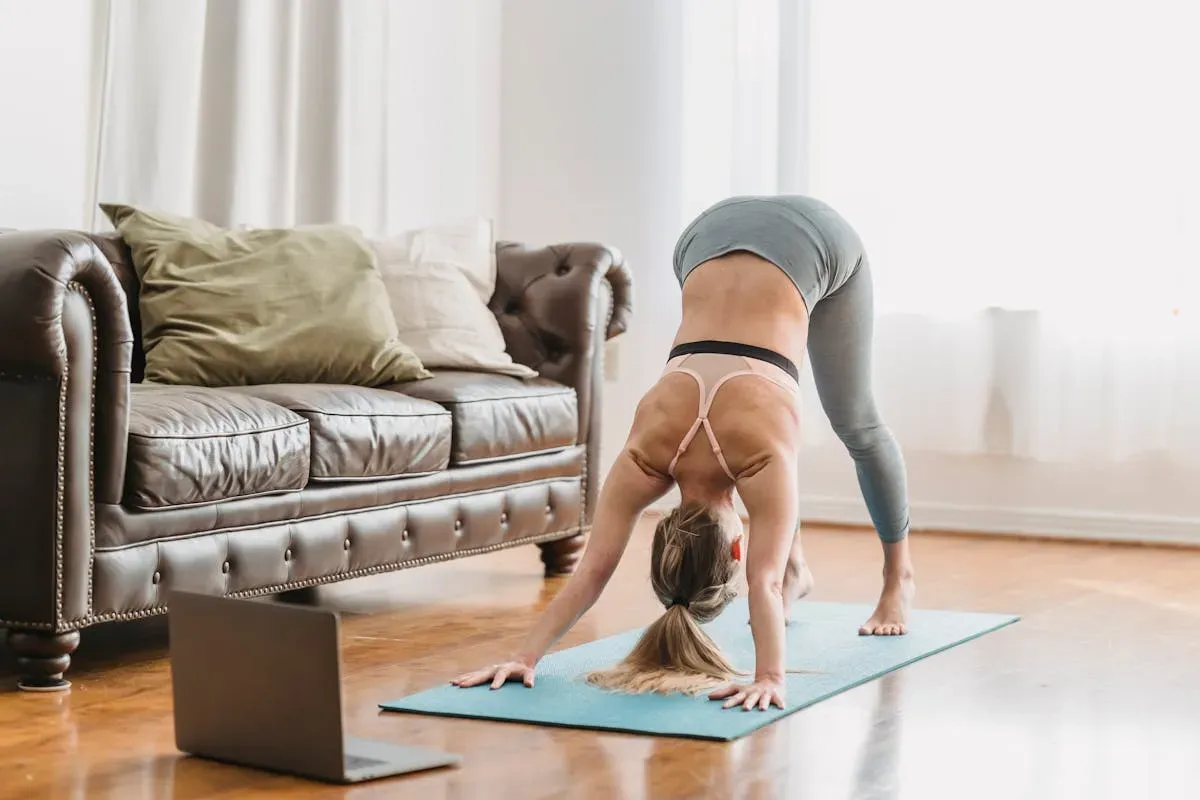
Here’s a stance most gym content won’t take: for a lot of women, the gym is the wrong place to start. Home removes the three biggest friction points at once, the commute, the cost, and the feeling of being on display. You don’t need a gym to build the habit. You need reps you’ll actually do. Bodyweight squats, a resistance band, and a mat in your living room build the same consistency muscle with none of the gymtimidation tax.
The honest trade-off is equipment and energy. You won’t have a squat rack, and there’s no ambient buzz of other people pushing you. But a home session you’ll do twice a week beats a gym session you dread and skip. Start where friction is lowest, prove you’ll show up, then upgrade if you want the barbell.
 Photo: Mart Production / Pexels
The psychology that actually keeps women training
Once the anxiety is handled, the real work is making the habit survive bad days. Three findings from the research do more here than any quote ever will.
Make the reason yours, not the mirror’s
The strongest predictor of whether you’ll still be training a year from now isn’t how badly you want to look different. It’s whether your reason comes from inside you. Self-determination theory draws a line between external motives (a beach body, a wedding, a number on the scale) and intrinsic ones (you enjoy moving, you’re getting stronger, it’s who you want to be). A review of 66 studies by Teixeira and colleagues found that autonomous, intrinsic motivation was more predictive of long-term exercise adherence, while external pressure mostly drove short-term starts.
This cuts against a lot of women’s fitness marketing, which runs almost entirely on appearance pressure. That pressure works for a few weeks and then curdles. “I want to feel strong carrying my kid up the stairs” outlasts “I need to fit the dress” because one of them is yours and the other belongs to someone else’s gaze.
Bundle the workout with something you crave
If you only steal one tactic from this article, steal this one. Behavioral scientist Katherine Milkman ran a field experiment where people could only listen to addictive audiobooks, like The Hunger Games, at the gym. That group visited 51% more often than the control group, and afterward 61% chose to pay for gym-only access to keep the arrangement going (Holding the Hunger Games Hostage at the Gym, Management Science).
The mechanism is simple and it’s perfect for a packed schedule. Pair the thing you should do with the thing you want to do, and only let yourself have the want during the should. Save your favorite podcast or your trashy reality show exclusively for the treadmill or the home workout. Suddenly the resistance flips. You’re not dragging yourself to train, you’re going because that’s the only place you get to find out what happens next.
Decide in advance so willpower doesn’t have to
Wanting to work out and actually working out are separated by a wider gap than anyone admits, and the best-studied bridge across it is the if-then plan. Instead of “I’ll work out more this week,” you commit to a specific trigger: “If the kids are down at 8pm, then I do my fifteen-minute routine before I open the laptop.” Gollwitzer and Sheeran’s meta-analysis of 94 tests found these implementation intentions had a medium-to-large effect on goal attainment.
Why it works: it hands the decision to a cue instead of to your tired evening self. When the cue fires, you’re not negotiating with the couch. For a woman whose free time arrives in unpredictable pockets, anchoring the workout to a reliable daily event, like a short walk after dinner, matters more than picking a clock time you’ll keep missing.
A motivation system you can run in a busy week
Here’s how the pieces assemble into something durable. None of this requires a transformation. It requires a structure that’s stubborn enough to survive a chaotic Tuesday.
Shrink the minimum until a bad day can clear it
The resistance lives at the threshold, not in the work. So shrink the threshold. Your non-negotiable isn’t “full workout,” it’s “put on the shoes and do the first five minutes, then I’m allowed to quit.” You almost never quit, because starting was the hard part. And on a genuinely brutal day, the five minutes still counts as a win that keeps your streak alive. A short session you’ll actually do beats an ambitious one you avoid, every single time.
Build a streak with a never-miss-twice rule
A streak is the most efficient motivation device in software because it turns every day into a small question about loss rather than gain. After two weeks, day fifteen isn’t about gaining anything, it’s about not throwing away the fourteen you’ve banked. The rule that makes it survivable: never miss twice in a row. One missed day is noise. Two is the start of a new, worse pattern. That single guardrail does more for consistency than any motivational reel. The mechanics behind why streaks and progress bars are so sticky are covered in our guide to fitness gamification, and they work especially well when the appearance-based goalposts keep moving.
Borrow accountability, lightly
When your own tank is empty, someone else’s mild expectation can pull you off the couch. The keyword is light. You want a nudge, not a courtroom.
- One witness. Text a single friend after each session. Knowing one person will notice is one of the cheapest, strongest commitment devices there is.
- A buddy, even remotely. Plenty of women prefer training with someone for comfort and motivation both. If your friends are flaky, an app can stand in. We weigh the options in our roundup of the best gym buddy apps for people who train alone.
- Skip the stranger leaderboard. Competing against strangers tends to fuel whoever’s already winning and quietly demoralize everyone else, which is the last thing a woman fighting comparison culture needs.
When motivation still won’t come
Some days the system isn’t enough, and a plan that punishes you for being human is a plan you’ll abandon. Build in the exits.
Tell a dip apart from real fatigue
“I don’t feel like it” and “my body is genuinely fried” are different problems. The first is normal resistance you push through with a five-minute minimum. The second is real under-recovery, and grinding through it is how people get hurt or come to hate training. A dip wants a tiny win to keep the chain alive. Burnout wants a rest day, taken on purpose, without guilt. Hormonal cycles, poor sleep, and a draining caregiving stretch are legitimate reasons to take the smaller option, not evidence you’ve failed.
Use a fresh start, then don’t depend on it
If you’ve fallen off completely, don’t wait until you feel ready. Pick the next natural landmark, a Monday, the first of the month, the start of a new season, and use that built-in motivational bump to relaunch. Just know the bump is a starter, not a sustainer. The system is what catches you a week later when the fresh-start glow fades and the old life crowds back in.
Stop restarting from scratch
The cruelest part of the start-stop cycle is treating every restart as zero. It isn’t. The fitness you built doesn’t fully vanish, and neither does what you learned about which routines you’ll actually do. Each restart should be easier than the last, because you’re rebuilding momentum, not knowledge. For a deeper toolkit for the relaunch itself, our guide on how to motivate yourself to work out goes through the tactics one by one.
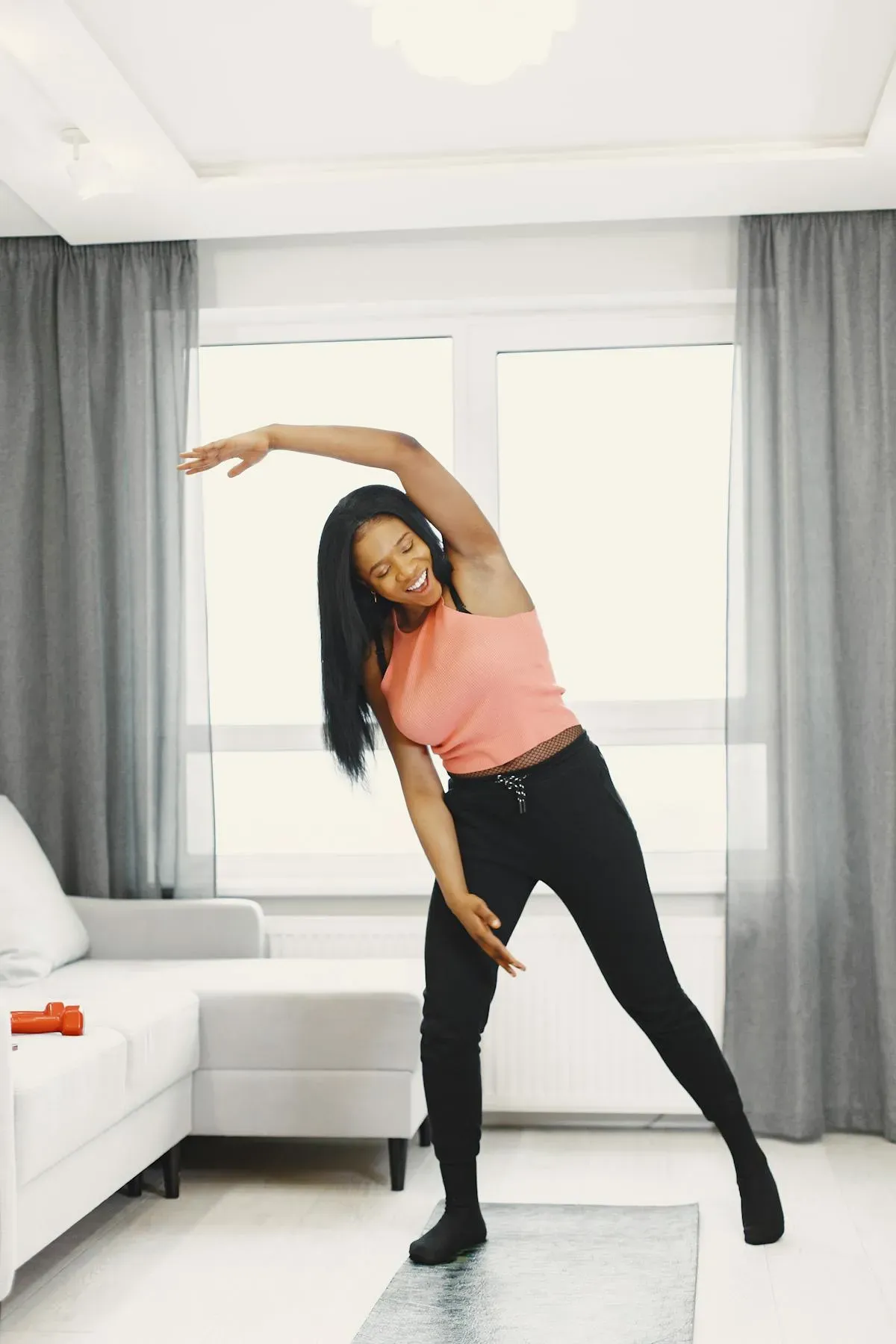 Photo: Gustavo Fring / Pexels
If you’ve tried every habit tracker and none of them stuck, the missing ingredient is usually that nothing was depending on you. Making a session into a small thing you don’t want to let down draws on the same psychology behind virtual pet apps for adults, pointed at movement instead of a to-do list, and aimed squarely at the consistency problem rather than the willpower one.
The takeaway
Female gym motivation isn’t a trait you’re missing or a quote you haven’t read yet. It’s a system you haven’t built, on top of barriers nobody told you were real. The gap between women and men is structural, gym anxiety is a normal response to a measured reality, and the start-stop cycle has a mechanism you can interrupt. Handle the anxiety by lowering exposure, often by starting at home. Make the reason yours instead of the mirror’s. Bundle the workout with something you crave, decide in advance with an if-then plan, shrink the minimum until a bad day can clear it, and protect a streak you’d hate to break. Do that, and motivation stops being the thing you wait for. It becomes a tailwind on an engine that was already running.
Frequently asked
- How do women stay motivated to go to the gym?
- Not by finding more willpower. The women who stay consistent build a system that runs on low-motivation days: a fixed time tied to a cue they already hit, a session small enough that a bad day can still clear it, and one form of accountability. They also deal with the real barriers, like gym anxiety and a packed schedule, instead of pretending those barriers are a personal failing.
- Why do I lose motivation to work out so easily?
- Because motivation is a feeling, and feelings expire. It rises with good sleep and a fresh resolution and crashes after a hard week, so any habit balanced on top of it tips over fast. The fix is to stop waiting for the feeling and design around its absence with a small non-negotiable minimum and a streak you would hate to break.
- How do I get over gym anxiety as a woman?
- Gym anxiety is common and not irrational. Research finds women report high rates of feeling watched and judged in gym spaces, so start by lowering exposure: train at off-peak hours, learn two or three machines so you never feel lost, or work out at home until the habit is solid. Confidence tends to follow competence, not the other way around.
- Is it better to work out at home or at the gym for motivation?
- Whichever one you will actually do twice a week. Home removes the biggest friction points women report, the commute, the cost, and the feeling of being on display, which is why it is often the more sustainable starting point. The gym offers equipment and energy, but only helps if you go. Pick the lower-friction option first and upgrade later.
- How long does it take to build a gym habit?
- For most people it takes a couple of months of fairly consistent training before showing up feels automatic, and the first several weeks are where most attempts die. Early on the goal is not intensity, it is keeping the chain alive on bad days with a minimal session until the habit can stand on its own.
- Do I need a workout partner to stay motivated?
- No, but you need some form of accountability. A partner is one version, and many women specifically prefer training with a friend for comfort and safety. A streak you will not break, a friend who gets a text after each session, or an app that notices when you skip all do the same job. Choose the one you will actually keep up.