How to Motivate Yourself to Go to the Gym

The hardest part of the gym is never the workout. It’s the forty minutes before it: the packing, the commute, the cold-start friction of walking through a door full of strangers when your body would rather be horizontal. If you’ve ever finished a session feeling great and still skipped the next one, you already know the problem isn’t the exercise. It’s getting yourself there.
This is a different question from how to motivate yourself to work out in general, which we cover in our guide on how to motivate yourself to work out. Here the obstacle is specific: the trip, the bag, the threshold, the post-work slump. So the tactics are specific too.
The short answer
Stop trying to feel motivated to go, and start removing the steps between you and the gym door. The people who go three times a week aren’t running on enthusiasm. They’ve made the trip almost automatic: a bag packed the night before, a route that doesn’t pass home, a fixed slot the rest of the day bends around. The friction of getting there is the real enemy, and you beat it by engineering it down, not by psyching yourself up.
Everything below is one way to lower that friction.
Why getting to the gym is the part that breaks you
It helps to know what you’re fighting, because it isn’t laziness. The trip to the gym is built to lose against your own brain.
The payoff (strength, energy, feeling at home in your body) lands weeks or months from now. The cost lands the moment you stand up: change clothes, find the bag, drive, park, walk in. Behavioral economists call the habit of overweighting immediate costs and underweighting distant rewards present bias, and the gym commute is almost a perfect trap for it. You pay the full price now and collect nothing until spring.
This is also why “remember your goals” rarely gets anyone out the door. The goal is real, but it’s too far off to win an argument against the very real appeal, right now, of just not leaving the house. After a full workday, the gap is widest. Your willpower is spent, the couch is right there, and the gym is a thirty-minute round trip you have to start from scratch.
So the real question isn’t how to want it more. It’s how to make leaving the house easier than staying on the sofa.
Step-by-step: get yourself out the door
Pack the bag the night before and put it by the door
The single most useful thing you can do for tomorrow’s gym trip happens tonight, when you still have energy to spare. Pack the bag: clothes, shoes, headphones, water, whatever you need. Then put it somewhere you physically cannot leave without seeing it, by the front door, or straight into the car.
This works because of a quiet rule of behavior: every extra step between you and an action is a place to quit. Searching for clean shorts at 6pm is a step. Realizing your headphones are dead is a step. Each one is a small off-ramp, and tired-you takes off-ramps. Remove them in advance, while motivated-you is still around to do the packing.
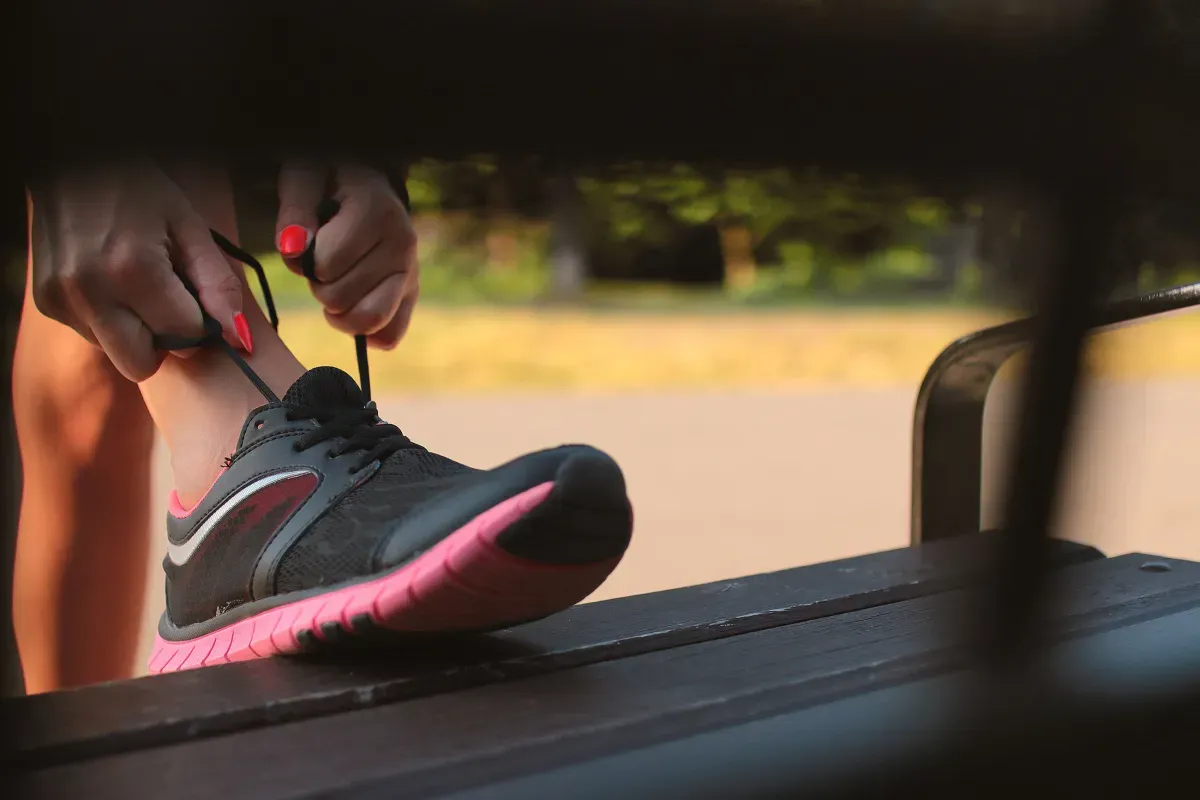 Photo: Jeshoots / Pexels
Don’t go home first
The couch is where the gym plan goes to die. If your route home passes your front door before it reaches the gym, you will sit down, and you will not get back up. Decide the order in advance: work, then gym, then home. Keep the bag in the car so home isn’t a required stop. If you work from home, change into gym clothes before you’d otherwise wind down, so leaving feels like continuing instead of restarting.
The principle here is sequence. Once you’re already in motion in the right direction, staying in motion is easy. The break in momentum, the sitting down, is what costs you.
 Photo: Olly / Pexels
Make an if-then plan instead of a vague intention
“I’ll go to the gym more this week” is the kind of plan that quietly evaporates. A specific one survives. Psychologist Peter Gollwitzer’s research on implementation intentions, simple “if X, then Y” plans that pin down exactly when, where, and how you’ll act, found a medium-to-large effect on follow-through across 94 separate tests (Gollwitzer & Sheeran, 2006).
So don’t plan to “go to the gym.” Plan: If it’s Tuesday and I clock out at 5:30, then I drive straight to the gym before going home. You’ve pre-made the decision, which means tired-you at 5:30 doesn’t have to win an internal debate. The version of you with energy already settled it.
Lower the bar to “just walk in”
Some days the full session feels like a wall. So shrink the commitment until it’s a door you can walk through half-asleep. Tell yourself you only have to get there, change, and do ten minutes. If you want to leave after that, you can.
You almost never will. The hard part was the getting-there, and you’ve already paid that cost. But even on the rare day you do bail early, you still made the trip, and the trip is the habit you’re actually building. We unpack why lowering the activation energy beats hyping yourself up in our guide to fitness gamification, but the gym version is simple: a tiny session you actually attend beats a perfect session you skip.
Bundle the trip with something you genuinely enjoy
This is the most evidence-backed tactic on the list. Take something you actually like, a specific podcast, an addictive audiobook, a playlist, and only let yourself have it on the way to and during the gym. Wharton’s Katherine Milkman ran a field experiment doing exactly this, restricting tempting page-turner audiobooks to gym sessions. The group given gym-only access went 51% more often than the control group (Milkman, Minson & Volpp, 2014, Management Science).
She calls it temptation bundling, and it fixes the exact timing problem at the root of all of this. The strength gains are months out, but the next chapter of the thriller is available the second you start the drive. You stop dragging yourself to the gym and start going to find out what happens next. Pick your bundle and guard it: the moment you let yourself binge it on the couch, the spell breaks.
Go off-peak until the place stops feeling strange
If the part that stops you is walking into a crowded room of people who look like they know what they’re doing, take the crowd out of the equation at first. Go mid-morning or early afternoon if your schedule allows, when the floor is half-empty. Walk a fixed, short route so you always know where you’re going. Familiarity is the cure for gym anxiety, and familiarity only comes from showing up enough times that the place turns boring. The early off-peak trips buy you that without the social cost.
Common mistakes
A few well-meaning habits make the trip harder, not easier.
- Going home “just to relax for a minute” first. There is no minute. Once you sit down after work, the gym becomes a negotiation you lose. Route around the couch entirely.
- Relying on a motivation hit. Hype videos and quote walls feel good for an hour and get you to the gym roughly never. If your system needs a pep talk to function, the friction is too high. Fix the friction, not the feeling.
- Setting a schedule you can’t sustain. “Gym five days a week starting Monday” usually becomes zero days by Wednesday. Two or three realistic trips beat five aspirational ones. Start small enough that it’s almost embarrassing, then add.
- Treating one missed trip as failure. Skipping a single day is noise. The damage is the story you tell about it: “I’ve blown the week, might as well quit.” One off day is a rest day. The only rule that matters is never skip twice in a row.
- Waiting for the perfect setup. The right shoes, the right program, a calmer week, Monday. Perfect conditions are procrastination wearing the costume of preparation. The bag you packed last night works fine today.
The one fix underneath all of it
Every tactic here is really one fix: giving your present-biased brain a reason to make the trip today, when the real reward is too far off to feel. Some days you’ll nail it. Other days the commute, the weather, or a late meeting wins and the trip just doesn’t happen. A single missed trip won’t hurt you. What hurts is the broken chain that tends to follow it, the week that quietly unravels after one skip. On those days, a short home session still counts and keeps the habit alive until tomorrow’s trip. For the bigger picture on building a routine that survives the bad days, see our pillar guide to gym motivation.
Frequently asked
- How do I motivate myself to go to the gym after work?
- Don't go home first. The couch is where the plan dies, so route yourself straight from work to the gym with the bag already packed and in your car or by the door. The decision to go was supposed to be made last night, not by your tired 6pm self. If the commute still wins, do a 5-minute session at home so the streak survives.
- Why do I struggle to go to the gym even when I want to?
- Wanting to go is a distant reward, and getting there is an immediate cost: the drive, the parking, the packing, the walking in. Your brain overweights the cost you pay now and discounts the benefit you get later. The fix isn't more willpower, it's removing steps between you and the door so 'not feeling like it' has less to fight.
- How do I get over gym anxiety so I actually go?
- Go at off-peak hours first (mid-morning or early afternoon if you can), walk a fixed short route through the floor, and give yourself permission to leave after ten minutes. Most gym anxiety fades once the place stops being unfamiliar, which only happens by going. Lowering the bar to 'just walk in' gets you past the threshold where the anxiety lives.
- Is it normal to dread going to the gym?
- Yes, and the people who go consistently mostly aren't excited to either. They've removed the decision: a fixed time, a packed bag, a route that doesn't pass the couch. They go on autopilot, not on enthusiasm. Dread usually attaches to the getting-there, not the workout itself, which is why most people feel fine once they're inside.
- What's the single best trick to actually get to the gym?
- Pair the gym with something you genuinely enjoy and only let yourself have it there: a podcast, an audiobook, a playlist saved for the drive and the session. In one field experiment this 'temptation bundling' raised gym visits by up to 51%, because it gives you a reason to go today instead of a payoff that's months away.