Gym Buddy & Workout Partner Apps 2026: What Works
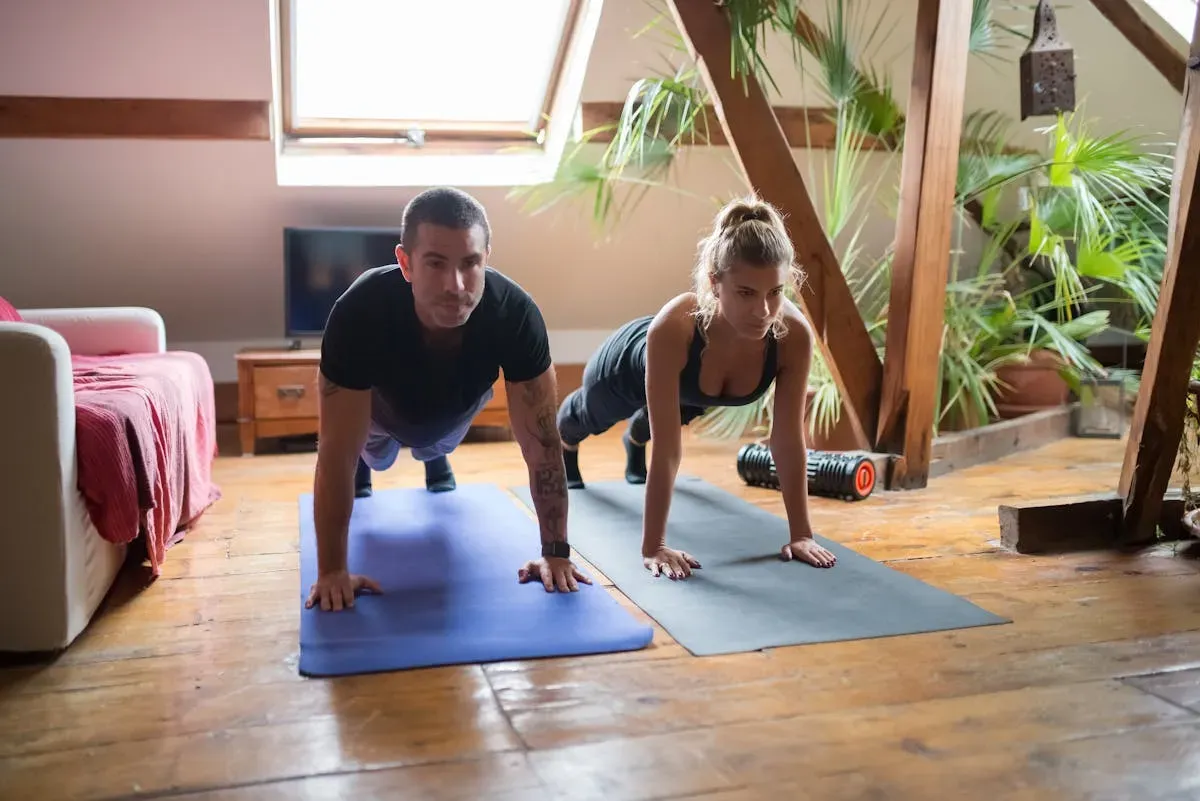
You already know the feeling. It’s 6pm, you told yourself you’d train, and the couch is winning. A gym buddy fixes this better than almost anything. Someone is waiting, so you go. The problem is that most people who want to get in shape don’t have a reliable training partner. Friends flake, schedules clash, or you simply work out at home where there’s nobody to spot you anyway.
That’s the gap “gym buddy app” tries to fill, and it’s worth being honest about what these apps actually are. Some find you a real human to train with. Some hold you accountable without involving another person at all. And a few hand you a companion that grows as you train, which sounds gimmicky until you’ve raised a Duolingo streak and understand why it works. They solve the same underlying problem (don’t train alone, train accountable) through completely different mechanisms.
This is a roundup of the ones worth your time, with a note on who each suits. I’ll say which I’d actually pick for a few common situations, including the one most guides skip: people who train at home and are never going to drive to a gym to meet a stranger.
 Photo: Annushka Ahuja / Pexels
Quick picks
| If you want… | Best app | Platform | Price |
|---|---|---|---|
| A real human partner at your gym | FitFriends | iOS | Free |
| A local partner for lifting, running or climbing | Actively | iOS, Android | Free + $2.99/mo |
| Accountability with a partner you already have | Sweatmates | iOS, Android | Free download, logging needs Pro |
| Social proof from people who already know you | Strava | iOS, Android, web | Free / $11.99 mo |
| Hard accountability with money on the line | stickK | iOS, Android, web | Free (you set stakes) |
| A pet that grows as you lift | Reppy | iOS | Free + Pro |
| A habit pet for any goal, not just gym | Habbie | iOS | Freemium |
| A home-workout companion, with co-op raids for two | TrainWiz | iOS, Android | Free + premium |
FitFriends: find a partner at your actual gym
FitFriends is the closest thing to a dating app for training, and it is also the clearest illustration of why this category struggles: its App Store listing shows 2.8 stars from 14 ratings, with no release since August 2024. You build a profile, list your gym and your goals, then swipe through other members nearby until you find someone whose schedule and training style line up. When you both match, you message and arrange to meet.
What it does well
The matching is gym-specific, which matters more than it sounds. Telling the app where you train means you get matched with people already in the building when you are, not someone across town you’ll never coordinate with. The profiles cover the basics that decide whether a partnership works: what you train, when, and roughly your level. The App Store listing positions it plainly as a way to “find your perfect workout partner” and someone to “share the pain, and the gains with.” (App Store listing)
Where it falls short
Every matchmaking app lives and dies by its user base. In a major city with a busy commercial gym, the pool runs deep enough to find someone you click with. In a quiet gym or a smaller town, you’ll scroll three profiles and hit the bottom. It’s free, and the listing shows no in-app purchases at all. The two most visible reviews describe the same problem from different angles: nobody at their gym, or anywhere in their area, was on it.
Who it’s for
People who genuinely want a human partner, train at a popular gym, and live somewhere dense. If that’s you, this is the most direct tool on the list.
Actively: a platonic partner-finder beyond the gym
Actively (App Store listing) plays in the same lane as FitFriends but casts wider. You pick activities, from lifting and running to hiking, climbing and yoga, then swipe on people nearby who share them. The listing is blunt about what it isn’t: “This isn’t a dating app.”
How it handles safety
Chat only opens once you’ve both swiped yes. The rules are the strictest of any app on this list: your location shows by city only, image messaging is switched off, the app is 18+, and anyone who treats it as a dating app gets banned. It’s free with ads; a $2.99/month premium tier adds unlimited swipes, shows who liked you and removes the ads.
The honest catch
Same structural weakness as every partner-finder. Density is everything: a partner-finder can work in London or Los Angeles and be nearly useless in a town of 30,000. There’s also the awkward reality that meeting a stranger to exercise is a real barrier for a lot of people, no matter how good the matching is. If the idea makes you wince, a partner-finder isn’t your answer. Actively had 19 ratings on the US App Store and 100+ downloads on Google Play in October 2026, so expect a small pool even in a big city.
Who it’s for
People in bigger cities who want a partner for more than one kind of training and like strict platonic rules. Casual home exercisers, less so.
Strava: accountability through people who already follow you
Strava isn’t a gym-buddy app in the matchmaking sense, but it earns a place here because of how it creates accountability. You don’t meet strangers. You share your activity with friends who already follow you, and the quiet pressure of they’ll see if I skipped does real work.
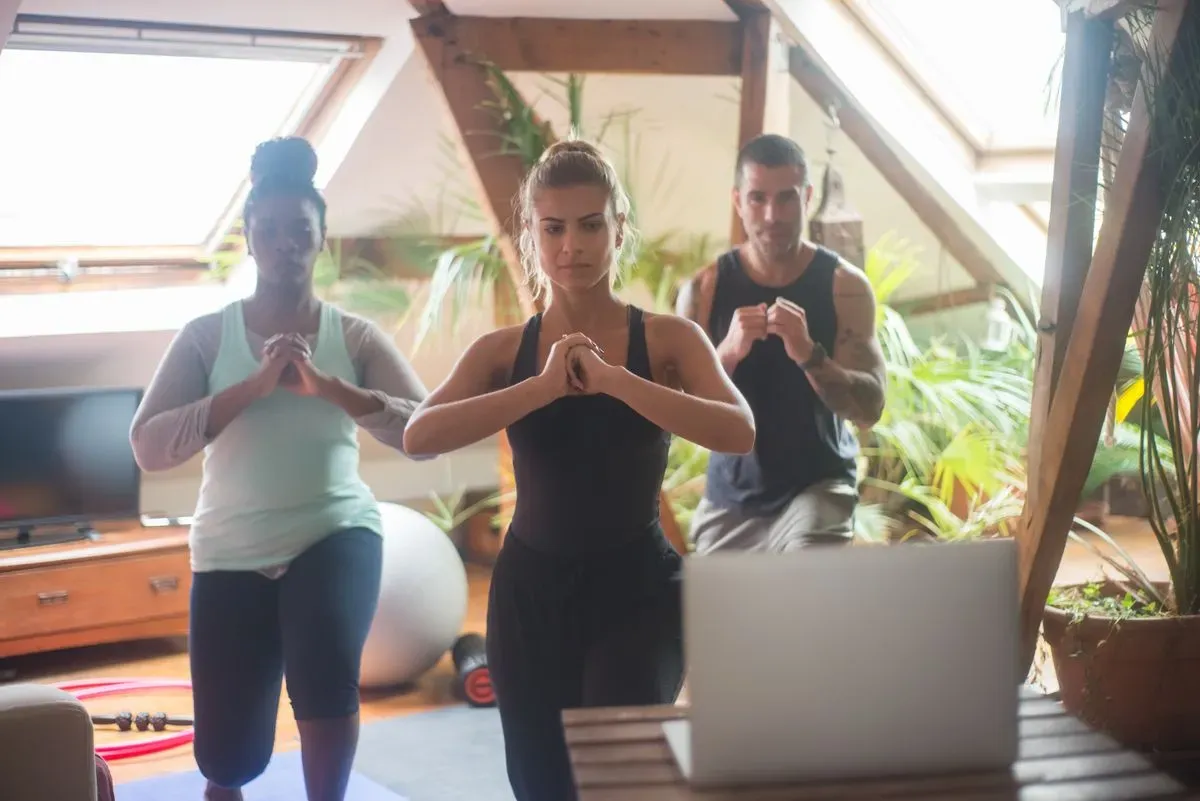 Photo: Kampus Production / Pexels
How it works
Every run, ride, or logged workout posts to a feed where friends leave kudos and comments. Segments let you compare your time on a stretch of road against friends and locals, and clubs group people by sport or location. The social loop is the product. Strava’s own newsroom puts the community at 195 million athletes, a scale no indie matching app comes close to. (Strava newsroom)
What’s free and what isn’t
Core activity tracking, the social feed, kudos, comments, clubs, and basic segment views are free. The subscription, $11.99/month or $79.99/year in the US (App Store listing), unlocks filtered segment leaderboards, suggested routes, personal heatmaps, training plans and Group Challenges (Strava Help Center). Group Challenges have been a subscriber feature since they launched in 2021; at launch, free members could create or join three before Strava asked them to subscribe. (BikeRadar)
Who it’s for
Runners and cyclists, first and foremost. The activity tracks itself via GPS, so sharing is effortless. It’s clunkier for home or gym strength work, where you’d be logging manually. If your training is cardio and you have friends on the app, it’s one of the strongest accountability tools that exists, and most of what you need is free.
Sweatmates: a workout partner app for couples and friends
Sweatmates bypasses the awkwardness of finding a stranger to train with. You bring your own partner. It runs on the social pressure of sharing a goal with someone you already know and talk to every day.
The mechanics of showing up together
According to developer KnightCollar LLC, Sweatmates is a simple accountability app for people who want to stay consistent. The app doesn’t track stats or metrics. It focuses on showing up together. You and your partner each pick how many days a week you want to exercise.
Logging a session requires a quick photo through a feature called SweatCam. Your partner sees this visual proof immediately. If you forget to snap a picture, a tool called Pinky Promise lets you ask your partner to count the workout anyway. They get the final say.
Missing your weekly goal means you owe a small wager, like buying dinner or finishing a chore. Hitting the goal means you’re safe. The wager is small on purpose; we cover why small stakes and visible streaks change behavior in a separate guide. Lab research suggests even a partner on a screen helps. In a small study by Irwin et al. (2012), 58 young women cycled on stationary bikes at 65% of their heart-rate reserve on six separate days. Those who rode alone lasted 10.6 minutes on average, against 19.77 minutes for those riding alongside a virtually present partner. When the team’s score depended on whoever stopped first, the average rose to 21.89 minutes.
Version 1.4.3, released in September 2026, added Lock-In Mode. Once a week, a partner who has already finished their workout can lock the other person’s distracting apps until they exercise too. The release notes describe it as “Supportive? Yes. Slightly toxic? Also yes.”
What you’ll pay
The download is free, but the listing states that workout logging requires a subscription. Sweatmates Pro in-app purchases range from $4.99 to $59.99 on the US store. One App Store reviewer in August 2026 said a year cost about $30, and that the daily highlight was seeing their boyfriend’s photos and the little comments he left under theirs.
The main limitations
There is no partner matching. Everything in the app assumes you bring someone you already know, so if you want to meet locals, you’ll need a different tool. The gap in scale says a lot about which problem is easier to solve. FitFriends, covered above, matches strangers at the same gym and had 14 ratings with no update since August 2024. On October 14, 2026, Sweatmates sat at #155 in Health & Fitness on the US App Store, with 4.9 stars from 14K ratings. It’s on Google Play too, under the name Sweatmates: Couples Fitness.
Who it’s for
Couples and long-distance friends who want to keep each other active will get the most out of this. If you generally respond well to habit apps where a party keeps you honest, this is the same idea shrunk to a party of two. It suits people who care more about proving they left the house than about tracking split times.
stickK: put money on the line
stickK takes accountability somewhere most apps won’t: your wallet. It was founded at Yale by economist Dean Karlan, law professor Ian Ayres and then-MBA student Jordan Goldberg, and it runs on a single idea: a commitment contract with real stakes. (About stickK)
The mechanism
You set a goal (“strength train three times a week for eight weeks”). You stake money. You name a referee, a friend who verifies whether you actually did it. And you choose where the money goes if you fail, with the brutal option of an “anti-charity,” an organization whose mission you hate. Miss your goal and your cash funds the thing you can’t stand. stickK says its methodology is empirically shown to make people up to three times more likely to hit their goals. (stickK FAQ)
Honest take
This is the most psychologically aggressive tool here, by design. Loss aversion is one of the most reliable forces in behavioral science. People work harder to avoid losing something than to gain the same thing, and stickK weaponizes that directly. The downside is friction: it’s a contract framework, not a polished daily companion, and its iOS app sits at 2.6 stars from 26 ratings. It also does nothing to make training itself enjoyable. It just makes quitting expensive.
Who it’s for
People who know they respond to stakes and want a sharp tool rather than a cute one. If a streak doesn’t move you but the thought of donating $100 to a political cause you despise lights a fire, this is your app.
Reppy: a lifting log with a pet attached
Reppy (App Store listing) sits between a workout tracker and a gym buddy. It’s a strength-training log where a creature, your “Reppy,” grows as you train. The download is free, with an optional Reppy Pro subscription at $2.99 a month or $29.99 a year in the US.
Features
You log sets, reps, and weights in a clean, lifting-focused system, with built-in tools like a plate calculator, total volume tracking, and 1RM estimates. The gamification layer is where it becomes a buddy: your Reppy levels up as you train, you build streaks, unlock achievements, and customize its look with cosmetics. There’s a friend leaderboard (share a code, add friends, and compete on weekly volume, frequency, and streaks). (App Store listing)
The trade-offs
Everything is manual entry, which is honest (no fake step counts) but means it lives or dies by your willingness to log every set. It’s iOS-only and lifting-specific, so home-workout and bodyweight crowds aren’t really the target. The pet is more skin than substance compared to dedicated companion apps. It grows, but it doesn’t ask much of you.
Who it’s for
Lifters who track their workouts anyway and want a light game layer plus a friend leaderboard.
Habbie: a habit pet that happens to cover the gym
Habbie (habbie.app) is a 90s-style pixel pet you keep alive by hitting your habits. It’s the most beginner-friendly companion here and the one least tied to lifting specifically.
How it works
You create habits (a gym session, ten minutes of stretching, anything) as timers, counters, or checklists. Hit your goal and your Habbie leaves you a gift to open. Miss it and it leaves a mess nobody wants to clean up. It pulls steps, walking and cycling distance, exercise minutes and other activity data from Apple Health, supports Apple Watch complications and home-screen widgets, and lets you decorate your pet’s space. The base app is free, with Habbie Plus running $4.99/month or $34.99/year. (App Store listing)
The honest read
The gift-and-mess loop is charming and the pixel art has real personality. But Habbie isn’t a fitness app. It’s a general habit tracker, so the gym is just one of many things it nudges. If your only goal is training, a lot of it is overhead. If you want one pet watching over a handful of habits, that breadth is the appeal.
Who it’s for
People who like Tamagotchi-era nostalgia and want a gentle pet tied to several habits, not just workouts.
How to find a gym buddy when the apps come up empty
Sometimes a partner-finder turns up nobody nearby, because your town doesn’t have enough users. Then you’re back to finding a partner the old way.
Starting with the people who train where you do
A good training partner often already exists in your daily routine. WebMD suggests asking your current friends, neighbors, and co-workers. You can also strike up a conversation with the regulars at your own gym. If you work with a personal trainer, it’s worth asking about group training or whether they can recommend a partner.
There’s some evidence the search pays off. An 8-week randomized online study by Rackow, Scholz and Hornung asked the intervention group to find a new exercise companion and train with them regularly. In that group, emotional support from the companion predicted self-efficacy, self-monitoring and action planning, and was indirectly linked to more exercise. Practical support showed no effect. In that study, at least, a buddy who cheered you on counted for more than one who spotted your bench press.
Group classes and local Meetup networks
If your immediate circle is empty, local clubs are the next place to look. Meetup’s Workout Buddies topic page showed 15,109 members across 67 groups worldwide in October 2026. The largest were Geneva Fitness, workout and yoga (2,677 members), FitFam Singapore (1,631) and a breakdance workout group in Berlin (1,589).
With 67 groups for the whole world, most towns won’t have one. Meetup lets you start a new group yourself, and the topic page links to related ones such as Home Based Workouts, Outdoor Workout Bootcamp and Crossfit Training. Joining an established group helps most when the harder part is getting yourself to the gym at all.
What to check before your first session
You don’t need a clone of yourself to have a good workout. WebMD lists several qualities worth looking for, from motivation to reliability. The practical ones are easy to check before a first session. You need someone who trains at the same time of day you do, ideally from a similar fitness level. Your goals should be “roughly, but not exactly, on the same page.” A powerlifter and a marathon runner will struggle to share a squat rack.
Basic safety when meeting a stranger to train
Taking a match from an app into the real world calls for some caution. It’s one reason many women prefer training with a friend for comfort and safety. Victoria Police advises having a safety plan when first meeting up with a stranger, “no matter the reason for meeting”: choose a place with lots of people around, meet in daylight and share your location with friends.
A staffed commercial gym at a busy hour already has plenty of people around. An empty trailhead or a stranger’s garage gym does not.
Victoria Police also suggests reading an app’s community guidelines and terms of service before signing up, and checking how the platform will support you if something goes wrong. Of the partner-finders above, Actively spells out its rules most plainly in its App Store listing.
How to choose the right gym buddy app
Strip away the marketing and there are only two questions that matter.
First: do you actually want a human partner, or do you just want to stop training alone? They’re not the same. A human partner means coordinating schedules, meeting strangers, and depending on someone who can flake. If you genuinely want that and live somewhere dense, Actively or FitFriends are the right call. If the real problem is that you can’t make yourself show up, a person isn’t required, and might be one more thing to flake on.
Second: what kind of pressure works on you? This is the part people get wrong. They download a matchmaking app when what they respond to is a streak, or they install a cute pet when what they actually need is money on the line. Be honest about your own wiring:
- If social visibility keeps you honest, Strava’s feed of people who already know you is hard to beat.
- If fear of loss is your lever, stickK’s financial stakes are the bluntest tool that exists.
- If a streak and progress you can see pull you back, a companion app does that without involving another person.
Most people who train at home fall into that last bucket, and it’s the most underserved. You’re not going to drive across town to meet a gym partner. You need something that makes showing up in your living room feel like it counts. That’s exactly the psychology behind fitness gamification: closing the gap between effort today and results months away.
Where TrainWiz fits
If you train at home and the home-workout apps left you cold, this is the entry on the list built for you. TrainWiz is a home-workout app with a companion that levels up off your real workouts. The simplest way to describe it is Duolingo for at-home workouts. You do bite-sized sets, your buddy grows, and a streak built to survive an ordinary week keeps you coming back.
It leans on the mechanics that genuinely move the needle: a companion that depends on you beats willpower aimed at yourself, small quests lower the activation energy that kills most attempts, and a forgiving streak turns every day into a decision you don’t want to lose. It won’t find you a human spotter, and it isn’t trying to. What it does have, since version 2.0, is Co-op Raids: you and a friend fight one boss together, and both sets of reps hit the same HP bar (App Store release notes). Sending a co-op invite is part of Pro; accepting one is free (Google Play listing). It’s for the millions of people whose actual barrier isn’t finding a partner. It’s getting off the couch when nobody’s watching. If that’s the problem you keep losing to, see our deeper guides on how to motivate yourself to work out and the wider world of virtual pet apps for adults.
One reality check before you download anything: the best gym buddy app is the one whose accountability style fits how your brain works. A partner app you stop opening helps nobody. For building the habit itself, our gym motivation guide covers the science underneath all of this.
Frequently asked
- What is the best gym buddy app?
- There's no single winner, because 'gym buddy' means two different things. If you want a real human partner to train with, Actively or FitFriends match you with people nearby, though both have small user bases. If you already have a partner or friend, Sweatmates keeps you both accountable. If you train alone and just need something to keep you showing up, an accountability app like stickK or a companion app like TrainWiz fills the gap better than a matchmaking app ever will.
- Is there an app to find a gym partner near me?
- Yes. Actively and FitFriends are built specifically for this: you set up a profile, browse people near you (Actively) or at your gym (FitFriends), and chat once you both match. They work best in dense cities with active user bases. In smaller towns the pool thins out fast, which is the main reason these apps frustrate people.
- What's the difference between a gym buddy app and a workout tracker?
- A tracker like Hevy or Strong logs your sets and reps. A gym buddy app is about the social side of training: finding a partner, sharing progress, or being held accountable. Some apps blur the line: Strava is a tracker with a strong social layer, and Reppy is a lifting log with a pet and a friend leaderboard bolted on.
- Do I need a workout partner to stay consistent?
- No, but you do need accountability of some kind. A human partner is one version of it. A streak you don't want to break, a friend who can see whether you showed up, or a companion that depends on you are all forms of the same thing. Pick whichever one you'll actually keep up with.
- Are gym buddy apps free?
- Most have a free tier. FitFriends is free with no in-app purchases. Actively is free with a $2.99/month premium tier. Sweatmates is free to download but needs a subscription to log workouts. Strava, Habbie and Reppy are freemium. stickK is free and only takes your money if you fail your own contract. Read the fine print before you assume the good features are included.