Best Virtual Pet Games to Play in 2026
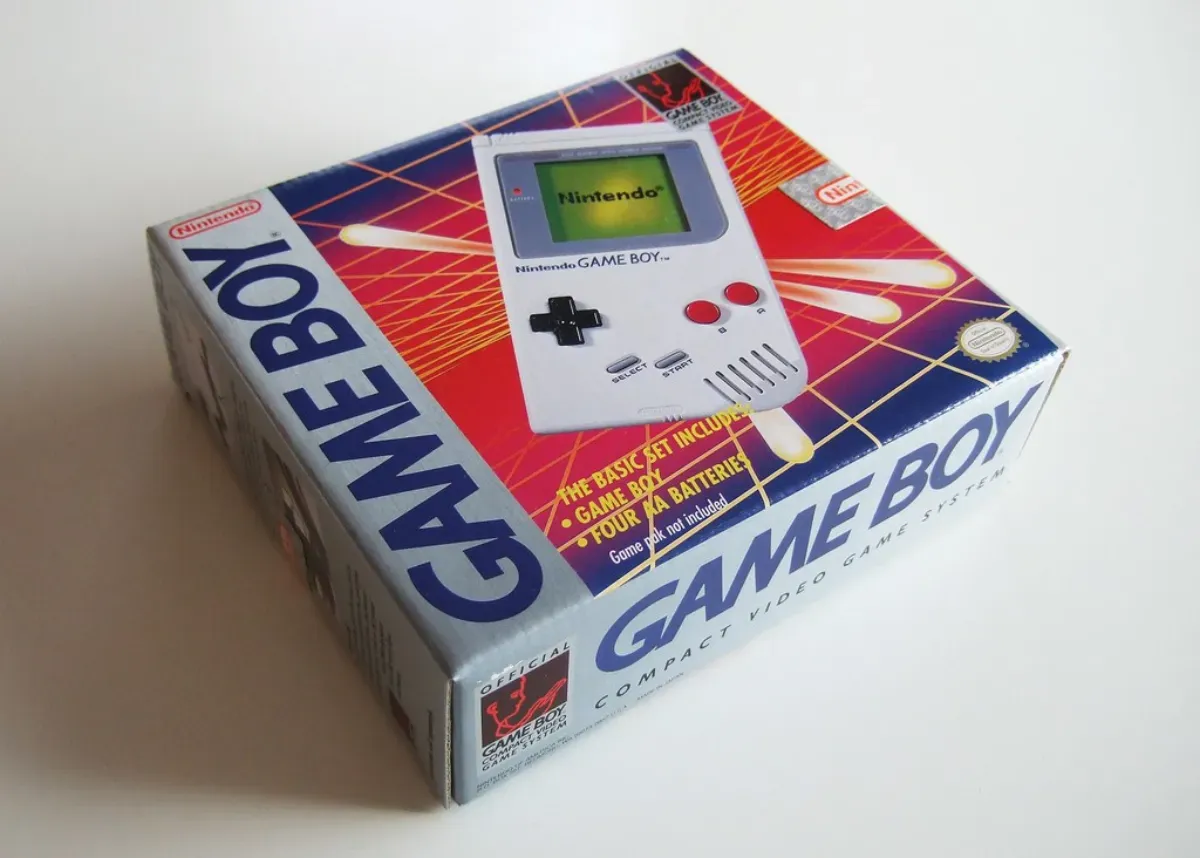
Photo by bochalla on Openverse
Short version: most virtual pet games are for play, and that is a perfectly good reason to download one. Neopets and Pou will scratch the nostalgia itch. My Tamagotchi Forever is the polished mobile pick. If you want a pet that does more than sit there waiting to be tapped, a smaller group ties the care loop to a real habit, and that is where it gets interesting.
I have played most of these. Some I kept for months. A couple I deleted in a week. Below is the honest breakdown of what each one is, who it suits, and the trap that catches a lot of people who download something cute and expect it to fix their life. Spoiler: the cute pet alone never does.
Quick picks
| Best for | Game / app | Platform | Price |
|---|---|---|---|
| Browser nostalgia and a whole world to explore | Neopets | Web | Free + premium |
| Pick-up-and-play feed-clean-fun loop | Pou | iOS, Android | $1.99 + IAP |
| Faithful, official Tamagotchi care | My Tamagotchi Forever | iOS, Android | Free + IAP |
| A pet that grows when you do self-care | Finch | iOS, Android | Free / Plus |
| A companion that levels up off real workouts | TrainWiz | iOS, Android | Free + premium |
How virtual pet games split into camps
Before you install anything, work out which camp you are in. The genre looks unified from the outside, but the games want very different things from you, and picking the wrong camp is how you end up disappointed.
Nostalgia and play
These recreate the original feed-clean-play loop for its own sake. The pet is the whole product. Pou, Neopets, and the various Tamagotchi web emulators live here. There is no self-improvement angle and no pretense of one. You tap, the creature is happy, you feel a little better. That is the entire transaction, and for a lot of people it is enough. For the phone versions of that loop, our guide to Tamagotchi apps walks through the official app and the closest modern picks.
Augmented reality and simulation
A newer breed uses your camera and procedural generation to make the pet feel like it shares your room. Peridot was the flagship, and its closure at the end of August 2026 leaves the camp without one. The tech raised immersion well past a 2D blob on a screen; the business underneath it did not hold.
Habit and fitness companions
The smallest and most useful camp. Here the pet’s growth is tied to a real-world action you want to repeat, so the creature only thrives if you do the thing. Finch ties it to self-care. TrainWiz ties it to workouts. The pet stops being a toy and becomes a delivery mechanism for a habit you would otherwise skip. We go deep on this whole category in our guide to virtual pet apps for adults, which is worth reading if you are leaning this way. For a straight shortlist of what to install, our best virtual pet apps roundup ranks the current options.
A short history, because it explains everything
The whole genre traces back to one egg-shaped keychain. The original Tamagotchi launched in Japan on November 23, 1996, and reached the United States on May 1, 1997. It ran on a basic chip with three buttons. You fed it, cleaned up its mess, and kept it alive, or it died and you started over.
The demand was almost comic. Bandai sold 400,000 units in 1996, then 10 million by July 1997, and by spring 1998 nearly 40 million units had sold worldwide, split roughly 20 million in Japan and 20 million overseas. At the peak, Bandai employees were reportedly told not to carry bags with the company logo for fear the devices would be stolen. (Tamagotchi, Wikipedia)
 Photo by DocChewbacca on Openverse
That feed-clean-play loop is the DNA of every game on this list. What has changed over thirty years is the wrapper, not the core. The wrapper got browsers, then phones, then cameras, and lately it got pointed at habits.
From keychain to browser to phone
Neopets carried the loop online. It first launched on November 15, 1999, as a free-to-play virtual pet browser game set in a world called Neopia. It is much smaller now than at its mid-2000s peak, but it is growing again: by April 2024 the platform had tripled its monthly active userbase from 100,000 to 300,000, under independent ownership since a management buyout in July 2023. (Neopets, Wikipedia) Then smartphones arrived and the loop got a third home in your pocket, which is where most virtual pet games for adults now live.
The nostalgia picks
If you want the warm, low-stakes feeling and nothing more, start here. These are the comfort food of the genre.
Neopets
Neopets is the closest thing the genre has to a full world. You adopt pets, but the real pull is everything around them: shops, games, a stock market, collectible items, and a sprawling map of Neopia to poke around in. It has run for over twenty years and still has a devoted player base, partly nostalgia and partly because few games offer that much to explore for free.
The honest read: it shows its age in places, and the modern app has had a bumpy ride compared to the classic browser version. But as a free, deep, do-what-you-want world built on a virtual pet, nothing else quite matches it.
Pou
Pou is the virtual pet most people have touched without remembering the name. It is a brown blob alien designed by Paul Salameh and released in 2012, and it has reached an estimated 100 million downloads across platforms, ranking among the most downloaded games of 2014. (Pou, Wikipedia) You feed it, clean it, play mini-games to keep it entertained, and let it sleep. Caring for it earns coins for outfits and wallpapers.
The honest read: Pou asks nothing of you and improves nothing in your life, and it is completely at peace with that. It costs $1.99 on the US App Store, runs on almost anything, and is perfect for killing ten minutes. If you want a toy and only a toy, this is the one.
Browser pets you can play without a download
Playing in a browser solves the friction of app stores. There’s nothing to install: you open a new tab and your creature is waiting. It suits people who want something undemanding on a second monitor while they work.
Tamaweb, for a pet in a tab
If you want the purest digital pet loop without installing anything, Tamaweb is the answer. It’s a free browser game from an indie developer. There’s nothing to download and no account to make.
The game runs entirely in your browser window and mirrors the traditional Tamagotchi-style experience: you feed it, clean up after it, and play simple mini-games. There’s a day-night cycle, and the pet evolves over time. It’s a quiet, self-contained loop.
Neopets and Flight Rising
Sometimes a single pet feels too small. The internet has a long history of sprawling virtual pet sites that focus on breeding and trading.
Neopets, covered in the nostalgia picks above, is the classic example: free in the browser, with an optional paid currency and an interface that wears its two decades openly.
For a more polished alternative, Flight Rising narrows the focus entirely to dragons. Players breed dragons for specific traits through a genetics-driven system, dress them in apparel, run coliseum battles, and trade the rare ones in a busy player economy. Like Neopets, it’s free to join, with an optional gem marketplace.
Browser game or app?
The right choice depends on your daily routine. Browser pets live neatly alongside your email and spreadsheets, and you check on your dragon or blob between meetings without installing a thing.
Phone apps excel at mobility, and they’re better for daily check-in reminders on the go. If you’re exploring virtual pet apps for adults to help build a habit, a phone app will actively notify you. A browser tab waits for your attention. An app taps you on the shoulder.
The modern mobile picks
These are the polished, current mobile virtual pet games. More production value, more reasons to keep opening them.
My Tamagotchi Forever
If what you actually miss is the Tamagotchi, this is the real thing, made by Bandai Namco rather than a knockoff. You raise a Tamagotchi through its life stages by feeding it, washing it, and putting it to bed, and care quality steers how it evolves. There is a town to explore, mini-games for coins, and an augmented reality mode that drops TamaTown onto a real surface through your camera. (My Tamagotchi Forever, App Store)
The honest read: it is faithful, charming, and free with in-app purchases for cosmetics. It is not trying to improve your life, and that is exactly the appeal for a nostalgia trip.
Peridot
Peridot was the best argument that virtual pet simulation games had moved on, and it is about to disappear. Built by Niantic, the studio behind Pokemon GO, it launched globally on May 9, 2023. It is no longer a Niantic product: the IP and its development team moved to Niantic Spatial when the Scopely deal completed in May 2025, and in April 2026 Niantic Spatial announced the game shuts down on 31 August 2026. Do not start a pet you will lose in days. You raise procedurally generated creatures called Dots from infancy to adulthood through feeding, petting, and games like fetch, and adult Dots can be bred at real-world locations to produce unique offspring with their own genetic code. The augmented reality uses computer vision so Dots can be occluded by real objects and react to things like flowers or water. (Peridot, Wikipedia)
The honest read: the tech is genuinely impressive and the breeding system gives it legs that a simple care loop lacks. It also leans on in-app purchases, and the AR is best outdoors, so it is less of a couch game than the others here.
When you want the pet to do a job
Here is where I get opinionated. Every game above is built for play, and play is fine. But a lot of people download a cute pet hoping it will quietly fix a habit, and a nostalgia pet cannot do that. Pou depends on you tapping Pou. That builds a tapping habit and nothing else. If your real goal is reading more, sleeping better, or actually working out, you need a pet whose survival is wired to that exact action.
That is not a marketing line. It rests on real behavioral science. Caring for something that depends on you triggers loss aversion, one of the most reliable findings in the field. Kahneman and Tversky’s 1979 prospect theory, the most cited paper ever published in Econometrica, showed that the value function for losses is steeper than for gains, so a loss looms larger than an equivalent gain. (Prospect Theory, Kahneman & Tversky 1979, Econometrica via Wikipedia) A sad or stalled pet is a small loss you can prevent, so you act to prevent it.
There is a second piece worth knowing. BJ Fogg’s behavior model says a behavior happens when motivation, ability, and a prompt land at the same moment, and his counterintuitive point is that motivation is the least reliable lever because it swings around. (Fogg Behavior Model, bjfogg.com) A pet that nudges you is a prompt you can engineer into your day, which beats waiting to feel motivated. We unpack how all of this powers a workout streak in our piece on fitness gamification.
Finch, for self-care
Finch is the clearest proof the Tamagotchi loop scales to adults. You get a customizable bird, but the bird grows from you taking care of yourself, not from you feeding it. Daily check-ins, mood tracking, guided breathing, journaling, and small self-care goals all feed its growth. It carries a 4.9-star rating from over 700,000 reviews and an Apple Editors’ Choice award, and it is free with an optional Finch Plus subscription. (Finch, App Store)
The trade-off is breadth. Finch covers moods, journaling, and gentle wellness all at once, so a specific goal like finishing a workout is one item among many rather than the whole point. If you like the idea but want to compare options, we rank the nearest competitors in our guide to apps like Finch.
TrainWiz, for workouts
If your barrier is not stress or journaling but simply moving your body, this is the niche TrainWiz fills. It is a home-workout app with a companion that levels up off your real workouts, not off taps or check-ins. The simplest way to describe it is Duolingo for at-home workouts. You do short, bite-sized sets, your buddy grows because you actually trained, and the streak is built to survive an ordinary week instead of punishing you for one missed day.
I am not going to call it the best virtual pet game, because it is not really a game and it is not trying to win on cuteness. What it does is tie the care loop to the one habit most of these apps leave on the table. The pet depends on the thing you are trying to make automatic, which is the whole reason to point this mechanic at fitness rather than leaving it general.
 Photo by qubodup on Openverse
If the couch keeps winning, a companion that reacts to whether you trained is a better prompt than willpower. We cover the psychology in our guides on how to motivate yourself to work out and gym motivation, and if you would rather have a real human in the loop, our roundup of the best gym buddy apps covers that side.
The biggest virtual pet games were never on your phone
A reader searching for virtual pet games rather than virtual pet apps is usually looking for exactly this wider field. The phone app stores are crowded with basic tap-to-feed timers. Dedicated gaming platforms offer something much larger. The two biggest virtual pet games by audience were never phone apps at all. One sold on a handheld console. One lives inside Roblox. If you just want a quick distraction, our shortlist of the best virtual pet apps is the shorter route. But to understand the genre, you have to look at the giants.
Nintendogs and the console era
Nintendogs is a 2005 pet simulation video game developed and published by Nintendo for the Nintendo DS. The scale of its success remains unmatched. All versions of the game have sold a combined 23.96 million copies worldwide as of 31 March 2016. That specific sales figure makes it the best-selling virtual pet game ever released. The demand was clearly massive. Players wanted a dedicated digital companion, and they were willing to buy specific hardware to get one. It is the same impulse that sold keychain pets by the million, covered in our guide to virtual pet toys. Nintendo eventually expanded the concept for newer hardware. Nintendogs + Cats is a 2011 pet simulation video game developed and published by Nintendo for the Nintendo 3DS. That sequel extended the series to a new generation of handheld consoles. As of 31 December 2015, the game has worldwide sales of 3.99 million. The numbers dropped from the original peak. Still, the audience remained substantial.
Adopt Me and the Roblox economy
Adopt Me! is a massively multiplayer online role-playing game developed and published by Uplift Games on the online game platform Roblox. The audience metrics dwarf almost everything else in the modern genre. It surpassed over 40.8 billion visits as of November 2025. The highest number of concurrent players Adopt Me! has achieved is 1.92 million. Players enter a vast digital space to raise their creatures. The core progression is strictly defined. Pets hatch from eggs and grow through specific life phases. They start as a newborn. They move through junior, pre-teen, teen, and post-teen stages. Finally, they reach the full-grown stage. The massive volume of visits proves that this structured growth cycle holds player attention.
Peridot and the end of the AR experiment
We also have to look at recent closures to understand the current market. The augmented reality pet experiment is closing rather than thriving. Peridot is a media franchise originally created by Niantic, Inc. It is currently owned and operated by Niantic Spatial. It is no longer a Niantic product. When the Scopely deal was completed in May 2025, the Peridot IP and its development team were transitioned to the newly formed company Niantic Spatial. The corporate transition did not save the game. In April 2026, Niantic Spatial announced that the mobile game would be shut down on 31 August 2026. That gives the title a lifespan of just over three years after its global release. Anyone who reads an older recommendation for Peridot should not download it now. The project is shutting down entirely.
How to actually pick one
One rule covers it. Match the pet’s care loop to what you want out of the next month.
Be honest about your goal
Want a toy to fiddle with on the train? Pou or My Tamagotchi Forever. Want a world to disappear into? Neopets. Want a pet that nudges your mental health or your training? Finch or TrainWiz. The mistake is downloading a nostalgia pet and expecting it to drag you to a workout it was never wired to touch.
Don’t overpay for a pixel
Almost every game here has a generous free core, so try before you subscribe. Neopets is free to enjoy fully, and Pou is a one-off $1.99. Finch and TrainWiz give you the real loop without paying, and the subscription only unlocks extras. Play for a week first. If you are still opening it on day seven, then it earned your money. Most virtual pet games you download on a whim get forgotten by day three, and there is no shame in that, but do not pay for the privilege.
Frequently asked
- What are the best virtual pet games right now?
- For nostalgia, Neopets and Pou still deliver the classic care loop. For modern mobile, My Tamagotchi Forever is the polished pick. If you want a pet tied to a real habit instead of pure play, Finch handles self-care and TrainWiz ties a companion to actual workouts.
- Are there virtual pet games for adults?
- Yes, and several are built for adults specifically. Finch is a self-care app used heavily by people in their twenties and thirties. The wider trend takes the Tamagotchi loop adults grew up with and points it at grown-up goals like sleep, journaling, or exercise instead of just feeding a pixel.
- What was the first virtual pet game?
- The Tamagotchi, released by Bandai in Japan on November 23, 1996 and in the United States on May 1, 1997. It was an egg-shaped keychain with three buttons. You fed it, cleaned up after it, and kept it alive, and roughly 40 million units sold worldwide by spring 1998.
- Are virtual pet games free?
- Most have a free core loop and sell extras. Pou is a $1.99 paid app on the US App Store with in-app purchases, Neopets is free in the browser, and Finch is free with an optional Finch Plus subscription. You can play the heart of nearly all of them without paying.
- Do virtual pet games actually help build habits?
- Some are designed to. Caring for a creature that depends on you taps loss aversion, a well-documented bias where a loss feels heavier than an equal gain. Apps like Finch and TrainWiz bolt that feeling onto self-care or exercise. Pure play games like Pou build nothing but a tapping habit, which is fine if play is all you want.
- What is the best mobile virtual pet game?
- It depends on what you want. My Tamagotchi Forever is the most faithful nostalgia pick and Pou is the easiest pick-up-and-play option. Skip Peridot: Niantic Spatial is shutting the augmented reality pet down on 31 August 2026. For a pet that grows off a real habit, Finch covers self-care and TrainWiz covers workouts.