Best Virtual Pet Toys in 2026: A Buyer's Guide
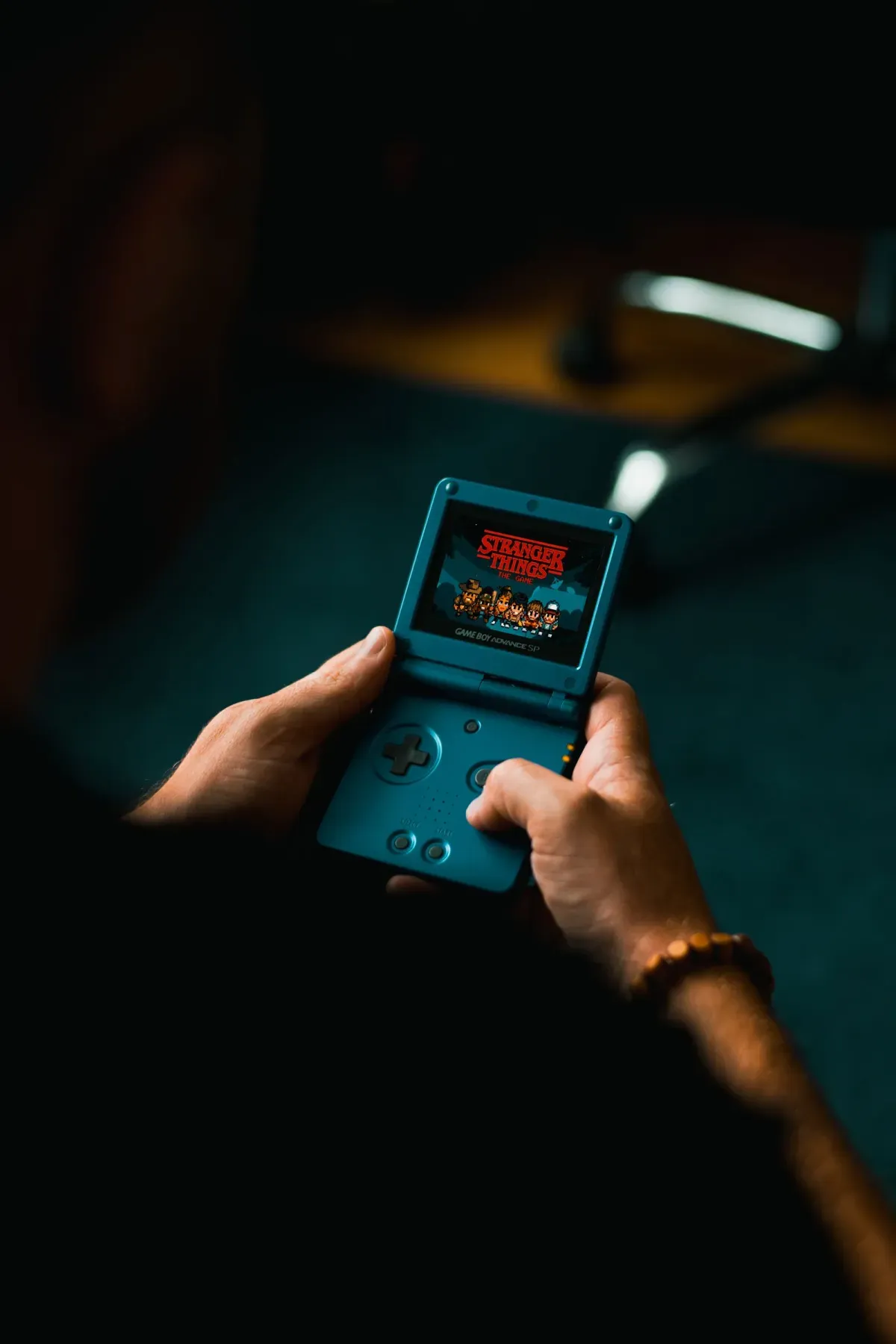
If you grew up in the late 90s, a virtual pet toy probably lived on your keychain or got confiscated from your desk at school. The little egg beeped, demanded food, and made you feel weirdly guilty when you neglected it. Most people assume those toys died with dial-up. They didn’t.
The category is quietly booming again. Bandai shipped a brand-new Tamagotchi in 2025, reissued the original 1997 model, and the franchise has now passed 98 million units sold worldwide. (Tamagotchi, Wikipedia) Spin Master built a touchscreen rival from scratch. There’s more choice now than there was at the peak of the first craze.
This is an honest guide to the virtual pet toys worth buying in 2026, who each one suits, and what they cost. At the end I’ll be straight about the one thing a handheld toy can’t do, and why a lot of adults end up reaching for an app instead.
Quick picks
| If you want… | Best toy | Maker | Roughly |
|---|---|---|---|
| Pure 90s nostalgia, the real egg | Original Tamagotchi (reissue) | Bandai | ~$20 |
| A modern touchscreen for kids | Bitzee | Spin Master | $29.99 |
| Online play, worn on the wrist | Tamagotchi Uni | Bandai | ~$59.99 |
| The latest care-and-evolve toy | Tamagotchi Paradise | Bandai | ~$29.99 |
| Battling pets, not just caring | Digimon Vital / classic Digivice | Bandai | varies |
Prices are approximate and move around by store, edition, and country. Treat them as a starting point, not a quote.
The Original Tamagotchi reissue: the one that started it all
The Tamagotchi is the toy every other entry on this list is descended from. Bandai launched it in Japan on November 23, 1996, and in the United States on May 1, 1997. It was a plastic egg the size of a keyring, with a tiny monochrome screen and a three-button interface. You fed it, cleaned up its mess, played with it, and kept it alive, or it got sick and died and you started over. (Tamagotchi, Wikipedia)
What you actually get
The reissue brings back that exact experience. Same egg shape, same chunky pixels, same three buttons, same loop. No Wi-Fi, no color, no apps. You hatch a creature, raise it through its life stages by feeding and cleaning and disciplining it, and how well you care for it decides what it grows into. The original run sold around 40 million units, and on US launch day a San Francisco FAO Schwarz cleared its entire 3,000-unit stock by 3pm.
Who it’s for
Anyone buying on pure nostalgia, or introducing a kid to the unfiltered original. It’s cheap, usually around $20, and it does one thing. That simplicity is the appeal. If you want the toy you remember rather than a reinvention of it, this is the one.
Be warned that it is genuinely basic by modern standards. A child raised on touchscreens may find the three-button monochrome interface charming for an afternoon and dull by the weekend.
Bitzee: the modern touchscreen pet
 Photo: Lisa / Pexels
If the Tamagotchi is the ancestor, Bitzee is the clean-sheet redesign for kids today. Spin Master released it on August 1, 2023, at $29.99, and it took the digital-pet idea somewhere the egg never could: a touch-reactive display you interact with using your hands instead of buttons. (Spin Master unveils Bitzee, The Toy Book)
How it works
Bitzee lives in a small purple pod with a screen that responds to tilts, swipes, and shakes. You feed it, rock it to sleep, and clean up after it by physically moving the device rather than pressing a button. Care for it well and the pet evolves from baby to adult to a “super Bitzee,” which unlocks a special outfit and its own mini-game. Each pod holds up to 15 collectible characters, from common ones like a puppy or hedgehog to rarer creatures like a unicorn or chameleon.
Who it’s for
Kids aged 5 and up, which Spin Master states plainly as the recommended age. The collectibility and the tactile screen make it feel current in a way the monochrome handhelds don’t, and the $29.99 price is reasonable for what’s essentially a self-contained game. Spin Master has since expanded the line, including Disney-themed versions.
The trade-off is that Bitzee is squarely a children’s toy. There’s no real grown-up angle here, and no pretense of one. It’s a well-made, modern take on the genre for the under-12 crowd.
Tamagotchi Uni and Tamagotchi Paradise: the connected era
Bandai didn’t stand still while Spin Master moved in. The modern Tamagotchi line went online.
Tamagotchi Uni
The Tamagotchi Uni launched worldwide on July 15, 2023. It has a full color screen, comes with a band so you can wear it on your wrist like a watch, and crucially, it connects to Wi-Fi. That connection opens the “Tamaverse,” an online space where your character can visit a Tama Arena, Tama Party, and Tama Travel, meet other players’ characters, swap items, and even marry. (Tamagotchi Uni, official site) It retails around $59.99, the priciest mainstream pick here, and the Wi-Fi features are what justify the jump.
Tamagotchi Paradise
Released internationally in July 2025 and in the US that August, Tamagotchi Paradise is the newest device in the core line and a big reason the franchise is enjoying a fresh wave of attention. It leans into exploration and a livelier world while keeping the care loop intact. If you want the current flagship rather than the connected one, this is it, usually near $29.99.
Who they’re for
The Uni suits tweens and nostalgic adults who want the social layer and don’t mind paying for it. Paradise is the pick if you just want the latest and most feature-rich care toy without the wrist-watch form factor. Both are a real step up from the keychain era, and both are still, at heart, about keeping a little creature happy.
Giga Pets and Digimon: the rivals worth knowing
Tamagotchi was never alone. Two competitors from the same era are still worth a mention, partly because they’re back too.
Giga Pets, made by Tiger Electronics, hit the US in May 1997 at roughly $10, undercutting the Tamagotchi by about $5. Where Tamagotchi creatures were original alien designs, Giga Pets were based on real animals, launching with a Digital Doggie, Compu Kitty, and Micro Chimp. (Giga Pet, Wikipedia) Tiger has reissued Giga Pets in recent years, so the brand lives on for collectors and nostalgics.
Digimon took the format somewhere different. Bandai noticed Tamagotchi was passive and marketed mostly to girls, so it built a virtual pet that could battle other devices, aimed at boys. The original Digital Monster spawned an entire franchise. Modern descendants like the Digimon Vital Bracelet keep that battle-first idea alive. If your kid (or you) wants competition rather than gentle care, this is the lineage to look at.
Neither is the obvious first buy for a newcomer, but if the standard care loop bores you, the battling angle is the genuinely different experience in this corner of the toy aisle.
Where a handheld toy stops, and an app begins
 Photo: RDNE Stock project / Pexels
Every toy above shares one limitation. The pet grows when you tap it, and that’s the whole interaction. Feeding a Tamagotchi builds a Tamagotchi-feeding habit and nothing else. For a kid, that’s fine, it’s a toy. For an adult who keeps buying these things hoping to feel something, the loop runs out fast.
The reason the care loop is so sticky is older than any of these toys. Caring for something that depends on you triggers loss aversion, one of the most reliable findings in behavioral science. Daniel Kahneman and Amos Tversky showed people feel a loss roughly twice as strongly as an equivalent gain. (Prospect theory, Kahneman & Tversky 1979, JSTOR) A sad pet is a small loss you can prevent, so you do. That pull is real, which is precisely why it’s worth pointing at something that matters.
That’s the leap the best modern app companions make. Instead of growing when you tap a screen, the pet grows when you do the thing you’ve been putting off. We unpacked why that works in our guide to fitness gamification, and the short version is that a well-built care loop tied to a real action beats raw willpower for most people. If you’re weighing a physical toy against a software companion, our roundup of virtual pet apps for adults walks through the grown-up options and our best virtual pet apps shortlist ranks them, and our look at virtual pet games covers the more game-forward side. And if it is specifically the Tamagotchi app you are weighing against the toy, our Tamagotchi app guide breaks down the official and modern options.
Buy the toy for nostalgia. Reach for an app when you want that same pull to change a habit you actually care about.
Where TrainWiz fits
If the appeal of a virtual pet toy is “I care for something and it grows,” but you wish that growth came from something real, this is the gap TrainWiz fills. It’s a home-workout app where a companion levels up off your actual workouts, not off taps on a screen. The simplest way to put it: you do short, bite-sized sets, your buddy grows because you trained, and a forgiving streak keeps you coming back through an ordinary week.
It won’t replace a keychain egg for pure nostalgia, and it isn’t trying to. But it takes the one mechanic that made those toys impossible to put down and aims it at the habit most people actually want to build. For the psychology underneath, see our guide to gym motivation, and if accountability is your real sticking point, our roundup of the best gym buddy apps covers that side too.
One reality check before you buy anything. The best virtual pet toy is the one whose care loop matches what you want from it. For a kid, that’s a Bitzee or a Tamagotchi and a happy afternoon. For an adult chasing a real habit, a toy you tap for a week and forget helps nobody. Be honest about which you are, then pick accordingly.
Frequently asked
- What is the best virtual pet toy?
- It depends who it's for. For pure 90s nostalgia, the reissued Original Tamagotchi is the real thing in a keychain egg. For a modern touchscreen handheld with collectible characters, Bitzee by Spin Master is the strongest pick for kids. If you want online play and a color screen you can wear on your wrist, the Tamagotchi Uni connects to the Tamaverse. Adults who want the care loop to actually build a habit are usually better served by a companion app.
- How much do virtual pet toys cost?
- Most handhelds land between $20 and $70. The reissued Original Tamagotchi runs around $20, Bitzee launched at $29.99, and the color-screen Tamagotchi Uni sits near $59.99 at retail. Prices vary by store and region, and limited editions cost more. App companions are usually free with an optional subscription.
- What was the first virtual pet toy?
- The Tamagotchi, released by Bandai in Japan on November 23, 1996, and in the United States on May 1, 1997. It was an egg-shaped keychain with a three-button interface. You fed it, cleaned up after it, and kept it alive, and the original run sold roughly 40 million units.
- Are virtual pet toys still made in 2026?
- Yes, and the category is having a revival. Bandai shipped the new Tamagotchi Paradise in 2025 and reissued the Original Tamagotchi, Spin Master's Bitzee line keeps expanding, and the Tamagotchi Uni added Wi-Fi play. Total Tamagotchi shipments passed 98 million units worldwide as of 2025.
- Are virtual pet toys good for adults?
- For nostalgia and a low-stakes desk companion, yes. The care loop still works on grown-ups, which is exactly why it migrated to phones. But a handheld toy only asks you to tap it. If you want that same feeling pointed at a real goal like sleep or exercise, a companion app ties the pet's growth to something that matters.