Arm Stretches for Desk Workers: A Practical Guide

What actually relieves arm tightness
Your wrists ache after typing a long email, and your forearms feel like tightly coiled springs by mid-afternoon. You do not need a complicated routine to relieve this stiffness. The most effective approach involves holding gentle stretches for a short period, then repeating them throughout your workday. Always avoid sharp pain.
If you spend hours at a desk, your forearm muscles stay locked in a slightly flexed position. This static posture breeds physical tension. Releasing that tension takes just a few minutes of dedicated attention. Extend your arm and flex your wrist. Let yourself breathe normally.
Start with a simple routine
Begin your practice with basic wrist flexor and extensor movements. These movements target the specific areas most affected by typing on a keyboard and gripping a computer mouse. You can then add a simple overhead triceps stretch alongside a wall-assisted biceps stretch to cover the upper arm. Do this daily. Regular, gentle movement easily beats intense, infrequent sessions when you are trying to improve your joint flexibility.
Know the warning signs
Muscle tightness feels like a dull, localized ache. Nerve pain feels entirely different. If you notice a tingling sensation or your grip suddenly weakens while holding a coffee cup, stretching is likely the wrong tool for the job. You must listen to your body. Seek medical advice when symptoms cross from simple muscle stiffness into numbness.
Consistency over intensity
Many people approach flexibility as a test of endurance. They pull hard on their limbs and grit their teeth. This approach triggers a defensive reflex in the muscle tissue. Your nervous system senses the aggressive pull and contracts the muscle to protect the joint. A successful stretching habit relies on mild tension. You want to coax the muscle into relaxing over weeks of regular practice. It takes time.
Understanding Your Arm Muscles
How the upper arm works
Your arm functions through a system of opposing muscles. According to Cleveland Clinic on Wrist Pain Exercises, the biceps sits on the front of the upper arm and bends the elbow. The triceps sits on the back and straightens it. This mechanical relationship allows you to lift heavy boxes or control the steering wheel of your car.
Because these muscles work in direct opposition, tightness in one often affects the resting posture of the other. A chronically tight biceps will keep your elbow slightly bent even when your arm hangs by your side.
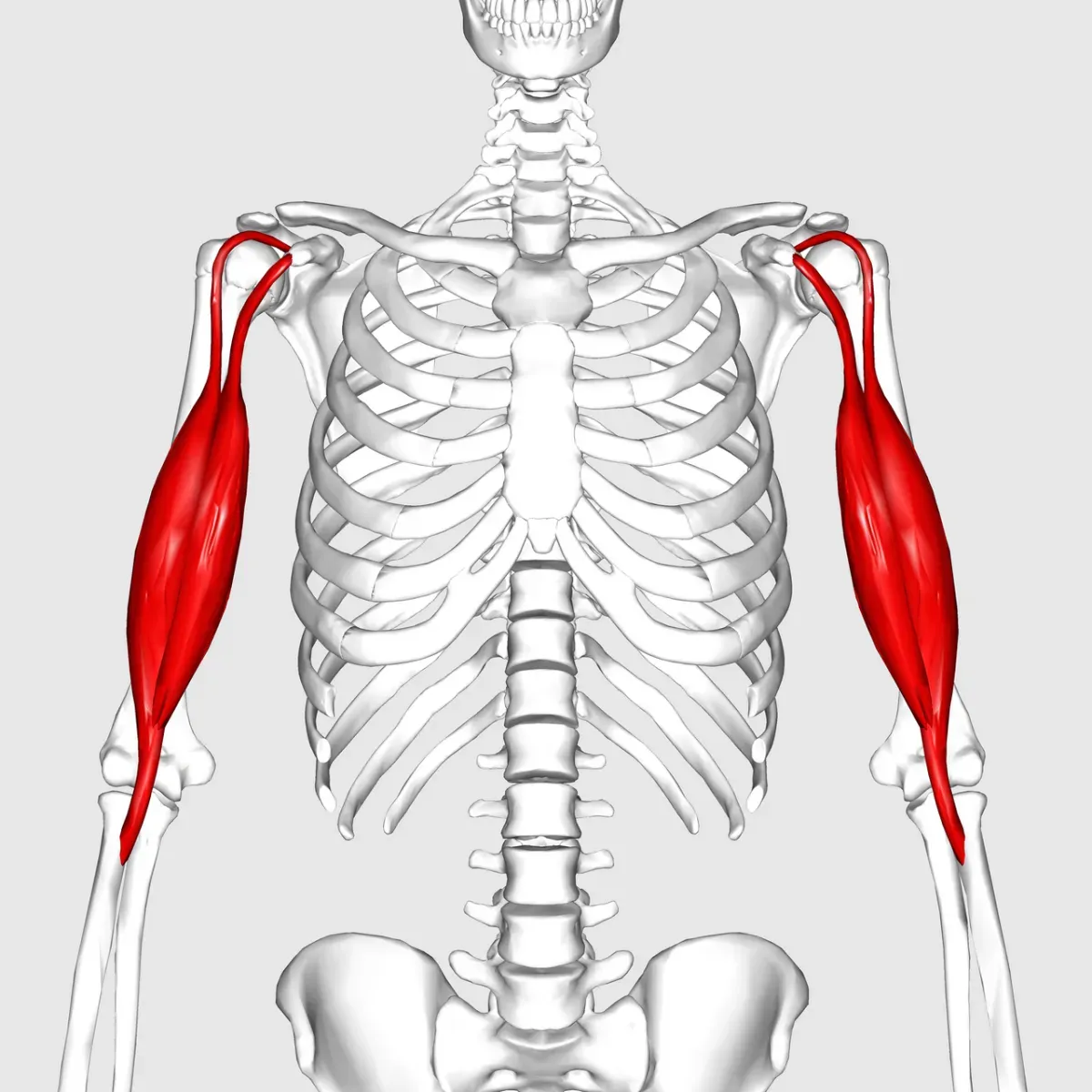 Illustration by Anatomography via Wikimedia Commons (CC BY-SA 2.1 jp)
The forearm and wrist complex
Lower down the arm, the anatomy becomes far more intricate. The forearm muscles bend and extend the wrist and fingers, as detailed by the Cleveland Clinic. These muscles transition into long tendons that pass through the narrow carpal tunnel in your wrist.
When you type for eight hours a day, these muscles rarely get a break. They remain in a continuous state of low-grade contraction. People often notice their arms feeling stiffer after months of this specific desk work.
Shoulder and hand connections
Tension rarely exists in total isolation. A tight shoulder can pull on the biceps tendon. A stiff elbow can subsequently limit your forearm mobility. When you start a new routine, it helps to look at the whole kinetic chain. This is why many physical therapists combine arm exercises with shoulder stretches to ensure the entire limb moves freely.
The impact of modern posture
Modern life asks very little of our full arm mobility. We keep our hands in front of us to hold phones. We rest our forearms on desks to operate keyboards. We rarely reach overhead or extend our arms fully behind us. This limited range of motion signals to the body that the outer limits of our flexibility are no longer needed. Without regular movement, the arm joints naturally feel stiffer over time.
Essential Wrist and Forearm Stretches
The wrist flexor stretch
The flexor muscles run along the underside of your forearm. They are responsible for curling your wrist downward. To stretch this area effectively, the Cleveland Clinic recommends a specific setup. Hold the arm out straight, palm up, fingers pointing down, and gently push the fingers toward you with the other hand.
You should feel a mild, pleasant pull from your wrist up toward the inside of your elbow. Keep your shoulder relaxed while doing this. Shrugging your shoulder toward your ear will compromise the stretch.
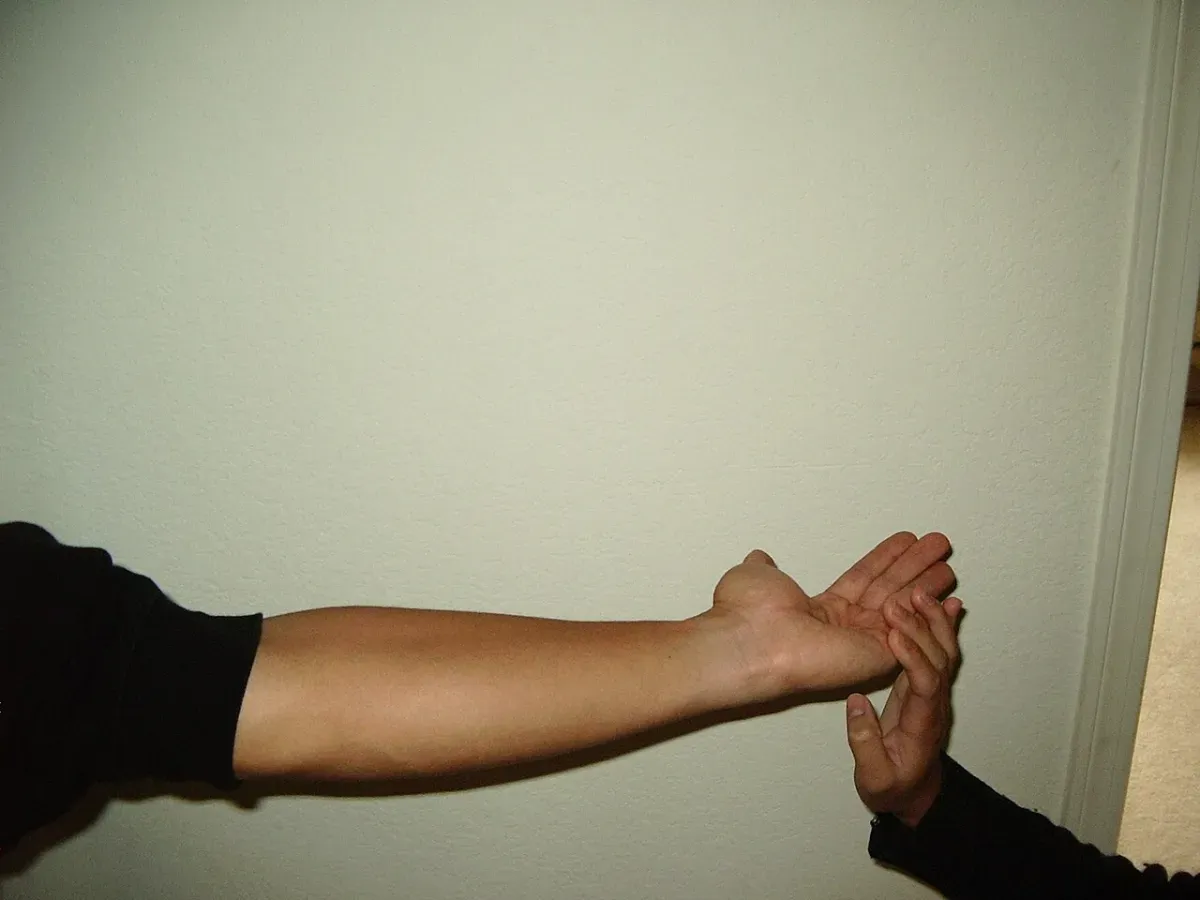 Photo by Hipnotic88 via Wikimedia Commons (CC0)
The wrist extensor stretch
The extensors sit on the top of your forearm. These muscles lift your hand and open your fingers. To perform a wrist extensor stretch, put your arm out, palm down, bend the wrist down and gently push against the back of the hand. This technique is outlined by the Cleveland Clinic.
The stretch will travel along the outer part of your forearm. Desk workers often find this movement particularly intense. Proceed slowly.
Build a habit at your desk
You need specific parameters to make these movements safe and effective. The Cleveland Clinic advises that you hold wrist stretches for 10-20 seconds, do 3-5 sets each, up to three times a day, and never force it. They note that it shouldn’t hurt, so pull back if you feel any pain. Try doing a quick set right before your lunch break. Add another set right after you shut down your laptop for the evening.
Prepare for heavy lifting
If you plan to lift weights or carry heavy groceries, stretching your forearms beforehand can prepare the joints for the load. Lifting with stiff forearms often feels uncomfortable. A few sets of flexor and extensor stretches will increase local blood flow. This small investment of time helps your grip mechanics function smoothly under pressure.
Stretching the Upper Arms
Release a tight biceps
Most people keep their elbows slightly bent throughout the day. This chronic posture can leave the biceps noticeably tight. A highly effective way to stretch this muscle involves standing next to a wall.
Extend your arm straight back behind you. Place your palm flat against the wall at shoulder height. Slowly rotate your torso away from the wall until you feel tension across the front of your arm. Hold this position and breathe deeply.
Open up the triceps
Triceps tightness often goes unnoticed until you try to reach behind your back. To stretch the triceps, raise your arm straight up toward the ceiling. Bend your elbow so your hand drops behind your neck.
Use your opposite hand to gently press back on the raised elbow. Keep your neck straight during this movement. Looking down will round your cervical spine and severely limit the effectiveness of the stretch.
Balance the whole arm
Stretching only the front of the arm creates structural imbalance. Always pair a biceps stretch with a triceps stretch. Your elbow joint relies on equal tension from surrounding muscles to stay centered and pain-free. If you are new to balancing opposing muscle groups, reading about stretching for beginners can help you build safer routines.
Better posture through upper arm mobility
Tight biceps keep your elbows slightly bent. This constant flexion subtly pulls your posture forward. Releasing the tension in your upper arms allows your limbs to hang naturally by your sides. Your chest can open more easily. Your shoulders can drop back into a neutral resting place.
Best Practices for Safety and Results
How long to hold a stretch
Timing dictates the physical response of your muscle tissue. A two-second stretch accomplishes almost nothing. For general flexibility, Harvard Health states you should hold each stretch for about 30 seconds without bouncing, and stretch daily or at least three to four times per week. This guideline provides a reliable baseline for healthy adults looking to improve their mobility.
Manage tension without pain
Many people mistakenly believe that intense pain equals a better stretch. This is entirely false. As noted by Harvard Health, a stretch should produce tension, not pain. If you feel pain, stop stretching that muscle and talk to your doctor. Sharp or tearing sensations are warning signals from your nervous system. You must respect them.
Frequency matters most
A single marathon stretching session on a Sunday will not reverse six days of poor desk posture. Your body needs frequent, gentle reminders to let the muscles relax. Incorporating these movements into a daily morning stretch routine guarantees you get them done before the distractions of the day take over. Small daily inputs create massive long-term changes in tissue elasticity.
The role of breathing
Holding your breath tenses your entire body. When you stretch your arms, focus on slow exhales. As you breathe out, consciously try to relax the specific muscle you are targeting. This breathing technique signals to your brain that you are safe. The nervous system then allows the muscle fibers to lengthen further without resisting the movement.
When Arm Pain Is Actually a Neck Problem
Recognize nerve irritation
Sometimes a tight arm muscle is merely a symptom of a deeper issue. Your cervical spine houses the nerve roots that travel down your shoulder and into your fingertips. According to NHS inform, pins-and-needles, numbness or weakness in the arm or hand can indicate an irritated neck nerve rather than tight muscle, and warrants a doctor’s visit.
When to see a doctor
You cannot stretch away a compressed nerve. Pulling on an irritated nerve can actually make the inflammation much worse. The medical red-flags are very clear. Pins-and-needles, numbness or weakness in the arm or hand, or dropping things, often point to an irritated neck nerve (cervical radiculopathy). Stretching won’t fix a pinched nerve, so see a GP if it doesn’t improve within about 6 weeks or gets worse.
Adapt your routine
If you receive a diagnosis like cervical radiculopathy, your physician will likely recommend a very specific set of rehabilitation movements. Often, they will focus on neck mobility and postural correction. Always follow professional medical guidance over general fitness advice when dealing with neurological symptoms.
Posture and nerve health
The position of your head directly impacts the nerves traveling to your arms. Pushing your chin forward to look at a monitor places immense strain on your lower neck. Over time, this poor posture can irritate the structures in your lower neck. Correcting your workstation ergonomics is just as vital as stretching your forearms. Keep your monitor at eye level.
Incorporating Arms into Your Broader Routine
Integrate arm movements
Isolated arm stretches are highly effective for targeted relief. Eventually, you will want to integrate them into a larger movement practice. Your body moves as an interconnected unit. A tight chest pulls your shoulders forward, which then internally rotates your arms. That subtle shift in position ultimately changes how your wrists function when you type.
The bigger picture for joint health
To address posture comprehensively, look at the entire chain. Adding your new wrist and upper arm exercises to a full-body stretch routine ensures you maintain overall joint health. You might spend ten minutes on your legs and core. You can then finish with five minutes dedicated entirely to your upper body mechanics.
Morning habits
Your muscles are naturally stiff when you wake up. Blood pressure is lower, and your core body temperature has dropped overnight. Performing a few light arm stretches while waiting for your coffee to brew is an excellent habit. It wakes up the nervous system. It prepares your wrists for the demands of the upcoming workday.
Stay consistent
Set a small, achievable goal today. Try performing the wrist flexor and extensor stretches once a day for a single week. Observe how your forearms feel. Notice if your grip feels lighter on the steering wheel during your commute. Small adjustments to your daily physical habits yield substantial improvements in how you feel over time. Keep the movements simple, and stick to the timing guidelines strictly. Above all, pay attention to how your body responds.
Frequently asked
- How long should I hold a wrist stretch?
- You should hold a wrist stretch for 10 to 20 seconds. Repeat this for a few sets. Never push the joint to the point of sharp pain.
- Why do my arms get tight from typing?
- Typing keeps your forearm muscles in a fixed position for hours. This constant low-level tension reduces blood flow and shortens the tissue over time. Regular movement helps restore their normal resting length.
- Can neck problems cause arm pain?
- Yes. An irritated nerve in your cervical spine can send pain all the way down to your hand. This often comes with a tingling sensation or noticeable weakness.