Walking After Eating: How Soon, How Long, and Why
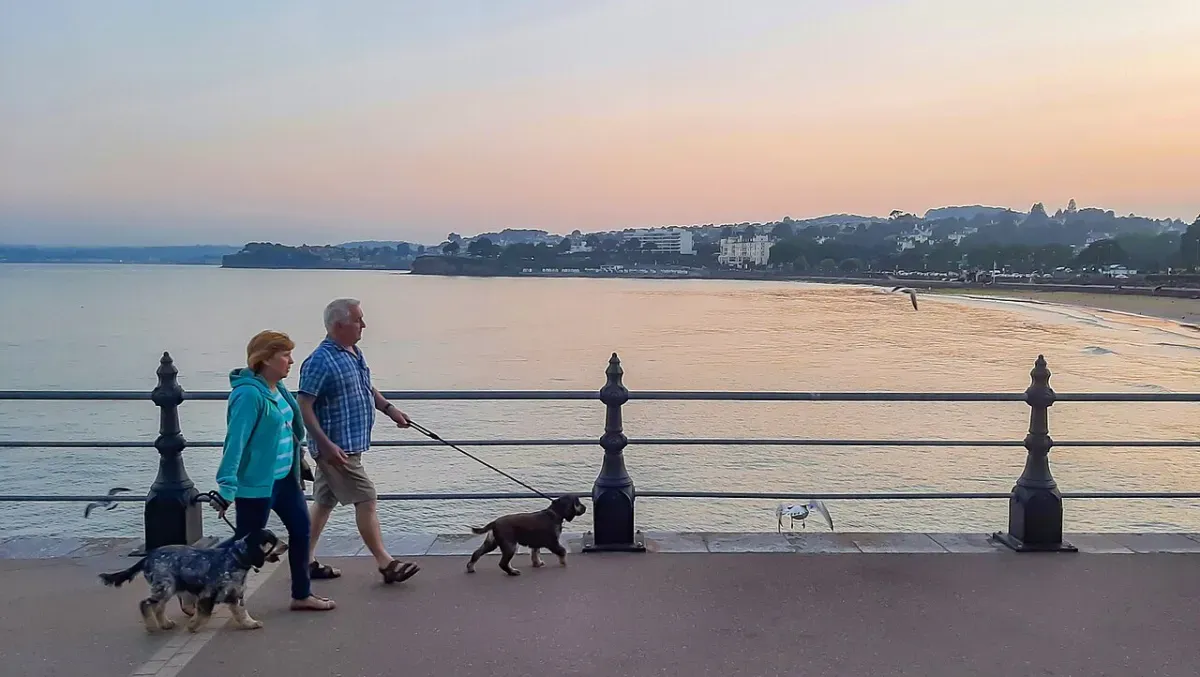
A short, easy walk soon after a meal is one of the better-supported small habits for lowering the post-meal rise in blood glucose. You don’t need to walk for hours to see an effect. In two clinical trials, 10 to 15 minutes was enough.
The evening meal is where this habit seems to make the largest difference. In one randomized trial, the rise in blood glucose after dinner was about 22 percent smaller when people took a 10-minute walk after the meal than when they took one 30-minute walk at a time of their choosing.
Is walking after eating good for you? The short answer
What a post-meal walk does to blood sugar
When you eat, your digestive system breaks down carbohydrates into glucose, which enters your bloodstream. Your body responds by releasing insulin to help move that glucose out of your blood and into your cells for energy or storage.
Adding movement changes this equation. As an updated guideline summary notes, aerobic exercise after meals usually lowers blood glucose. Contracting muscles take up glucose even without extra insulin, so when you walk, your leg muscles pull glucose from your bloodstream to keep moving.
Who the research was actually done on
The most widely cited studies focused on specific populations rather than the general public. One trial looked at 10 inactive adults aged 60 or older who had fasting glucose levels between 105 and 125 mg/dL but weren’t on any glucose-lowering medication. Another key study tracked 41 adults with type 2 diabetes. A review of seven laboratory trials focused mostly on adults who were overweight or had obesity. Finally, a study on digestion and gastric emptying looked exclusively at 10 healthy young men.
The review comparing exercise before and after meals pooled 116 people, 47 of them with type 2 diabetes.
Healthy young adults made up only a small share of these samples, a couple of small lab trials inside the two reviews, so the effect in lean, young, healthy people is less certain. The clearest benefits appear in older adults with raised fasting glucose and in people with type 2 diabetes.
What a walk after eating won’t do
A post-meal stroll helps with blood sugar spikes, but its reach is limited. One trial had the same people try each routine for two weeks and found no significant difference in body weight, blood pressure or blood lipids between the after-meal walks and a single longer walk.
Walking after eating complements your health routine. It doesn’t replace medical treatment, dietary changes, or prescribed medication.
What the studies on walking after meals actually found
The trials measured different things in different ways. Most point the same way.
| Study | Who | What they did | Main result | Limits |
|---|---|---|---|---|
| DiPietro 2013 | 10 inactive adults, aged 60+ | Three 15-min post-meal walks vs one 45-min walk | 24-h glucose dropped ~10% with post-meal walks vs ~8% with morning walk | Small sample, healthy-ish volunteers, short duration |
| Reynolds 2016 | 41 adults with type 2 diabetes | 10 min walking after each meal vs 30 min daily at any time | Post-meal glucose 12% lower overall, rise after dinner 22% smaller | Timing mixed with higher overall activity, no long-term HbA1c data |
| Engeroff 2023 | 116 pooled participants | Meta-analysis of pre-meal vs post-meal exercise | Post-meal exercise lowered glucose vs no exercise | High risk of bias, after-vs-before gap not significant in the diabetes subgroup |
| Buffey 2022 | 166 pooled participants | Light walking breaks vs continuous sitting | Light walking lowered post-meal glucose and insulin vs sitting | High heterogeneity, one-day lab studies |
| Franke 2008 | 10 healthy young men | 3 hours of slow walking after a 576 kcal meal | Gastric half-emptying time shortened by about 13% | Tiny sample, walking was prolonged rather than a short stroll |
Three 15-minute walks vs one 45-minute walk
In a rigorously controlled trial published in Diabetes Care, researchers placed 10 older adults in a whole-room calorimeter for 48-hour stays. They tested three routines. The participants either did three 15-minute treadmill walks starting 30 minutes after each meal, a single 45-minute sustained walk at 10:30 a.m., or a 45-minute walk at 4:30 p.m.
The post-meal walks lowered 24-hour mean glucose from 129 to 116 mg/dL, a drop of about 10 percent. The 45-minute morning walk lowered it from 127 to 118 mg/dL, which is about 8 percent. The 45-minute afternoon walk had a negligible effect. Most importantly, only the post-meal walking routine significantly lowered glucose in the three hours after dinner. It beat both 45-minute walks for that specific evening window.
A whole-room calorimeter is a specialized, sealed environment that precisely measures human energy expenditure. The popular press often claims that short walks are “as effective as 45 minutes.” This framing is technically true for the 24-hour measure, but it misses the point that post-meal walks performed significantly better specifically after the evening meal.
Ten minutes after each meal in type 2 diabetes
Another well-known randomized crossover trial looked at 41 adults with type 2 diabetes. They wore continuous glucose monitors and tried two different two-week routines. One was a 30-minute daily walk taken at any time. The other was a 10-minute walk after each main meal, starting within five minutes of finishing their food.
Both routines prescribed the same 30 minutes a day. Accelerometers showed people actually moved a little more overall during the after-meal weeks, so timing and slightly more activity are tangled together, but the after-meal walks still came out ahead. Post-meal glucose over three hours was about 12 percent lower overall. After the evening meal, the rise in blood glucose was about 22 percent smaller.
Crossover trials are particularly useful because the same individuals complete both interventions. Researchers don’t have to worry about whether one group was naturally fitter than another. The continuous glucose monitors provided a detailed, round-the-clock view of how the participants’ bodies reacted to the timing shift in their real, everyday environments.
Light walking breaks vs sitting still
You don’t necessarily have to take a traditional walk outdoors. A meta-analysis of seven lab trials looked at 166 participants who sat for five to eight hours after eating or drinking test beverages.
Researchers interrupted this sitting with either standing breaks or light walking breaks, typically lasting two to five minutes every 20 to 30 minutes. The results showed that light walking breaks significantly lowered post-meal glucose and insulin compared to continuous sitting. Standing breaks lowered glucose modestly but had no significant effect on insulin. Walking beat standing on both glucose and insulin.
This finding matters most if you sit at a desk for hours, though all seven trials were one-day lab studies in mostly overweight adults.
How strong is this evidence?
The studies rely on small samples, usually ranging from 10 to 41 people per trial. Even the pooled meta-analyses only cover 116 to 166 participants.
The study durations are short. They range from a single day in a laboratory to a maximum of two weeks. We lack data on long-term outcomes like HbA1c. The before-versus-after review rated its trials at high risk of bias, and the sitting-breaks review found results varied widely from trial to trial. The evidence is solid for immediate, acute blood sugar drops, but we can’t confidently generalize these exact percentage drops to a lifetime habit.
How soon after eating should you walk?
Sooner tends to work better
A recent systematic review analyzed the time gap between eating and exercising. It found that the time between the meal and the exercise was a significant moderator. Longer gaps weakened the effect. The authors advise starting activity as soon as possible after a meal.
In the real world, researchers tested different timings. The diabetes trial told participants to start walking within five minutes of finishing their meal. The calorimeter trial had participants start 30 minutes after each meal, a timeframe chosen by the authors to match the period of nutrient absorption.
Both “right after” and “within about half an hour” were tested and both worked. There isn’t a proven, precise peak time for glucose that you must hit perfectly. You don’t need to sprint from the dining table to the front door, but getting moving while the meal is still settling is a practical target.
Is it better to walk before or after eating?
If you like to walk before dinner, you might wonder if it provides the same blood sugar benefits. The data suggests it doesn’t.
The systematic review found that pre-meal exercise didn’t significantly lower post-meal glucose compared to doing no exercise at all. Post-meal exercise did lower post-meal glucose and beat pre-meal exercise overall, though in the subgroup with type 2 diabetes the gap between after and before wasn’t statistically significant.
The paper’s title quotes the old proverb “After dinner rest a while, after supper walk a mile”; the authors propose “After dinner walk a while, after supper walk again.”
If you can’t head out right away
Life gets in the way. You might have to clean the kitchen, bathe a child, or finish a phone call. If you can’t go immediately, a later walk still counts toward your overall daily activity.
A delayed walk just did less for that specific meal’s glucose spike in these studies. For most people, the easiest rule to build the habit is simple: put your shoes on before you wash the dishes. Delaying the walk often means it gets skipped entirely once you sit down on the couch.
How long and how hard to walk after a meal
10 to 15 minutes is the dose that was tested
You don’t need a massive time commitment. The diabetes trial used 10 minutes after each main meal. The whole-room calorimeter trial used 15 minutes. The systematic review cites about 20 minutes as a good example of post-meal activity, noting that exercise duration wasn’t a significant moderator in their findings.
An easy pace is enough
Intensity doesn’t need to be high. The participants in the calorimeter trial walked on a treadmill at 3.0 METs, an average speed of about 3 mph. The digestion study used 4 km/h (about 2.5 mph), which the authors called light exertion. The lab trials that broke up sitting used light walking at 1.5 to 4.4 km/h (about 0.9 to 2.7 mph).
You should be able to talk comfortably while you walk. Light walking is enough to lower post-meal glucose and insulin versus sitting. Keeping the pace light also means you’re unlikely to need a change of clothes, which lowers the barrier to getting out the door.
Why the walk after dinner matters most
If you only pick one, pick dinner.
In the diabetes trial, the biggest drop in blood sugar came after the evening meal. In that trial, dinner was the meal with the most carbohydrate and was followed by the most sitting. In the calorimeter study, the post-dinner window was where the short post-meal walks clearly beat the 45-minute morning walk.
Do you need to walk after every meal?
The authors of the systematic review suggest walking after all meals if possible, or at least after meals that will be followed by prolonged sitting. In reality, walking three times a day is a tough schedule for anyone with a normal job. A single evening stroll is a far more realistic starting point.
Walking after eating and digestion
What a gastric-emptying study showed
Many people wonder if walking helps the stomach empty faster. A study on digestion gave 10 healthy young men a 576 kilocalorie solid meal and then tracked them using ultrasound.
They found that slow treadmill walking at 4 km/h through the following three hours shortened the gastric half-emptying time from 123 minutes to 107 minutes. That is 16 minutes, or about 13 percent, shorter. They also tested espresso and alcoholic digestifs, but those did not significantly change the emptying time.
Bloating and fullness: what isn’t proven
You’ll often see claims that walking relieves bloating and fullness. The digestion study found faster gastric emptying, but none of the conditions, walking included, changed post-meal symptoms such as satiety, fullness or bloating in these healthy volunteers.
It’s also worth noting that the walking in this specific study lasted for three hours, not a brief 10-minute stroll.
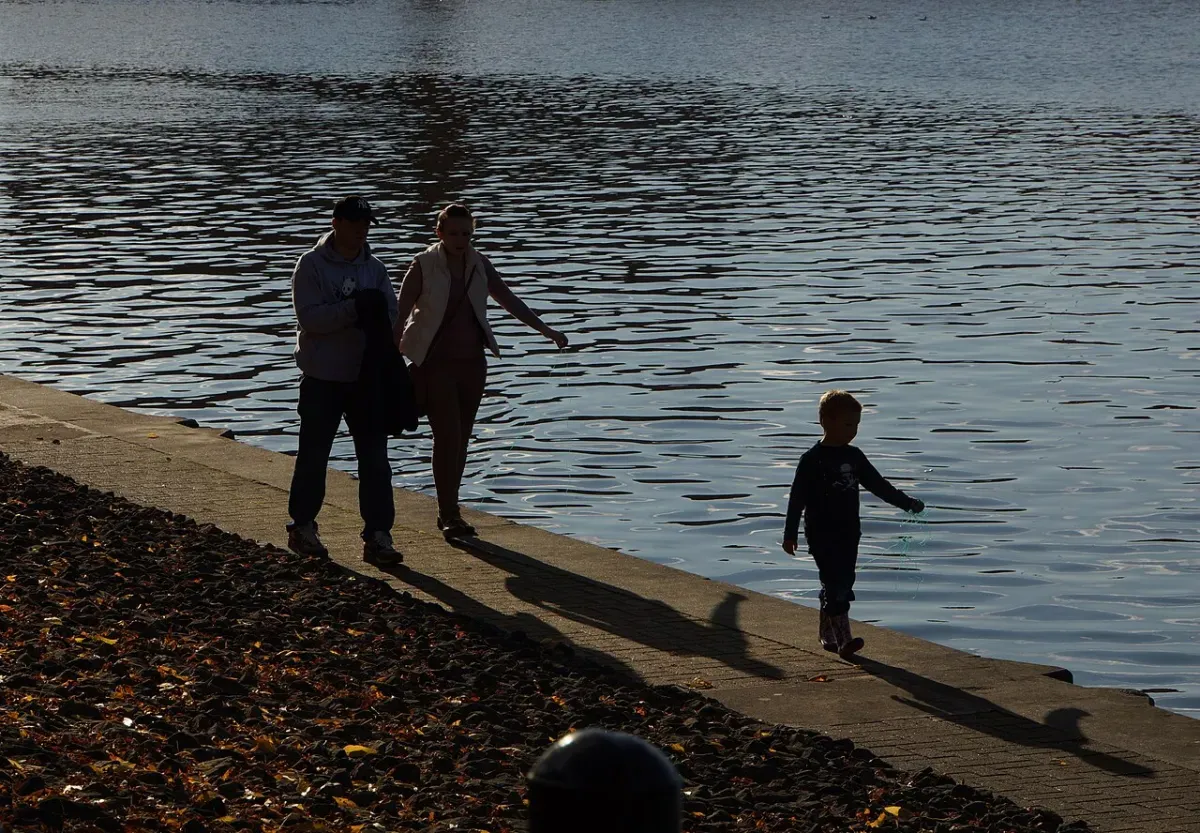 Photo: Anthony O’Neil / Wikimedia Commons (CC BY-SA 2.0)
If walking soon after a big meal feels uncomfortable
If you start a brisk, intense workout right after a big meal, you might feel awful. Keep it to an easy stroll. If you feel uncomfortable, slow your pace down or shorten the walk. Talk to a doctor if you have ongoing digestive symptoms that bother you after eating.
Does walking after eating help with weight loss?
What the trials measured
There’s no evidence that it does. Nothing in these studies shows that walking after a meal leads to more fat loss than the same walk at another time.
The researchers found no significant differences in body weight, blood pressure or blood lipids between the two-week block of after-meal walks and the two-week block of one 30-minute walk a day, and they note two weeks is too short to show longer-term effects.
Where after-meal walks fit in your week
What these walks do provide is consistent daily movement. Three 10-minute walks add up to 30 minutes a day, and in the diabetes trial both that routine and the single 30-minute walk met the physical activity guidelines for type 2 diabetes.
An easy after-dinner stroll is closer to a movement break than to exercise snacks, which are short bursts of hard effort, but the two fit side by side in the same day. Whether walking counts as real exercise comes down mostly to pace: an easy after-dinner stroll is lighter than the brisk walking that exercise guidelines count.
If you want to track how these short walks contribute to your overall activity, you can check out the best walking apps for logging your steps. You can use how many steps are in a mile to turn a few short daily walks into distance. If you’re curious about how long it takes to walk a mile, at the easy 2 to 3 mph paces in that article’s chart, a 15-minute stroll covers roughly half to three-quarters of a mile.
How to make an after-dinner walk a habit
Tie it to the last bite
The hardest part of an evening walk is getting off the chair. Create a simple if-then plan to lock the habit in place. Tell yourself: “If I put my fork down at dinner, then I walk around the block.” This removes the debate. You can read more about using these implementation intentions to make a workout automatic.
Dinner happens every day, so the end of the meal makes a ready-made trigger. You don’t have to remember a set time or put an alarm on your phone.
Bad weather, small spaces, and hallway laps
You don’t have to skip your walk just because it’s raining. The laboratory trials that successfully lowered glucose used walking breaks on treadmills, around a lab track, and even in office hallways.
Walking laps inside your home or apartment building is a perfectly reasonable fallback. Your legs don’t care about the view. They just know they’re working.
 Photo: Ferdous / Wikimedia Commons (CC BY-SA 3.0)
Bring someone along
A habit sticks better when it’s a shared routine. Bring your partner, your kids, or the dog. Walking together right after dinner turns a health intervention into a predictable part of family life.
It creates a natural transition between the busy workday and the relaxed evening. It gets everyone away from screens for a few minutes. If you live alone, calling a friend or family member during your 10-minute stroll can serve the same purpose.
Keep a simple log
You don’t need a complex spreadsheet. Any basic phone step counter or walking app works to track your consistency. Seeing a streak of consecutive post-dinner walks can be highly motivating on evenings when you’d rather just sit down.
Who should talk to a clinician first
If you use insulin or glucose-lowering medication
This article is general information, not medical advice. Walking directly lowers blood glucose. Therefore, if you use insulin or insulin secretagogues such as sulfonylureas, you need to be careful.
The updated guidelines note that exercise-related hypoglycemia is common in type 1 diabetes and less common in type 2 diabetes. However, anyone using these medications carries a higher risk. You should talk with your clinician before adding or retiming your walks. Some medication doses may need adjusting around your activity, and continuous glucose monitors can help catch unexpected lows.
In the diabetes trial we discussed, participants were mostly on oral glucose-lowering drugs or a combination of insulin and metformin, and the paper didn’t report on hypoglycemia, so it can’t tell you whether the routine is safe with your medication. After-meal walks complement your prescribed treatment, diet, and monitoring. They definitely don’t replace them.
Other conditions worth a quick check
The studies cited here are small and short. They were done in very specific groups of people. If you have any heart condition, you should see a doctor before starting a new walking routine, even a light one. The same applies if you have ongoing digestive symptoms that flare up when you move.
For everyone else, a 10-minute stroll after dinner is a simple, evidence-based way to help your body handle the food you just ate. Keep the pace easy and get out the door while the plates are still on the table.
Frequently asked
- Is it better to walk before or after eating?
- Exercising after a meal lowered post-meal blood sugar more than exercising before it in a 2023 review of eight small trials, most of them using walking. Exercise before the meal did not significantly lower post-meal glucose compared with no exercise at all.
- How long should I wait to walk after eating?
- One trial had people start walking within five minutes of finishing, another started 30 minutes after the meal, and both lowered post-meal glucose. A 2023 review found that the longer the gap, the weaker the effect, so sooner is better.
- Does walking after eating help with weight loss?
- Walking after meals does not directly cause more weight loss than walking at other times of the day. A two-week trial comparing post-meal walks to a single daily walk found no significant difference in body weight, though the walks do count toward your overall daily calorie burn.