Ab Workout at Home: A No-Equipment Core Guide
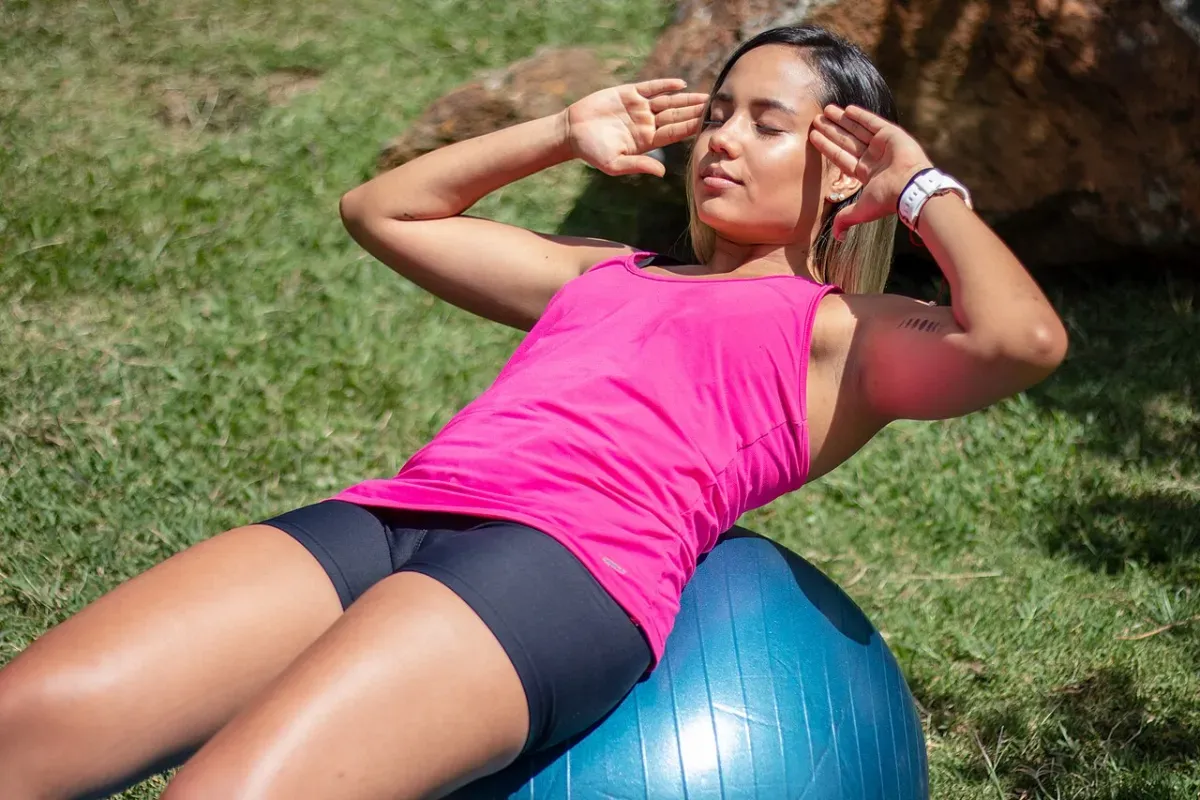
Most ab guides skip the one sentence you actually need: crunches build the muscle, but they don’t reveal it. You can do a thousand a week and still not see a single line of definition, because what hides your abs is the layer of fat sitting on top of them, and that layer comes off through your diet and overall activity, not through the crunch itself. So let’s do both jobs honestly. Below is an ab workout you can run at home with no equipment, plus a straight answer on what it will and won’t do for you.
This is one piece of a wider home-training routine. If you’re building a full at-home setup, pair this with our chest workout at home and arm workout at home guides for the upper body.
The short answer
You need three movements and a floor. A plank trains the deep muscle that holds everything stable. A crunch trains the muscle people picture when they say “abs.” A leg raise hits the lower portion that crunches mostly miss. Run those two or three times a week, mix in a couple of variations as you get stronger, and you’ve covered your core properly.
You do not need to train abs every day. They’re muscles like your legs or chest, and they recover the same way, so daily hammering just leaves them tired without building them faster. And no amount of ab work alone will give you a six-pack if there’s fat covering it. This workout builds the muscle. Whether anyone ever sees it comes down to your diet.
Everything below is the practical version of that.
What your core actually is
“Abs” is a nickname for a group of muscles, and knowing the four main ones tells you why a single exercise is never enough.
The rectus abdominis is the long sheet of muscle down the front of your stomach. The visible “six-pack” is just this one muscle, divided into segments by bands of connective tissue. Crunches target it directly.
The obliques run down your sides in two layers, internal and external. They handle twisting and side-bending, which is why moves like the bicycle crunch and the side plank matter: front-only training leaves them underworked.
The transverse abdominis is the deepest layer, wrapping around your midsection like a built-in belt. You can’t see it, but it’s the one that stabilizes your spine and pulls your waist in. Planks and dead bugs are how you train it, and it’s arguably the most useful muscle of the four for everyday life and back health.
Train all of them and your core gets genuinely strong. Train only the front and you get a sore rectus abdominis and not much else.
The spot-reduction myth
Most ab content skips this part. Doing crunches does not burn the fat on your belly specifically. The body doesn’t take fuel from the muscle you happen to be working; it draws from fat stores all over, in a pattern set largely by your genetics and hormones.
This isn’t a hunch. In a 2011 trial, researchers had sedentary adults do seven ab exercises, two sets of ten reps, five days a week for six weeks, while holding their diet constant. At the end, the ab-exercise group showed no reduction in abdominal fat, waist circumference, or overall body composition compared to a control group that did nothing (Vispute et al., 2011, Journal of Strength and Conditioning Research). Their endurance improved. Their belly fat did not.
So what does work? A calorie deficit, where you burn slightly more than you eat over time, which lowers body fat everywhere, including the layer hiding your abs. Strength and cardio help you get there by raising the calories you burn and protecting muscle while you lose fat. The World Health Organization’s baseline for adults is 150 to 300 minutes of moderate aerobic activity a week plus muscle-strengthening on two or more days (WHO physical activity fact sheet). Hit that, eat in a modest deficit, and the abs you build in this workout will eventually show. Skip it and crunch forever, and they won’t.
The plank and its variations
The plank is the foundation, so learn it well before you chase harder versions.
Lie face down, then prop yourself up on your forearms and toes so your body forms one straight line from head to heels. Elbows under shoulders, hips level with neither a sag nor a peak. Squeeze your glutes, brace your stomach as if bracing for a light punch, and breathe. Hold for 20 to 40 seconds to start. Quality beats duration here, so the moment your hips drop, the set is over.
A few seconds of a clean plank does more than a sloppy minute. If you can hold two minutes with a perfect line, you’re past needing a longer hold, so move to variations instead.
Side plank is the one most people skip, and it’s the best home move for your obliques. Lie on one side, prop up on the lower forearm, stack your feet, and lift your hips so your body is a straight diagonal line. Hold 15 to 30 seconds per side. If stacking your feet feels shaky, drop the lower knee to the floor for support.
Plank shoulder taps add anti-rotation work: from a high plank on your hands, slowly tap each opposite shoulder while keeping your hips as still as possible. The goal is to not rock side to side, which is exactly what trains the deep stabilizers.
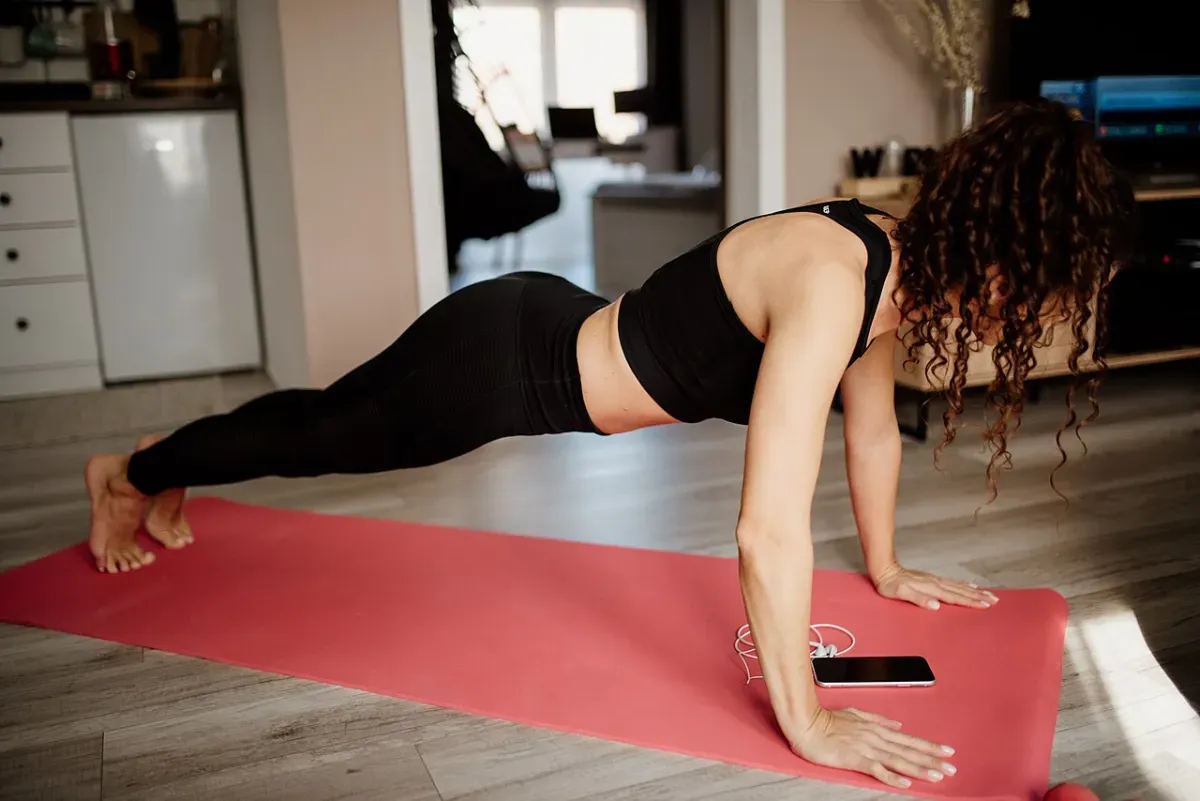 Photo by Shixart1985 via Wikimedia Commons (CC BY 2.0)
Crunch variations that beat the basic crunch
The standard crunch is fine, but two variations give you more for the same effort.
For a basic crunch, lie on your back, knees bent, feet flat. Place your fingertips lightly behind your ears (not laced behind your neck) and lift your shoulder blades a few inches off the floor by contracting your stomach. Lower with control. The movement is small. If your whole back is leaving the floor, you’ve turned it into a sit-up, which loads the hip flexors more than the abs.
The bicycle crunch, or cross-body crunch, is one of the most effective ab moves you can do without equipment, because it works the rectus abdominis and both obliques at once. Lie back, lift your shoulders, and bring one elbow toward the opposite knee while extending the other leg, then switch in a slow pedaling motion. Slow is the operative word. Racing through it turns a great exercise into momentum practice.
The reverse crunch flips the movement to hit the lower portion that the standard crunch under-trains. Lie on your back, knees bent and lifted, and curl your hips up off the floor to bring your knees toward your chest, then lower without letting your feet touch down. Small, controlled, no swinging.
Leg raises for the lower abs
Leg raises are the home move people most often get wrong, and fixing the form changes everything.
Lie flat on your back, legs straight, hands tucked under your lower back or by your sides for support. Keeping your legs as straight as is comfortable, raise them until they point at the ceiling, then lower slowly until they hover just above the floor. The critical rule: press your lower back into the floor the entire time. If you feel it arching up as your legs descend, you’re loading your spine instead of your abs. Bend your knees to make it easier, and stop the downward phase higher up, where you can still keep your back flat.
That lowering phase is where the work lives. Drop your legs in two or three controlled seconds rather than letting gravity do it. Eight to twelve good reps will challenge most people far more than twenty sloppy ones.
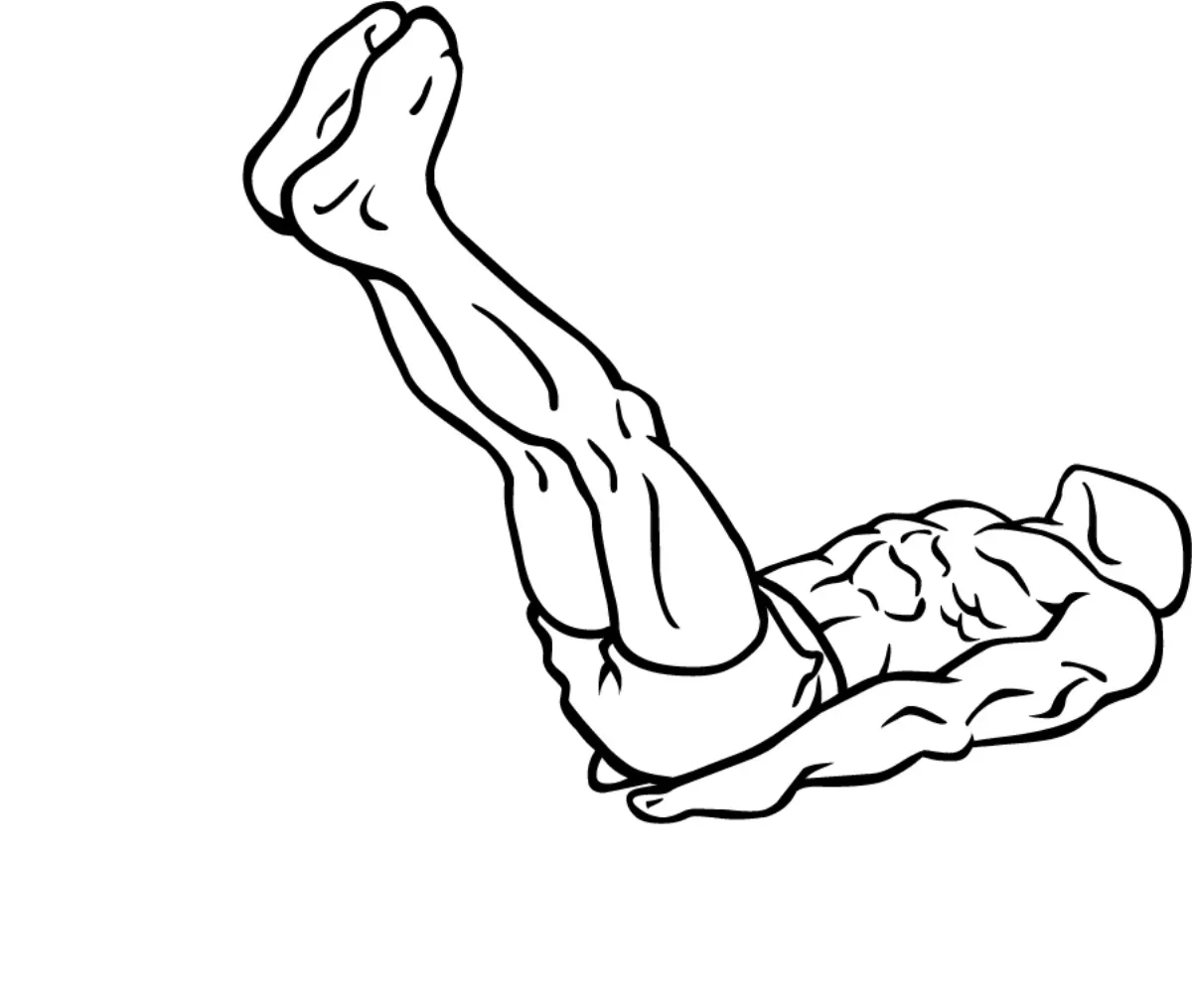 Illustration by Everkinetic via Wikimedia Commons (CC BY-SA 3.0)
Mountain climbers and the dead bug
Two more moves round out a complete core session, and they sit at opposite ends of the spectrum.
Mountain climbers add a cardio bite. From a high plank, drive one knee toward your chest, then switch legs quickly as if running in place horizontally. Keep your hips low and level instead of piking them up. Thirty seconds is a tough set. This one nudges your heart rate up, which helps on the fat-loss side of the equation rather than just the muscle side.
The dead bug looks gentle and humbles almost everyone. Lie on your back, arms pointing straight up at the ceiling, knees bent at 90 degrees over your hips. Slowly lower your opposite arm and leg toward the floor while keeping your lower back pinned down, then return and switch sides. The whole point is to move your limbs without letting your spine arch, which is precisely how you train the transverse abdominis to do its real job: keeping your midsection stable while everything else moves. If your back lifts off the floor, shorten the range.
A simple weekly plan
You don’t need a complicated split. Here’s a realistic structure for someone training at home:
- 3 days a week, non-consecutive (for example Monday, Wednesday, Friday). Abs need recovery like any muscle, so leave a day between sessions.
- Per session, pick four moves: one plank variation, one crunch variation, leg raises, and either mountain climbers or dead bugs.
- Reps and holds: planks 20 to 40 seconds, crunch and leg-raise variations 8 to 15 controlled reps, mountain climbers 30 seconds. Run through twice as a beginner, three times as you progress.
- Total time: 10 to 15 minutes. Training abs at home is short enough that the real obstacle is just starting.
Pair these core days with the WHO’s weekly activity target and a sensible diet, and you’ve built the complete picture: muscle from the workout, definition from the deficit. The same once-it’s-a-habit logic applies to the rest of your home training, which is why our booty workout at home and shoulder workout at home guides follow the same short-session approach.
Common mistakes
Most stalled core progress comes down to a handful of fixable errors.
- Pulling on your neck. Lacing your fingers behind your head and yanking your chin to your chest strains your neck and takes the work off your abs. Rest your fingertips lightly behind your ears and lead with your ribs, not your head.
- Holding your breath. Bracing your core does not mean clenching and going silent. Holding your breath spikes pressure and makes you light-headed. Breathe steadily through every rep and hold.
- Training abs every single day. More is not faster here. Muscles grow during recovery, so daily ab sessions just keep them perpetually fatigued. Two to four quality sessions a week beats seven rushed ones.
- Expecting a six-pack in two weeks. This is the one that quietly ends most people’s effort. Visible abs follow body-fat loss, which is slow. A 2024 meta-analysis found that health habits take a median of around two months to feel automatic, with a wide range from a few weeks to nearly a year (Singh et al., 2024). Judge yourself on whether you showed up this week, not on the mirror after fourteen days.
- Chasing rep counts instead of control. Twenty fast crunches with momentum are worth less than eight slow ones you actually feel. Slow the lowering phase down and the same movement gets harder and more effective.
Keep the habit alive past the first two weeks
Notice the pattern in the mistakes above: almost none of them are about the exercises. The hard part of an ab routine isn’t the plank, it’s still doing the plank in week six when the novelty is gone and the mirror hasn’t caught up yet. Definition lags effort by months, and that gap is where most home routines quietly die.
The science backs the timeline: habits take a couple of months to stick, so the trick is surviving the stretch before they do. The exercises won’t give you abs on their own. Nothing can, no workout in isolation. What gets you there is showing up through the slow middle, so that by the time your body fat drops far enough, the muscle you built in these workouts is actually there to see. If you need help getting started at all, our guides on how to motivate yourself to work out and gym motivation tackle the part before the first rep.
Frequently asked
- Can I really get abs working out at home with no equipment?
- Yes. Planks, crunches, leg raises, mountain climbers and dead bugs train every part of your core with nothing but the floor. What the exercises can't do is decide whether you actually see the muscle. They build it, but visible abs come from a lower body-fat percentage, which is driven mostly by your diet and overall activity rather than the ab moves themselves.
- How often should I train my abs at home?
- Two to four short sessions a week is plenty for most people. Your abs are muscles like any other and need a day or so to recover, so training them hard every single day gives you sore, tired muscles rather than faster results. If you want daily movement, alternate core days with walking, cardio or other strength work.
- How long does it take to get abs at home?
- There's no fixed number, because it depends almost entirely on your starting body-fat level and your diet. Abs become visible for most men around 10 to 14% body fat and for most women around 16 to 20%, and getting there can take a few months to over a year. Two weeks of crunches won't do it, and any source promising that is selling something.