Arm Workout at Home: Build Real Arms Anywhere
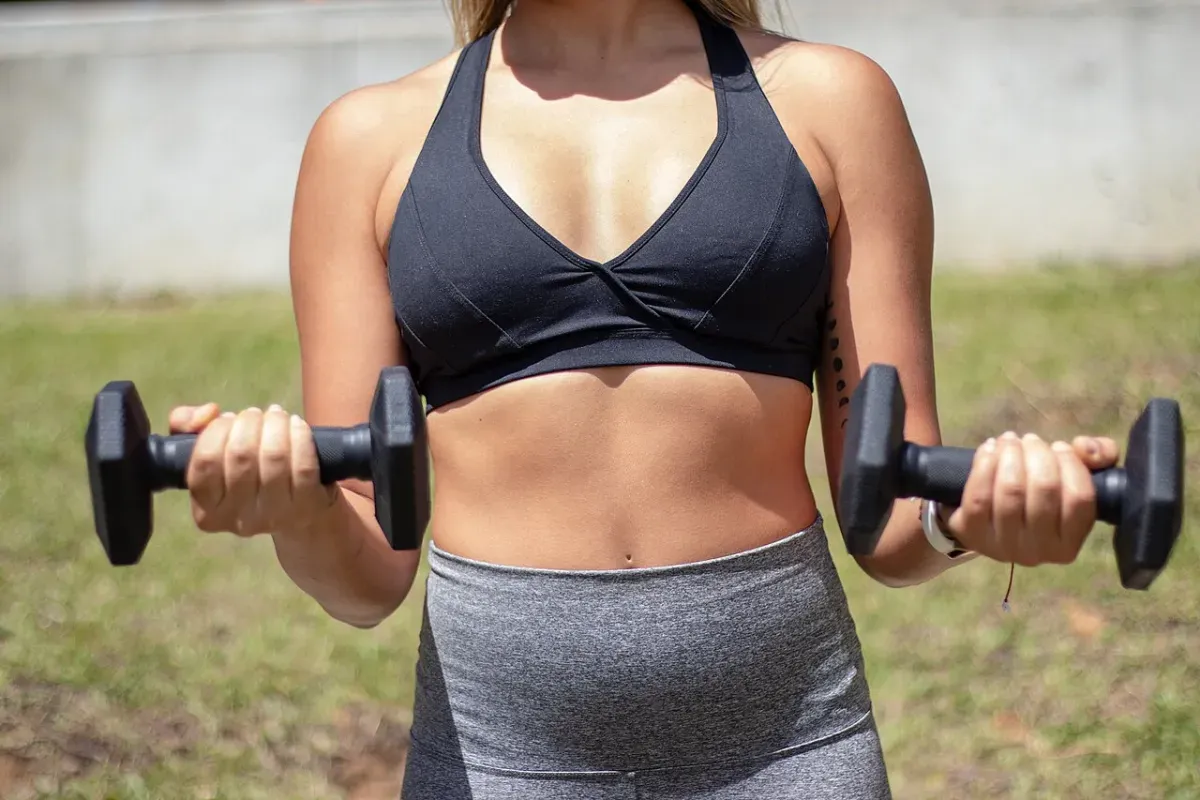
You don’t need a gym to build arms. You need a chair, the floor, and something heavy to hold, and most of the work is done by muscles you’ve probably been ignoring. The biggest mistake people make with arms at home is spending all their effort on biceps curls while the triceps, which actually make up most of the arm, get a couple of half-hearted sets at the end. Flip that, and your arms start changing.
This guide covers a full arm workout you can do at home, with or without dumbbells. It pairs with our other room-by-room guides, including the chest workout at home and the shoulder workout at home, so you can build a complete upper body without a single machine.
The short answer
For triceps, do dips and close or diamond push-ups. For biceps, do curls with a loaded backpack or two water bottles. Train arms twice a week with a rest day in between, three sets of each movement, and push close to the point where the last couple of reps are genuinely hard. That’s it. Everything below is just detail on how to do those movements well and how to make them harder as you get stronger.
If you only remember one thing: triceps matter more than biceps for arm size, and most home routines get this backwards.
A quick word on arm anatomy
Knowing what you’re training changes how you train it.
Your biceps brachii has two heads (that’s what “bi” means) and sits on the front of your upper arm. It bends the elbow and turns the palm up. It’s the muscle everyone flexes, and it’s also small.
The triceps brachii has three heads, runs along the back of the arm, and straightens the elbow. And it makes up roughly two-thirds of your upper arm’s muscle mass, which is the bit most people forget. So if you want arms that fill a sleeve, the triceps are where the size lives. Curls alone will never get you there, which is why every section below gives the triceps the larger share of the work.
Triceps work: the bigger half of your arm
Triceps respond beautifully to bodyweight training because pressing your own weight is naturally heavy. You don’t need dumbbells to make them grow at home.
Chair or bench dips
Sit on the edge of a sturdy chair, hands gripping the edge beside your hips, and slide your butt off the front. Lower until your elbows hit about 90 degrees, then press back up. Keep your elbows tracking straight back, not flaring out to the sides, and don’t sink so deep that your shoulders feel strained.
In an ACE-sponsored EMG study that ranked eight common triceps exercises by muscle activation, dips landed among the top three (ACE, Best Triceps Exercises). That’s a strong return for a move that needs nothing but a chair.
To make it easier, keep your feet flat and close to the chair so your legs share the load. To make it harder, walk your feet out straight, or prop them on a second chair so all your weight rides on your arms. One caution from that same research: bench dips put real force through the shoulder joint, so if you feel pinching at the front of the shoulder, reduce your depth or switch to push-ups.
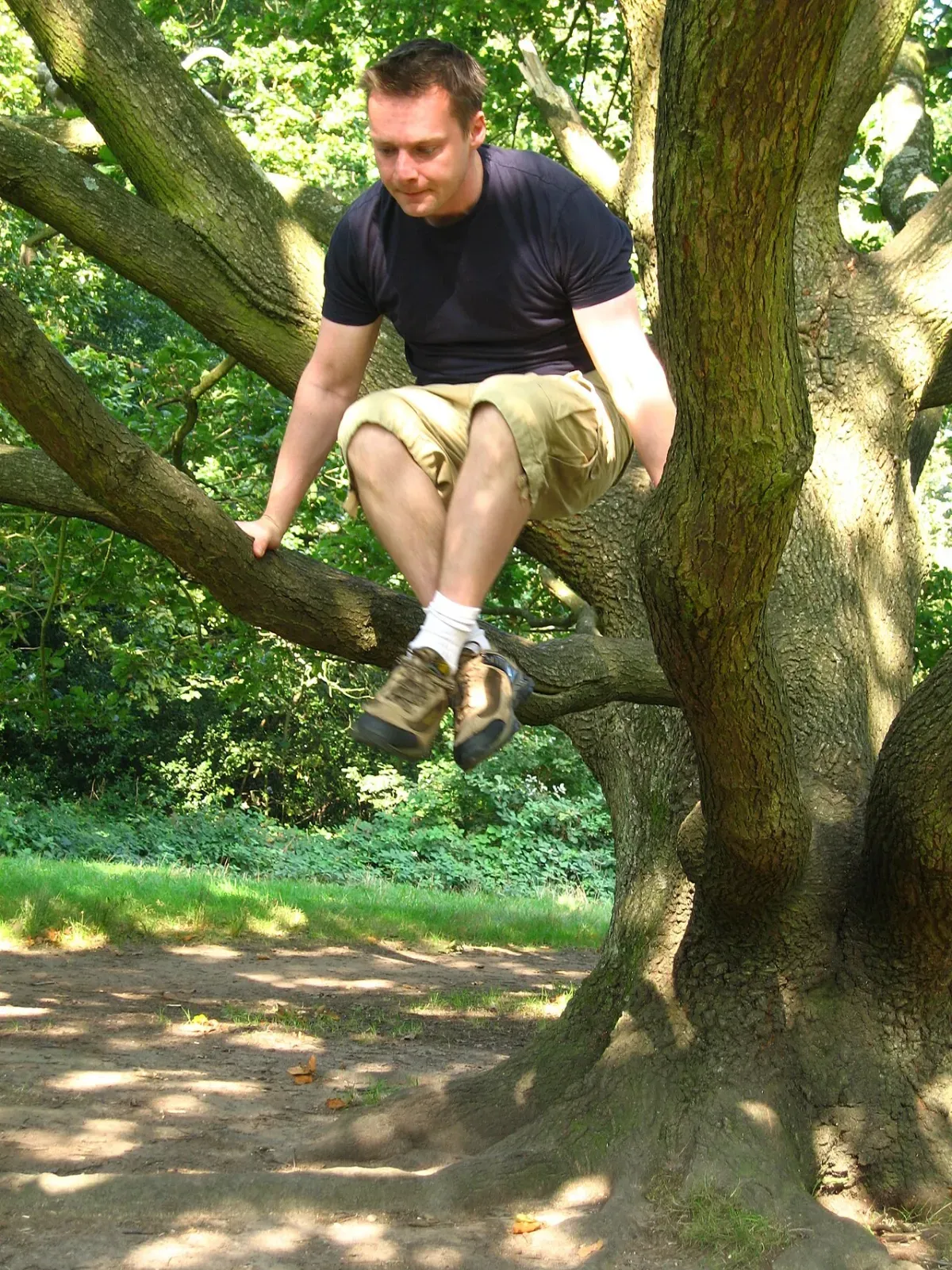 Photo by Jdoggett via Wikimedia Commons (CC BY-SA 3.0)
Close-grip and diamond push-ups
A normal push-up hits the chest. Bring your hands in close, and the work shifts to the triceps. The diamond push-up, where your thumbs and index fingers touch to form a triangle under your sternum, is the most extreme version.
That same ACE study found the triangle (diamond) push-up produced the single highest triceps activation of all eight exercises tested, beating kickbacks, pushdowns, and overhead extensions. If you do one triceps exercise with no equipment, this is it.
Diamond push-ups are hard. If you can’t manage a full one yet, drop to your knees, or place your hands on a raised surface like a step or the edge of a couch so your body is more upright. As you get stronger, slow the lowering phase down to three seconds and pause at the bottom. That small change adds a lot of difficulty without any weight.
Overhead extension with a backpack or bottle
This one targets the long head of the triceps, which the pressing moves work less directly. Hold a loaded backpack (or a single heavy water bottle) overhead with both hands, keep your elbows pointing forward and close to your head, then lower the weight behind your neck and press it back up. Move only at the elbow. Your upper arms should stay still, like two posts.
Load a backpack with books or filled bottles until ten reps feel challenging. It’s the closest a home setup gets to a cable triceps machine.
Biceps work: smaller, but worth doing well
Biceps are the harder muscle to train at home because they really do want load. Bodyweight alone struggles to challenge them through a curl, so this is where a backpack or bottles earn their place.
Curls with a loaded backpack or water bottles
Grab the top handle of a loaded backpack, or hold a water bottle in each hand, and curl with control. Keep your elbows pinned to your sides and your upper arms still. The only thing that should move is your forearm. Lower slowly, taking about two to three seconds on the way down, because that lowering phase is where a lot of growth happens and it’s the part people rush.
Two two-litre bottles weigh about 4kg total, which is light. The fix is reps and tempo: do sets of 15 to 20 with a slow lower and a one-second squeeze at the top. Time under tension does the work that heavy weight would do in a gym.
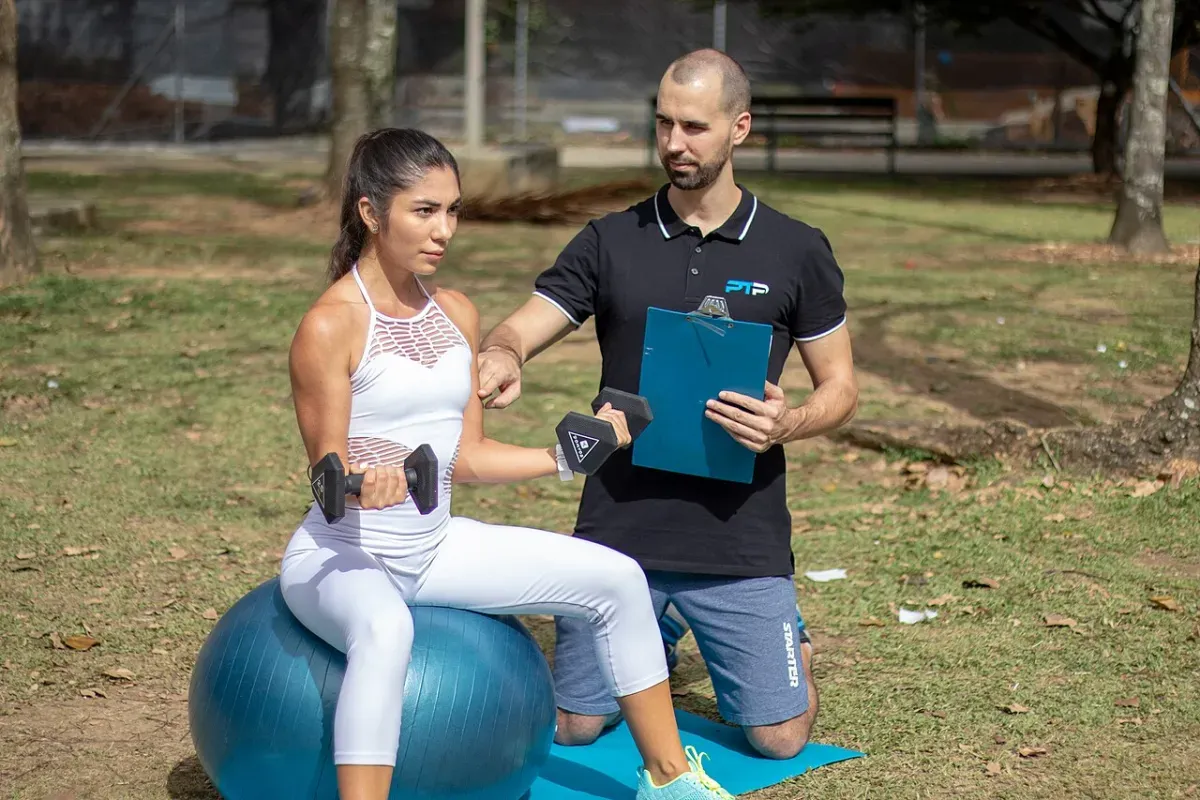 Photo by PTPioneer via Wikimedia Commons (CC BY 2.0)
Towel and isometric curls
No bottles, no bag? You can still load the biceps with a towel and your own resistance. Loop a towel under one foot, hold both ends, and curl upward while your foot pushes down to resist. Or sit, place your forearm against the underside of a heavy table, and try to curl the table up for ten to fifteen seconds. It won’t move. Your biceps will work hard anyway. Isometric holds build strength even though nothing visibly happens, which makes them a genuine option when you have nothing to lift.
Chin-ups if you have a bar
If there’s a doorway pull-up bar in your home, the chin-up (palms facing you) is the best biceps builder you can do without weights. It loads the biceps with your full bodyweight, far more than any bottle. Start with assisted versions, a band looped under your foot or a chair to push off, and work toward unassisted reps. Even three or four clean chin-ups beat dozens of light curls.
Why you can’t really isolate “just biceps” at home
Be honest about the limitation. A gym gives you the load and the angles to hammer biceps in isolation: heavy dumbbells, preacher benches, cables that keep tension constant. At home, your biceps just won’t get the same direct stimulus from water bottles and a backpack, because the resistance is light and gravity only pulls one direction.
There’s no magic curl variation that fixes this. What works is stacking a few small things. Rig up the heaviest household load you can, since a backpack stuffed with books beats two small bottles every time. Slow the lowering phase to drag out the time the muscle spends under tension. And lean on chin-ups if you have any kind of bar, because bodyweight is heavier than anything in your kitchen. Do that and your biceps will grow at home. They just grow slower than triceps do, which is one more reason to give the triceps the bulk of your effort.
A simple weekly plan
Two arm sessions a week, with at least one rest day between them, fits the global baseline for resistance training: the World Health Organization recommends muscle-strengthening activity on two or more days a week for adults (WHO, Physical Activity).
Day 1 (triceps focus):
- Diamond or close-grip push-ups: 3 sets to near failure
- Chair dips: 3 sets of 10 to 15
- Overhead extension with backpack: 3 sets of 10 to 12
- Backpack curls: 2 sets of 15
Day 2 (biceps focus):
- Chin-ups or band-assisted chin-ups: 3 sets
- Backpack or bottle curls: 3 sets of 15 to 20, slow lower
- Towel isometric curls: 2 holds of 15 seconds per arm
- Close-grip push-ups: 2 sets to finish the triceps
Rest 60 to 90 seconds between sets. When a movement gets easy, add reps, slow the tempo, or load more weight into the bag. Done properly, this bicep and tricep workout grows real arms at home. It isn’t something you tolerate until you can get to a gym.
Consistency beats intensity here. A meta-analysis of habit formation found it takes a median of around two months of repetition for a behaviour to feel automatic, with wide variation between people (Singh et al., 2024, Healthcare). Two short sessions you actually do every week will out-build a perfect program you abandon in March.
Common mistakes
A handful of errors quietly cap your results.
- Swinging the curl. If your back leans and your elbows drift forward, momentum is doing the lifting, not your biceps. Slow down and lighten up. A controlled bottle curl beats a heavy one you heave.
- Flaring your elbows in dips and push-ups. Elbows splayed out turns a triceps move into a shoulder strain. Keep them tracking back along your ribs.
- Cutting the range short. Half-reps feel productive because you can do more of them. Lower until your elbow hits 90 degrees on dips, and bring your chest near the floor on push-ups. Full range is where the muscle actually works.
- Training arms every single day. Muscle grows during recovery, not during the set. Hitting arms daily just keeps them tired and sore. Two quality sessions a week, with rest between, beats seven rushed ones.
- Ignoring the triceps. This is the big one. If your arm routine is mostly curls, you’re training the smaller third of your arm and skipping the larger two-thirds.
Keep the habit, not just the workout
The exercises are the easy part. The hard part is doing them in week six, when the novelty is gone and nobody’s watching. A five-minute arm session on a flat day still counts, even when it feels like it doesn’t.
Once your arms are moving, round out the rest of your body at home with our ab workout at home and booty workout at home guides. And if motivation is the part that keeps slipping, the real fix is structural, not a pep talk, which we get into in how to motivate yourself to work out.
Frequently asked
- Can I really build arms at home with no equipment?
- Yes, especially the triceps, which make up most of your upper arm. Dips, diamond push-ups, and close-grip push-ups load the triceps hard with just your bodyweight and a chair. Biceps are harder without weight, but a loaded backpack or two water bottles gives you enough resistance to grow them.
- How many days a week should I train arms at home?
- Two days a week is plenty for most people, with at least one rest day in between. Arms also get worked during chest and back training, so they recover slower than you'd think. Training them hard every day backfires because muscle is built during recovery, not during the set.
- Are biceps or triceps more important for bigger arms?
- Triceps. They have three heads and make up roughly two-thirds of your upper arm, so growing them adds more visible size than biceps do. Most people overtrain biceps and neglect triceps, which is exactly backwards if size is the goal.