The 10-Minute Whole-Hip Stretching Routine for Desk Workers
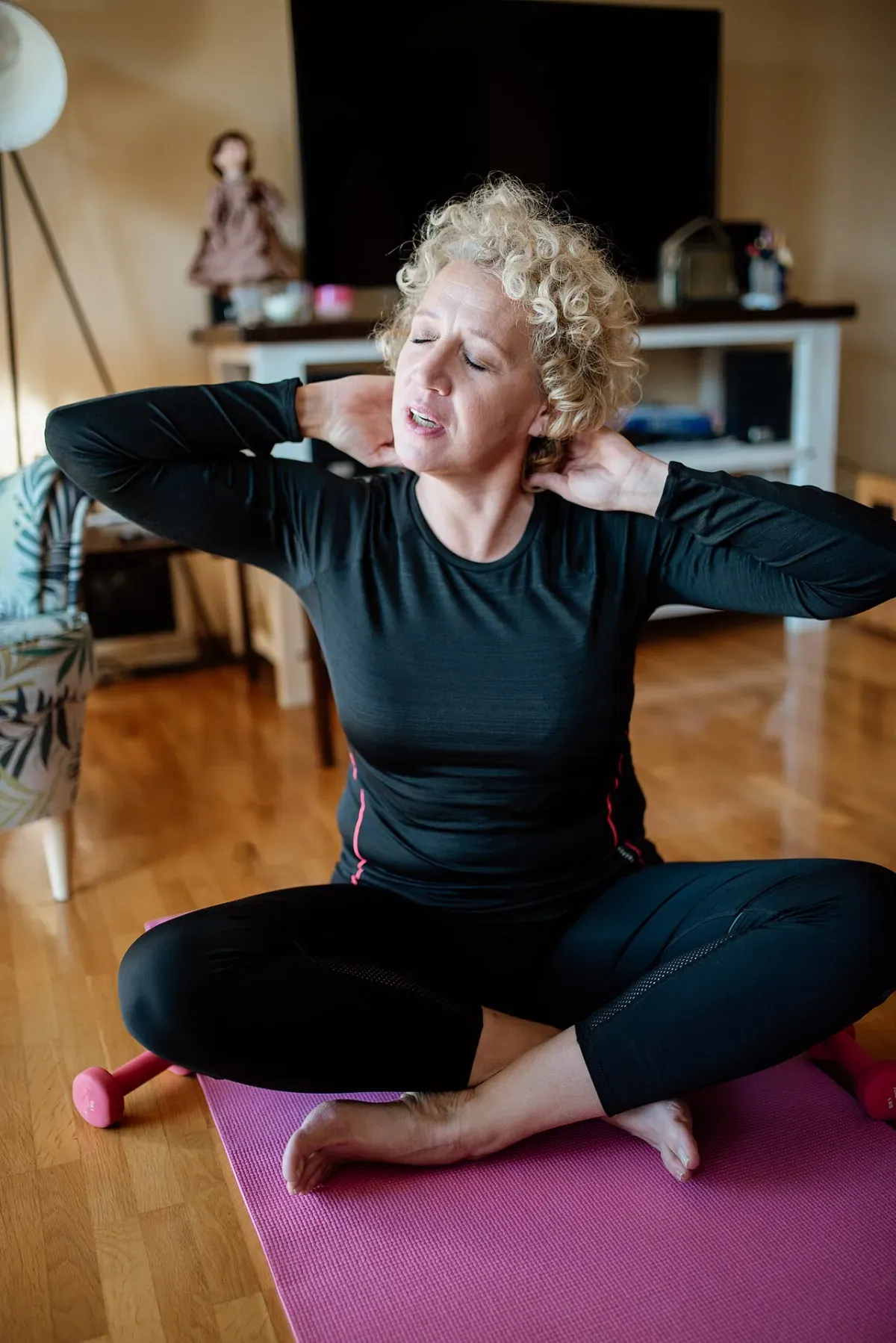
If you want to start moving better right now, you need a routine that works the whole joint, not just one side of it. The hip is a ball-and-socket joint. When desk workers feel stiff, they usually focus entirely on the front of their legs and ignore the rest of the surrounding muscles. This approach leaves the job half done.
To actually improve your mobility, you have to address the entire perimeter of the pelvis. You need a practical sequence that covers the front, back, inner, and outer hip regions. A balanced approach ensures that your legs can move freely in all directions, whether you are walking up a flight of stairs or just standing up from your office chair.
Here is a straightforward routine designed to target the major muscle groups surrounding the joint. By performing a single solid hold on each side, you can complete the entire sequence in roughly ten minutes.
The Quick Answer: A 10-Minute Whole-Hip Routine
The table below outlines the core movements. If you transition smoothly from one stretch to the next, this fits easily into a morning routine or a quick break during your workday.
| Stretch | Target Region | Hold Time | Sets |
|---|---|---|---|
| Half-Kneeling Stretch | Front (Hip Flexors) | 30 seconds | 1 per side |
| Standing Quad Stretch | Front (Quadriceps) | 30 seconds | 1 per side |
| Figure-4 Stretch | Back (Glutes/Rotators) | 30 seconds | 1 per side |
| Knee-to-Chest | Back (Lower Glutes) | 30 seconds | 1 per side |
| Crossed-Leg Lean | Outer (Abductors/TFL) | 30 seconds | 1 per side |
| Butterfly Stretch | Inner (Adductors) | 30 seconds | 2 sets |
| Side Lunge | Inner (Adductors/Groin) | 30 seconds | 1 per side |
| Low Lunge with Reach | Front/Core Integration | 30 seconds | 1 per side |
Covering the front, back, outer, and inner hip
This sequence is built on the principle of complete coverage. The American Academy of Orthopaedic Surgeons notes that a complete hip conditioning program must cover the glutes, hamstrings, piriformis, adductors, abductors, and the tensor fascia latae. These eight movements cover everything on that list except the hamstrings, which get their own dedicated guide.
You’ll start by opening up the front of the hip. This area gets notoriously tight from long periods stuck in a chair. Next, the sequence moves to the back of the pelvis to address the glutes and the deep rotator muscles. Finally, you will target the outer and inner thigh to make sure the joint can move freely from side to side.
How long to hold and how often to practice
For general flexibility improvements, research published in the International Journal of Sports Physical Therapy recommends holding each static position for 15 to 30 seconds. You can repeat these holds two to four times per muscle group if you have extra time.
Regular practice usually beats infrequent, intense sessions. Aim to stretch at least two to three days per week. Running through this routine daily is absolutely fine and matches standard orthopedic conditioning programs.
Age slightly changes the rules for stretching. Older adults often see better flexibility gains with longer holds. A 60-second duration improves flexibility more than shorter holds in older populations. You might want to adjust your timer if you fall into this category.
Be mindful of your timing if you plan to exercise vigorously afterward. Long static holds immediately before intense exercise can temporarily reduce strength and limit jump or run performance. Save these long static stretches for after your main activity or do them as a completely standalone session.
Warm up first with easy movement
Never force cold muscles into a deep stretch. The American Academy of Orthopaedic Surgeons advises warming up with 5 to 10 minutes of low-impact activity before you begin stretching.
A brisk walk works perfectly. A short session on a stationary bike is another excellent choice. The goal is simply to elevate your heart rate slightly and get blood flowing to your lower body. Once your muscles are warm, they will respond much better to the demands of the routine.
Why Hips Feel Tight
Many desk workers experience a persistent sensation of stiffness around their waist and upper legs. Understanding the physical reality of sitting helps you choose the right interventions.
What long sitting actually does to your mobility
When you sit in a chair for eight hours, your hips stay in a continuously flexed position. The muscles at the front of the joint remain shortened. The muscles at the back stay lengthened and inactive. Over time, people who sit like this tend to show less hip extension when they finally stand up.
A 2021 cross-sectional study by Boukabache and colleagues looked at the relationship between daily sitting and hip flexibility. The researchers found that people with high activity levels who sat for less than four hours a day showed 6.1 degrees more passive hip extension than a low-activity group that sat for more than seven hours a day.
Because this study is cross-sectional, prolonged sitting is only associated with reduced passive hip extension. The data doesn’t definitively prove that the chair caused the stiffness. The difference was statistically significant. Whether 6 degrees changes how you move is a fair question, but it isn’t a rounding error.
The four regions of the hip joint
To regain lost mobility, you need to understand the basic geography of the joint. The hip requires attention from all four directions.
The front includes the hip flexors and the quadriceps. These are the muscles that lift your knee toward your chest. The back houses the glutes, hamstrings, and deep rotators like the piriformis. These power your stride and help stabilize your pelvis when you walk.
The inner hip contains the adductor muscles. They pull your legs together. The outer hip includes the abductors and the tensor fascia latae. These move your leg out to the side and keep your pelvis level when you stand on one leg.
What stretching can actually fix
We need to be clear about what these exercises will actually achieve. A review in the International Journal of Sports Physical Therapy provides a very honest caveat about flexibility training. Stretching has not been shown to reduce overall injury incidence. You should value stretching for the comfort and range of motion it provides, rather than viewing it as a magical shield against sports injuries.
Short-term range-of-motion gains often reflect an increased tolerance to the stretch sensation. Your nervous system simply allows you to move further before sending a discomfort signal. Whether the muscle itself ever gets longer is still debated among researchers.
Front of the Hip: Hip Flexors and Quads
The front of the hip is the primary battleground for anyone who works at a computer. Opening this area allows you to stand taller and walk with a much more efficient stride.
Half-kneeling hip flexor stretch
This is the most popular stretch for the front of the leg. Most people do it incorrectly by leaning too far forward and aggressively arching their lower back.
Kneel on your right knee. You might want to place a folded towel or a yoga mat under your kneecap for comfort. Place your left foot flat on the floor in front of you. Both your right knee and left knee should be bent at roughly 90-degree angles. Now, focus entirely on your pelvis. Imagine your pelvis is a bucket of water. Try to tip the bucket backward so water spills out the back. This specific motion is called a posterior pelvic tilt.
A 2024 crossover trial published in BMC Musculoskeletal Disorders found that adding this posterior pelvic tilt significantly outperformed the standard forward-lean version of the stretch. The researchers used two sets of 30 seconds. Tuck your tailbone, squeeze your right glute slightly, and hold the position. You’ll feel a strong, localized pull at the very top of your right thigh without needing to lean forward at all.
Standing quad stretch
The quadriceps muscle group runs down the front of your thigh and crosses the hip joint. You need to stretch this group to achieve full hip extension.
Stand tall near a wall or a sturdy chair so you don’t lose your balance. Shift your weight completely to your left leg. Bend your right knee and bring your right heel up toward your glutes. Reach back with your right hand and grasp your right ankle. If you can’t reach your ankle, you can grab your pant leg or loop a towel around your foot.
Keep your knees close together. Don’t let your right knee flare out to the side. Stand up completely straight and look forward. Hold this position for 30 seconds and then carefully switch sides.
Low lunge with reach
This movement combines a deep stretch for the hip flexors with an opening for the torso and core muscles.
Begin in a standard push-up position on the floor. Step your right foot forward and place it flat on the floor directly outside your right hand. Lower your left knee to the floor. Keeping your left hand planted firmly, reach your right arm straight up toward the ceiling. Turn your chest toward your right knee. Hold this open position while breathing slowly.
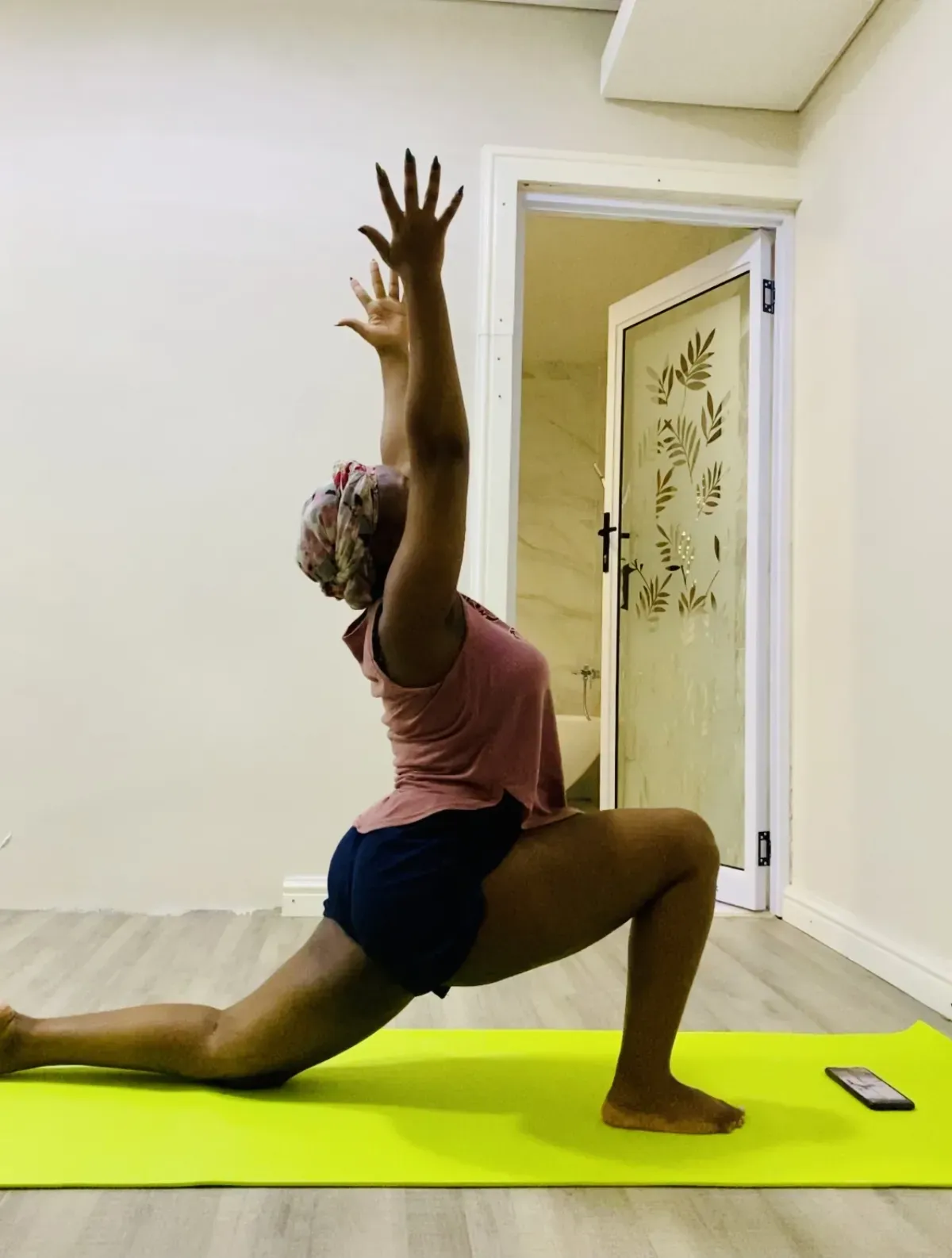 Credit: Photo by BameSanah88 on Wikimedia Commons (CC BY-SA 4.0)
Targeted front-leg work
If you struggle specifically with severe tightness in the front of your legs, you might need more targeted variations. You can explore a wider variety of techniques in our guide to hip flexor stretches.
Back of the Hip: Glutes and Deep Rotators
The muscles at the back of your pelvis do heavy lifting during walking, running, and climbing stairs. When they get stiff, they can make your lower back feel tight and restrict your stride length.
Lying figure-4 stretch
This stretch targets the piriformis, which is a small muscle located deep beneath the larger glute muscles.
Lie on your back with your knees bent and both feet flat on the floor. Cross your right ankle over your left knee. This creates a shape that looks exactly like the number four. Reach your hands around your left thigh. Gently pull your left knee up toward your chest.
You should feel a deep stretch in the outside of your right hip and glute. Keep your head and shoulders relaxed heavily on the floor. Don’t strain your neck by lifting your head to look at your legs. Hold the position for 30 seconds.
Seated figure-4 for the office
You can perform the exact same mechanical stretch while sitting right at your desk. This is incredibly useful during a long workday.
Sit near the edge of a sturdy office chair. Keep your spine perfectly straight and plant your left foot on the floor. Cross your right ankle over your left knee. Let your right knee drop open toward the floor. Place your hands lightly on your shin for stability.
Hinge forward at the hips. Keep your chest lifted up and your back flat. Don’t round your shoulders forward. You only need to lean forward a few inches to feel a strong pull in your right glute. Hold this for 30 seconds.
Knee-to-chest stretch
This is a gentle, calming stretch that addresses the lower glutes and provides some mild relief to the lower back area.
Lie flat on your back with your legs extended straight along the floor. Bend your right knee and interlace your fingers just below the kneecap. Slowly pull your right knee straight up toward your chest. Keep your left leg as straight and relaxed as possible on the floor.
Breathe deeply into your belly. Hold for 30 seconds, then slowly release the tension and switch to the left leg.
Detailed glute releases
The gluteus maximus, medius, and minimus require different angles of approach for maximum release. For a detailed breakdown of these specific muscles, check out our article on glute stretches.
Outer and Inner Hip: Side Hip and Adductors
Lateral movement is crucial for overall joint health. If you only stretch the front and back of your body, your hips will remain restricted during side-to-side motions.
Standing crossed-leg lean
This move targets the abductors and the tensor fascia latae located on the outside of your hip.
Stand next to a wall with your right shoulder facing the wall. Place your right hand on the wall for support. Cross your left leg entirely behind your right leg, planting your left foot firmly on the floor.
Slowly push your right hip outward toward the wall. Keep your torso upright and avoid twisting your shoulders. You’ll feel a long stretch running down the outside of your right hip and thigh. Hold this position for 30 seconds.
Butterfly stretch
The butterfly stretch is a classic floor exercise for the adductor muscles located on the inside of the thighs.
Sit on the floor. Bring the soles of your feet together in front of you. Let your knees fall open toward the floor. Grasp your feet or ankles with your hands. Sit up very tall to lengthen your spine and balance your weight evenly on your sit bones.
If you want a deeper stretch, gently press your elbows against your inner thighs. Let gravity do most of the work.
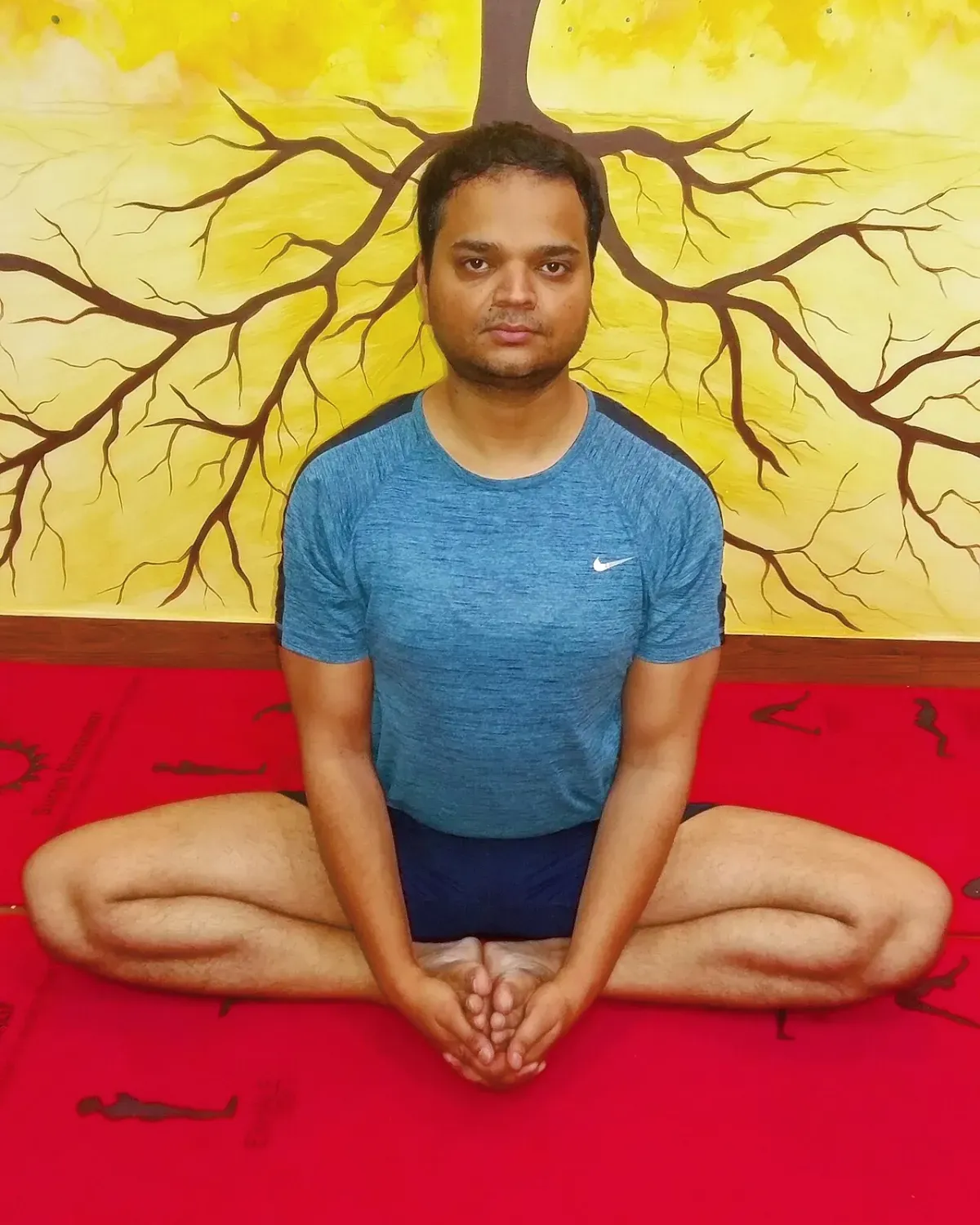 Credit: Photo by Yogini Asha on Wikimedia Commons (CC BY-SA 4.0)
Side lunge and seated straddle
You can target the groin muscles dynamically with a side lunge or statically with a seated straddle.
For the side lunge, stand with your feet very wide apart. Keep your toes pointing generally forward. Shift your weight to your right leg and bend your right knee. Keep your left leg completely straight with the foot flat on the floor. Push your hips back slightly as you lower down. You’ll feel a stretch along the inside of your straight left leg.
For the seated straddle, sit on the floor and open your legs as wide as comfortably possible into a V-shape. Keep your toes pointing straight up toward the ceiling. Walk your hands forward on the floor between your legs. Keep your back straight. Hold the position for 30 seconds.
Advanced inner thigh work
The adductor group consists of five distinct muscles. Releasing them properly requires patience and good technique. You can find more advanced variations in our complete guide to groin stretches.
A Realistic Daily Plan for Desk Workers
Knowing the exercises is only the first step. You have to actually integrate them into a busy working life.
Break up your sitting time
Stretching for ten minutes at night can’t entirely undo ten hours of continuous sitting. You need to interrupt the sedentary pattern throughout your day.
The World Health Organization strongly advises that adults limit the amount of time spent being sedentary. As a practical step, you should try to stand up, walk around, or simply shift your posture every 30 to 60 minutes. This frequent, low-intensity movement breaks up the static positioning of the joint.
Stretching supports your overall health, but it doesn’t replace formal exercise. Adults still need at least 150 minutes of moderate-intensity aerobic activity every single week.
The 3-minute desk version
You don’t need a yoga mat or athletic clothing to maintain your hip mobility during the workday. You can perform a highly effective mini-routine wearing your regular work clothes.
Stand up from your chair. Perform the standing quad stretch for 30 seconds on each leg. Next, sit back down on the edge of your chair. Perform the seated figure-4 stretch for 30 seconds on each side. Finally, stand up and perform a standing side lunge, holding for 30 seconds on each leg.
This sequence takes exactly three minutes. You won’t break a sweat, but you’ll effectively reset the tension in your lower body before your next meeting.
Combine stretching with active movement
Passive stretching helps you tolerate new ranges of motion. To truly own that new flexibility, you need to build active control in those positions.
Once your hips start feeling looser, begin incorporating exercises that build strength at the end ranges of your mobility. A muscle that is long but weak isn’t particularly useful for daily activities. You can learn how to build this active control in our guide to hip mobility exercises.
Common Mistakes and When to Get Help
Stretching should be a safe and restorative practice. Poor technique can easily irritate the joint and make stiffness worse.
Stop bouncing and holding your breath
Many people attack their flexibility with too much aggression. Bouncing into a stretch is a very common mistake. You should move into the position smoothly and hold it completely still.
Holding your breath is another frequent error. You must breathe slowly and deeply into your abdomen while you hold the position.
Arching the lower back happens constantly during hip flexor stretches. Always focus on keeping your spine neutral and your pelvis tucked.
The American Academy of Orthopaedic Surgeons states clearly that you should never stretch into pain. A proper stretch feels like a mild, dull tension. It should never feel sharp, burning, or electrical. Back off immediately if you feel joint pain.
Red flags for serious hip pain
Some hip pain has nothing to do with tight muscles. You need to know when to stop stretching and consult a medical professional.
The National Health Service provides clear self-care guidance and lists specific red flags for hip pain. For ordinary hip stiffness, you should keep moving within the limits of your comfort. You should see a GP if your hip pain hasn’t improved after two weeks of careful self-care. You should also consult a doctor if morning hip stiffness lasts more than 30 minutes after you wake up.
Certain symptoms require immediate medical care. Per NHS guidance, seek urgent medical attention for hip pain that is severe and sudden without a clear injury. You must also seek immediate help if your hip is swollen and hot, if you experience pain after a fall and find yourself unable to bear weight, or if your hip pain is accompanied by a fever.
Setting a 4-6 week horizon
This takes longer than most people want to hear. You might feel a temporary sense of relief immediately after a stretching session, but creating lasting changes in your resting mobility takes weeks of consistent effort.
The standard hip conditioning program published by the American Academy of Orthopaedic Surgeons is built to run for 4 to 6 weeks. That is a reasonable window before judging whether the routine is working. If you perform your 30-second holds daily, or at least two to three times a week, you’ll give your body enough time to adapt.
Consistency matters more than intensity. Breathe steadily during your holds, and keep your expectations grounded. If you are new to this process and want to understand the fundamental rules of flexibility training, read our comprehensive beginner stretching guide.
Frequently asked
- How often should I stretch my hips?
- Aim to stretch your hips at least two to three days a week for general flexibility. Daily practice is also perfectly fine and matches standard orthopedic advice. Just remember to warm up with some light movement first.
- How long should I hold a hip stretch?
- A standard hold is 15 to 30 seconds per stretch. Older adults often get better results holding stretches for up to 60 seconds. You'll want to repeat each movement two to four times per muscle group.
- Can stretching fix my hip pain entirely?
- Stretching can improve your range of motion and make daily movement more comfortable. It isn't a guaranteed cure for all types of discomfort. If ordinary stiffness doesn't improve after two weeks of self-care, or if you feel severe pain, you should see a doctor.