Calf Stretches for Tight Lower Legs
The most effective way to resolve tight calves is to commit to a consistent routine over time. Relief requires holding a static stretch for about 30 seconds without bouncing. You should aim to stretch daily, or at minimum three to four times per week. Flexibility takes weeks to months to build and must be maintained with regular effort. This baseline protocol is outlined by Harvard Health’s stretching guide, and it applies whether you are recovering from a long run or trying to undo the stiffness of a desk job. Once you understand the basic mechanics, you can integrate these movements into your daily life. If you are entirely new to flexibility work, a comprehensive stretching for beginners guide is the best place to start.
The Anatomy of a Calf Stretch
To stretch your lower leg effectively, you have to understand what is happening under the skin. The calf is actually two distinct muscles working together. They attach to the Achilles tendon at the bottom, but they start at different points near the top. This anatomical difference completely changes how you need to stretch them.
The gastrocnemius needs a straight knee
The gastrocnemius is the visible bulk at the back of your lower leg. It has two distinct heads that start on the thighbone (femur) and cross both the knee and ankle joints. Because it crosses two joints, it only reaches its maximum length when the knee is fully locked out and the ankle is flexed upward. Any bend in the knee introduces slack into the gastrocnemius. Straight-knee stretches are therefore required to target this larger superficial muscle.
The soleus requires a bent knee
Beneath the gastrocnemius lies the soleus. This muscle is wider, flatter, and sits deeper in the leg. Crucially, the soleus only crosses the ankle joint. According to the Cleveland Clinic’s calf muscle overview overview, this structural difference dictates how we stretch it. When you bend your knee, the gastrocnemius relaxes. This allows the stretching tension to bypass the surface muscle and isolate the deep soleus fibers. A complete calf routine must include both straight-knee and bent-knee variations.
Why calf cramps happen so often
Tightness is one problem, but sudden cramping is another. Roughly 75% of people over age 50 have experienced leg cramps based on data from the Cleveland Clinic’s calf muscle overview page. These painful spasms often occur at night. They are typically linked to muscle fatigue, dehydration, or holding the foot in a pointed position under heavy blankets. Regular stretching helps maintain muscle length and can reduce the frequency of these nocturnal interruptions.
Medical Red Flags to Watch Out For
Calf tightness is usually a harmless mechanical issue. Sometimes it is a symptom of a severe medical event. You need to know the difference before you start pulling on the tissue.
Spotting a blood clot
Sudden one-sided calf pain accompanied by swelling (edema), warmth, or discoloration can be serious. Discoloration might appear red, purple, brown, or black depending on your skin tone. These are classic warning signs that your calf symptoms may be a deep vein thrombosis (DVT) rather than simple tightness. These symptoms need immediate medical attention. Do not stretch the leg. Do not massage the tissue. Pushing on a blood clot can dislodge it, creating a life-threatening situation. The Cleveland Clinic’s calf muscle overview guidelines are very clear on treating these signs as a medical emergency.
Managing persistent Achilles pain
Pain located lower down in the Achilles tendon requires a different approach than general muscle tightness. Persistent Achilles pain deserves assessment by a physical therapist or doctor rather than self-treatment. Aggressively stretching an inflamed or degenerated tendon can sometimes provoke the tissue further. Tendons require load and strength to heal. Passive stretching rarely provides a long-term solution for localized tendon pain. If the pain sits under your heel instead, see our guide to plantar fasciitis stretches.
The Wall Calf Stretch Method
The wall stretch is the most accessible way to mobilize your lower legs. You can do it anywhere you have a flat vertical surface and supportive shoes.
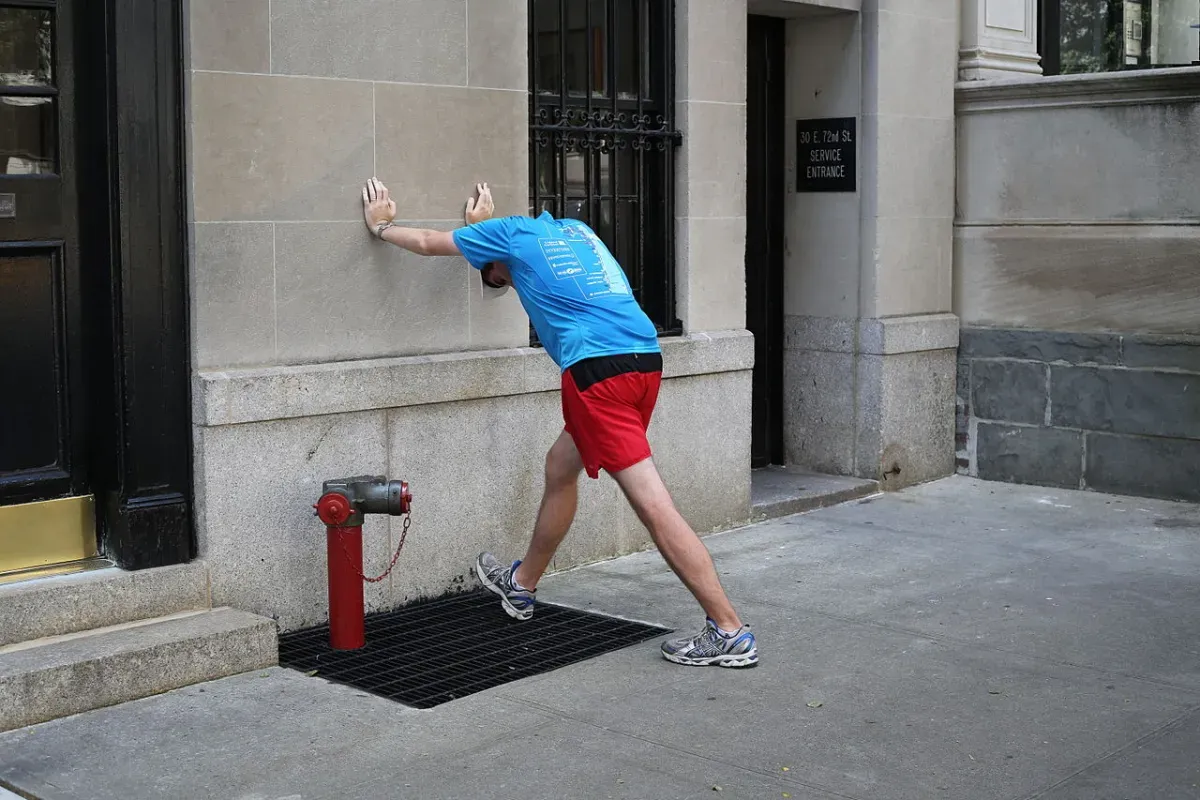 Photo by Timothy Krause via Wikimedia Commons (CC BY 2.0)
Setting up the straight-leg version
Stand facing a wall with your feet hip-width apart. Place your hands flat against the wall at shoulder height. Step your right foot back about two feet. Keep your right heel firmly planted on the floor and lock your right knee perfectly straight. Bend your front left knee and lean your body weight forward into the wall. You should feel a strong pull in the upper portion of your right calf. Keep your torso upright and your hips square to the wall. Hold this position steadily for 30 seconds. Switch sides.
Transitioning to the bent-knee stretch
Once you finish the straight-leg hold, you can easily shift to the soleus stretch. Keep your right foot back, but slide it a few inches closer to the wall. Keep your right heel glued to the floor. Now, slightly bend your right knee. As the knee bends, the stretch will shift lower down your leg toward the Achilles tendon. You might need to sink your hips slightly downward to find the right tension. Hold this bent-knee position for 30 seconds.
Common form mistakes to avoid
The most frequent error in a wall stretch is turning the back foot outward. If your toes point to the side, the stretch bypasses the calf fibers and twists the ankle joint. Look down at your back foot and ensure the toes point directly at the wall. The second common mistake is lifting the heel. If the stretch feels too intense, people naturally raise their heel a millimeter off the floor. This eliminates the stretch entirely. Step your foot slightly further forward if you cannot keep the heel flat.
Floor and Seated Calf Stretches
You do not always need a wall to find a good stretch. Floor-based variations are excellent for quiet home routines or integrating into a broader yoga practice.
The seated towel stretch
This variation is ideal if you have limited mobility or balance issues. Sit on the floor with your legs extended straight in front of you. Loop a long towel, yoga strap, or sturdy belt around the ball of your right foot. Sit up tall and pull gently on the ends of the towel. Draw your toes back toward your shin until you feel tension in the calf. Keep the knee straight. This is a very controlled way to stretch, making it a perfect addition to a morning stretch routine before you start your day.
The downward dog walkout
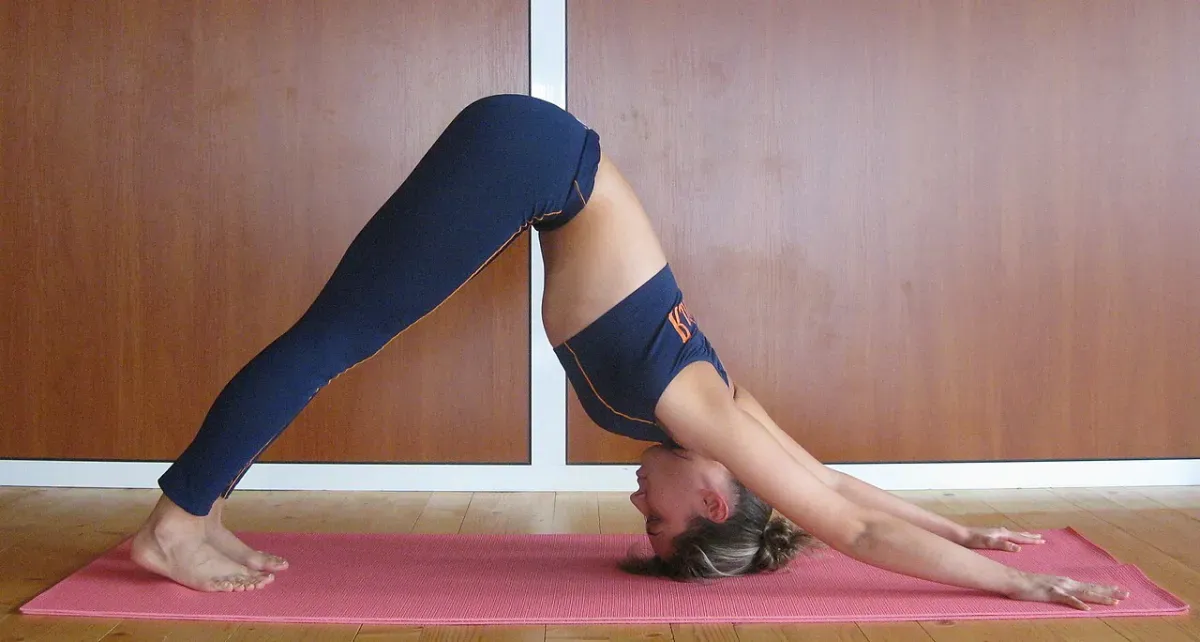
Start on your hands and knees. Tuck your toes under and lift your hips high into the air. Your body should form an inverted V shape. Press your hands into the floor. Now, gently pedal your feet. Bend your left knee while pressing your right heel down toward the mat. Hold for a second, then switch. This dynamic movement warms up the tissue. After a few pedals on each side, press both heels down simultaneously and hold the static stretch.
The elevated heel drop stretch
Find a sturdy step or stair. Stand on the edge so that the balls of your feet are on the step and your heels hang off the back. Hold onto a railing for balance. Slowly lower both heels toward the floor until you feel a deep stretch in the back of your lower legs. This uses your full body weight to lengthen the muscles. It provides a deeper range of motion than the floor stretches because the heel is allowed to drop below the level of the toes.
Eccentric Strength vs Passive Stretching
Tightness is frequently a symptom of weakness. When a muscle lacks the strength to absorb the forces placed upon it, the nervous system tightens the tissue to create artificial stability. Stretching feels good temporarily. Building strength fixes the problem permanently.
The Alfredson heel drop protocol
The medical community radically changed how it views calf and Achilles recovery in the late 1990s. In a landmark trial published by Alfredson et al. 1998, Am J Sports Med (PubMed), researchers tested a heavy-load eccentric training protocol. They took 15 recreational athletes with chronic Achilles tendinosis and had them perform 12 weeks of eccentric heel drops. All 15 athletes successfully returned to their pre-injury running levels. The comparison group consisted of 15 patients who received conventional treatments like rest, anti-inflammatories, and standard physiotherapy. Every single patient in that control group eventually required surgery.
How to perform an eccentric drop
An eccentric contraction means the muscle is lengthening while it is under tension. To perform the Alfredson protocol, stand on a step with your heels hanging off. Rise up onto your tiptoes using both feet. Once you are at the top, lift your uninjured leg off the step entirely. Now, slowly lower your body weight down using only the single working leg. The lowering phase should take three to four seconds. Drop the heel below the level of the step. Place the second foot back down to push back up to the starting position. This builds incredible resilience in the tissue and fits well into any leg workout at home.
Why strength prevents tightness
When you perform heavy eccentric drops, you are signaling the tissue to adapt. The muscle fibers grow stronger and longer simultaneously. A stronger calf does not fatigue as quickly during a run or a long walk. When the muscle resists fatigue, it does not spasm or knot up afterward. If you have been stretching your calves for months without lasting relief, you likely need to introduce strength training.
Routine Design for Runners and Desk Workers
Your daily habits dictate how your muscles adapt. A runner placing massive repetitive impact on their legs needs a different approach than an office worker who sits in a static position for eight hours.
Warming up before a run
Static stretching before a run is largely ineffective and can temporarily decrease your power output. Instead, prepare the calves with dynamic movements. Perform walking lunges, gentle skipping, and calf raises. Runners almost always develop tightness in the entire posterior chain simultaneously. The calves and hamstrings work together to decelerate the leg. Incorporating hamstring stretches into your post-run routine will take secondary tension off the lower leg. Save the 30-second static holds for after your run when the muscles are warm and pliable.
Releasing tension after a desk day
Sitting in a chair keeps your knees bent and your ankles resting in a relaxed, slightly pointed position. Over time, the nervous system accepts this shortened position as the new normal. To counteract a desk day, you need frequency. Keep a slant board or a yoga block near your workspace. Stand up every few hours and hold a straight-leg calf stretch for 30 seconds on each side. Consistency throughout the day yields better results than one marathon stretching session on the weekend.
Complementing stretches with foam rolling
Tissue massage can temporarily desensitize the nerve endings in a tight muscle. This makes foam rolling an excellent companion to a stretching routine.
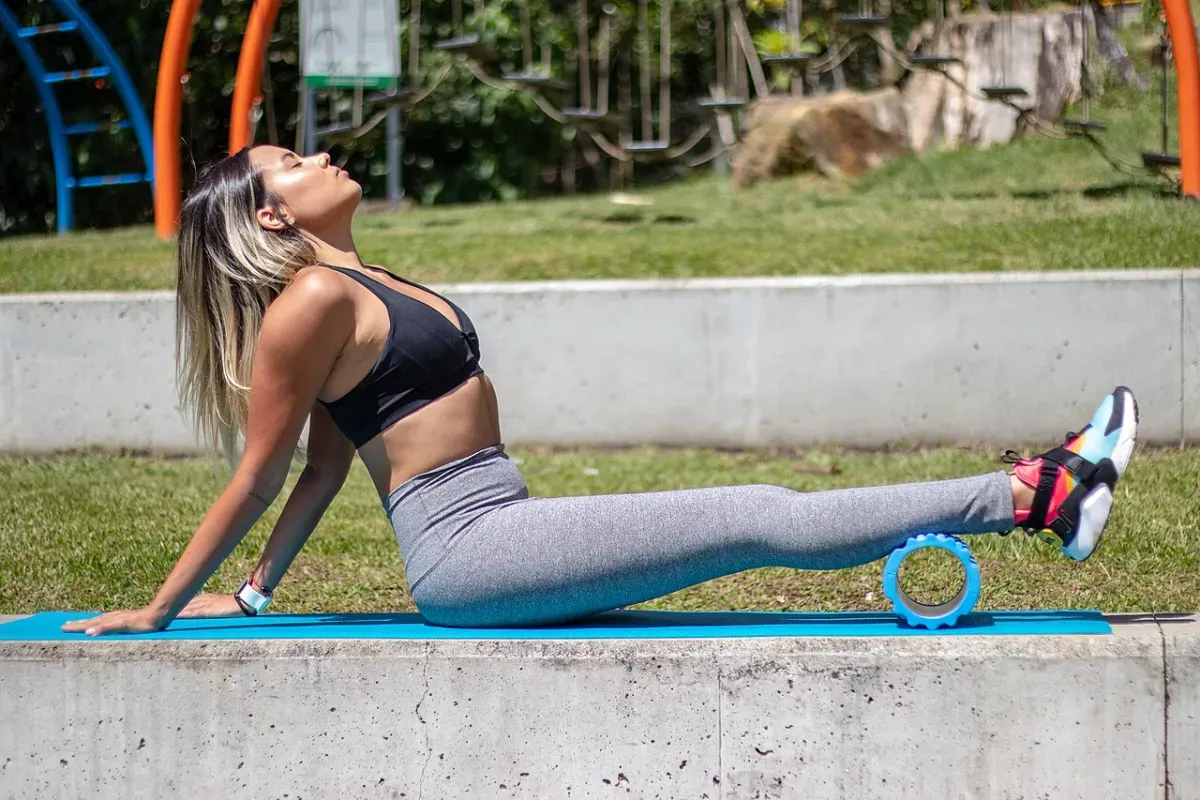 Photo by Tyler Read via Wikimedia Commons (CC BY 2.0)
Sit on the floor and place the foam roller under your right calf. Support your body weight with your hands behind you. Slowly roll the length of the muscle from just above the ankle to just below the back of the knee. If you find a particularly tender spot, stop and rest your weight on it for 15 seconds. Breathe deeply. Foam rolling does not physically stretch the muscle fibers, but it alters your pain perception. Rolling the tissue right before you perform a wall stretch often allows you to sink deeper into the range of motion.
Frequently asked
- How long should I hold a calf stretch?
- You should hold a static calf stretch for about 30 seconds. Bouncing can cause micro-tears in the muscle tissue, so keep the hold steady and breathe deeply.
- Why do I feel the stretch behind my knee sometimes?
- The larger calf muscle crosses the knee joint. When you stretch with a completely straight leg, the tension often peaks near the upper attachment point behind the knee.
- Can stretching cure my Achilles tendon pain?
- Passive stretching alone rarely cures chronic Achilles pain. Eccentric strength training is usually required to rebuild the tendon tissue, and persistent pain should be evaluated by a physical therapist.