Full Body Stretch: A Head-to-Toe Routine That Sticks
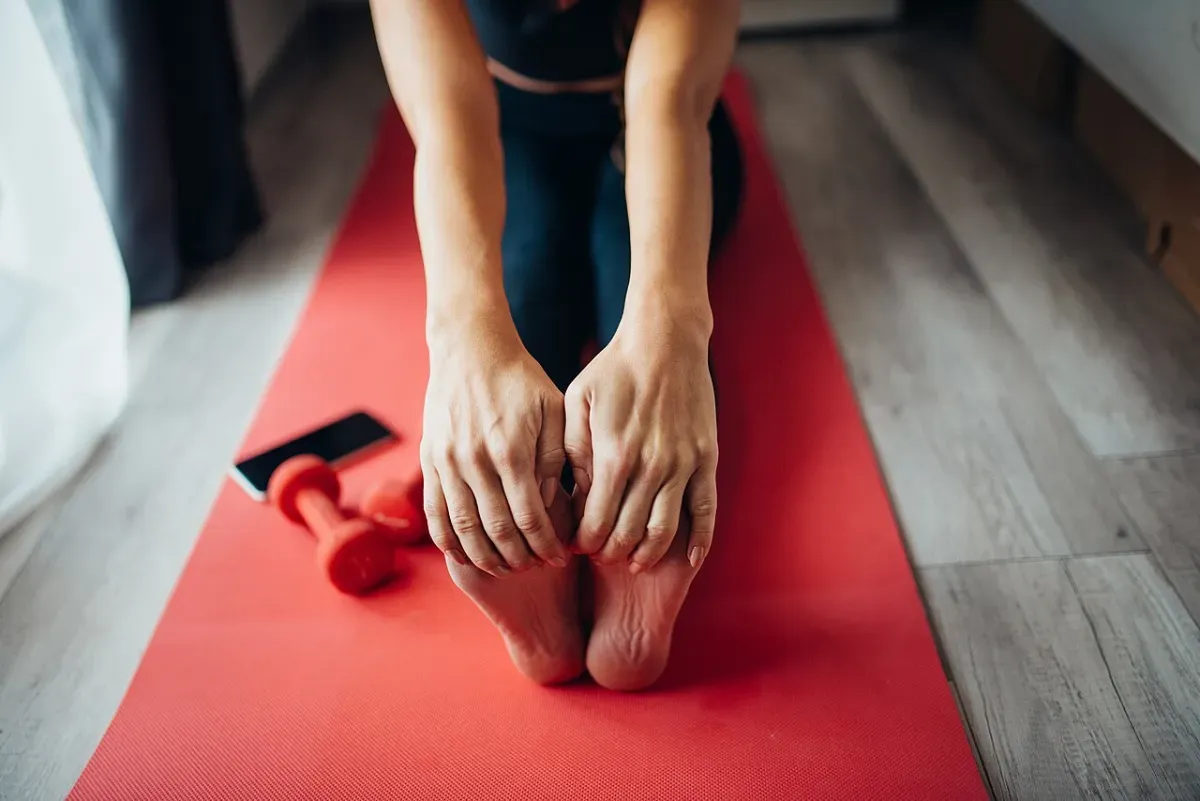
A good full body stretch moves you from neck to calves in one continuous flow, and a useful one fits inside the time you actually have. Below is a named sequence with hold times, a six-minute version for busy days and a twelve-minute version for when you want to settle in. You can do all of it on a mat or a patch of carpet, no equipment.
One opinion before the routine, since it shapes everything else: consistency beats depth. A short stretch you do most days will improve how your body feels far more than an ambitious 30-minute session you manage once a fortnight. Harvard Health recommends stretching daily, or at least three to four times a week, to keep muscles flexible and joints moving through their full range (Harvard Health Publishing). Frequency is the lever. Reach is just a nice bonus that shows up over months.
Dynamic vs static, and when to use each
These are two different tools. Dynamic stretching means moving in and out of a position, like swinging a leg or rolling the shoulders, so the muscle never sits at its end range for long. Static stretching means easing into a position and holding it still for 20 to 60 seconds.
Timing decides which one you want. Before a run, a lift, or any sport, lean on dynamic movement. A 2011 systematic review by Behm and Chaouachi found that holding long static stretches right before activity can produce small short-term drops in strength and power, while dynamic stretching tends to have no effect or even a slight boost (Behm & Chaouachi, 2011, PubMed). The same review noted that keeping total static stretch time under about 90 seconds per muscle, and not pushing past mild discomfort, largely avoids that dip.
Static holds earn their place after exercise, or in a standalone session, when the tissue is already warm and you want to work on flexibility. Cold muscle does not love being pulled hard. Harvard Health is blunt about it: stretching muscles before they are warmed up can hurt them, so five to ten minutes of light movement first is worth the time (Harvard Health Publishing).
So the routine below is built two ways. The dynamic moves double as a warm-up. The static holds come later, once you are loose.
Who this is for and how long it takes
This routine suits beginners and anyone with a desk-bound day who finishes work stiff in the neck, hips, and lower back. It is gentle by design. If you are recovering from an injury or managing a specific condition, run it past a physio first.
On time: the American College of Sports Medicine, as summarized by Harvard Health, suggests about 60 seconds of total stretch time per muscle group, which you can reach with two 30-second holds or four 15-second ones (Harvard Health, the ideal stretching routine). The twelve-minute version below hits that target for the big groups. The six-minute version trims the holds and skips a few repeats, which is the right trade when the alternative is skipping the whole thing.
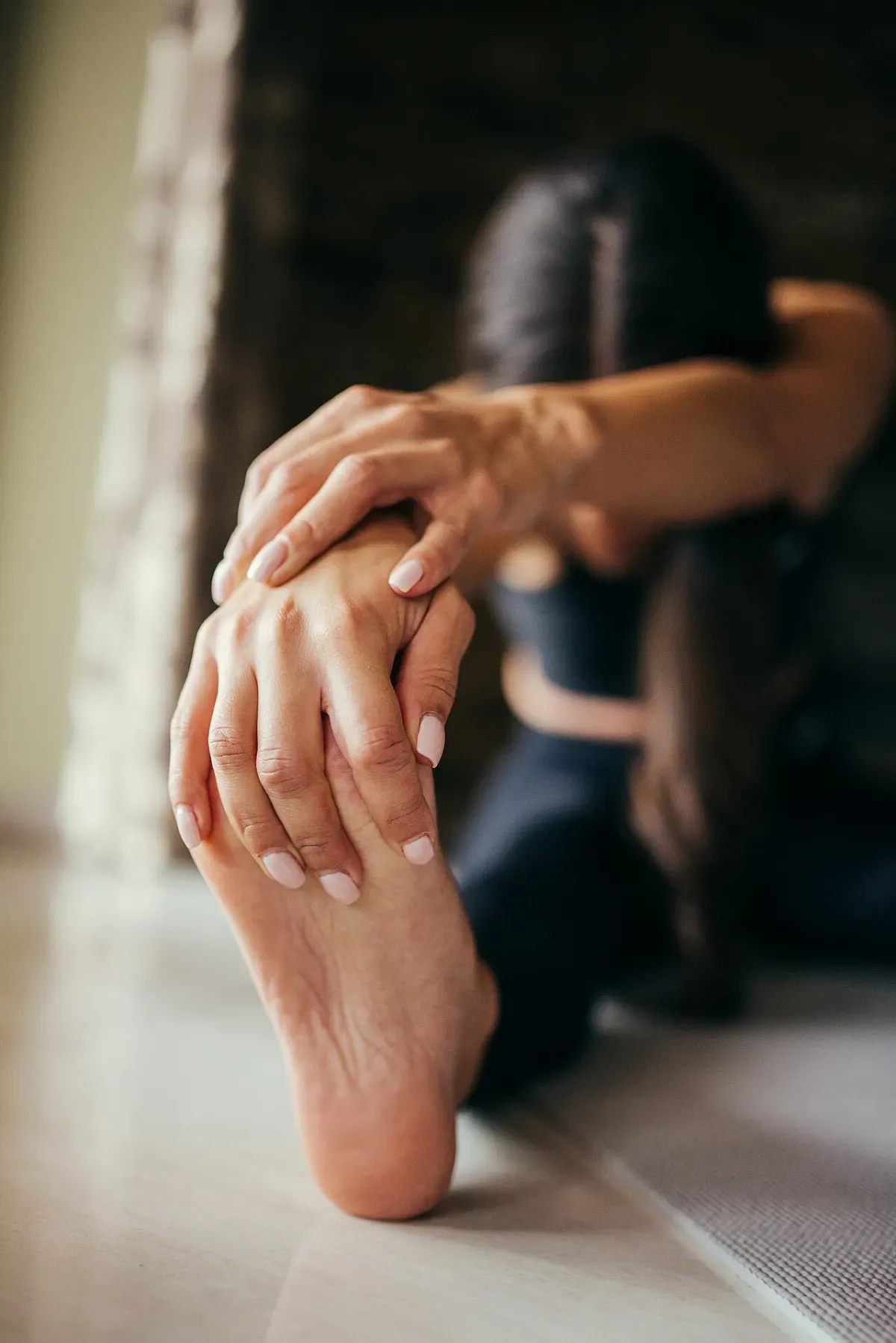
Photo by Nenad Stojkovic via Wikimedia Commons (CC BY 2.0)
The head-to-toe sequence
Run these in order. The flow travels top to bottom so you are never wondering what comes next. Breathe slowly and stop short of any sharp or pinching pain. A stretch should feel like a firm pull, not an alarm.
1. Neck rolls and side bends (45 seconds)
Stand or sit tall. Drop your right ear toward your right shoulder, hold a slow breath, then float the head forward and over to the left. Repeat twice each side. Then look gently left and right. This is dynamic, so keep it moving and never crank the head backward hard.
2. Shoulder rolls and chest opener (45 seconds)
Roll both shoulders backward in big slow circles, ten times. Then clasp your hands behind your back, straighten the arms, and lift them slightly while opening the chest. Hold 20 seconds. Desk posture rounds the shoulders forward all day, and this undoes a little of that.
3. Cat-cow for the spine (60 seconds)
On hands and knees, drop the belly and lift the gaze (cow), then round the back and tuck the chin (cat). Move with your breath, about eight slow cycles. This wakes up the whole spine without any held stretch, which is why it works well early when you are still cold.
4. Seated or standing spinal twist (40 seconds, each side)
Sitting with legs crossed, place your right hand behind you and your left hand on your right knee, then turn gently to the right. Hold 20 seconds, switch sides. Keep the spine long rather than collapsing into the twist.

Photo by Shixart1985 via Wikimedia Commons (CC BY 2.0)
5. Hip flexor lunge (30 seconds, each side)
Step into a low lunge, back knee on the floor, and push the hips gently forward until you feel the front of the back hip lengthen. Hold 30 seconds per side. Hips tighten from sitting more than almost anything else, so do not rush this one. If you want a deeper look at this area, the hip flexor stretches guide breaks down a few variations.
6. Hamstring stretch (30 seconds, each side)
Sit with one leg straight and the other bent, foot tucked toward your inner thigh. Hinge forward from the hips over the straight leg, reaching toward the foot without forcing it. Keep the back fairly flat rather than rounding hard at the neck. Hold 30 seconds, switch. The hamstring stretches article has seated and standing options if the floor version feels awkward.
7. Glute and lower-back stretch (30 seconds, each side)
Lie on your back, cross your right ankle over your left thigh, and draw the left thigh toward your chest until you feel it in the right glute. Hold 30 seconds per side. This also takes pressure off a tight lower back, which is the most common complaint I hear from desk workers. For more on that, see these lower back stretches.
8. Calf stretch (30 seconds, each side)
Stand facing a wall, hands flat against it, one foot back with the heel pressed down and the leg straight. Lean in until you feel the back calf lengthen. Hold 30 seconds, switch. Calves get short from shoes with any heel and from a lot of sitting.
Quick version vs the longer one
For the six-minute version, run each move once through with shorter holds, around 15 to 20 seconds, and skip the second side repeat on the twists. You will still touch every major group. This is the one to keep when motivation is thin, and if motivation is the real blocker, our notes on how to motivate yourself to work out might help more than another stretch.
For the twelve-minute version, run two holds per static stretch to reach that 60-second-per-group mark, add a few extra cat-cow cycles, and finish lying still for a minute. The longer version is where flexibility gains actually accumulate, because the tissue spends more total time under a gentle load. Neither version is better in the abstract. The better one is whichever you will repeat next week.
Common mistakes that make stretching feel useless
A few errors come up constantly, and each one quietly cancels the benefit.
Bouncing into the stretch. Harvard Health warns against bouncing because it can cause injury and triggers the muscle to tighten rather than release (Harvard Health Publishing). Sink in slowly and stay still.
Holding your breath. People clamp up and brace. Long exhales let the muscle settle into the position. If you are gritting your teeth, you have gone too far.
Stretching cold and hard. Going straight from the sofa into a deep static hamstring hold is asking for a strain. Do the dynamic moves first, or at least march in place for two minutes.
Chasing pain as proof. Sharp pain in a stretch is a warning, not a sign it’s working. Aim for a firm, tolerable pull and let range improve gradually.
Doing it once and expecting results. Flexibility responds to repetition over weeks, not to one heroic session. This is the whole reason the short daily version exists. If you want the full beginner framework behind all of this, the stretching for beginners guide is the pillar that ties these routines together, and pairing your stretch with an easy morning stretch routine on busy days keeps the streak alive.
A simple way to keep it going
Anchor the routine to something you already do every day, like the few minutes after you brush your teeth or right before bed. That single trick, attaching a new habit to an old one, does more for consistency than any amount of willpower. Run the six-minute version on ordinary days and the twelve-minute one when you have the room. Over a month of small sessions, you will reach further, sit straighter, and feel less of that end-of-day stiffness, without ever forcing a single rep.
Frequently asked
- How long should a full body stretch take?
- A quick version takes about six minutes, and a longer one runs around twelve. Harvard Health, citing an American College of Sports Medicine panel, suggests roughly 60 seconds of total stretch time per muscle group, which you can split across a couple of holds. For most people the short daily version beats a long one done twice a month.
- Should I do a full body stretch before or after a workout?
- Before a workout, use dynamic moves like leg swings and arm circles to warm the muscles up. Save long static holds for after exercise or for a standalone session when your body is already warm. Holding a deep stretch on cold muscle can blunt strength and power for a short time, according to a 2011 review by Behm and Chaouachi.
- Is it okay to do a full body stretch every day?
- Yes. Harvard Health recommends stretching daily or at least three to four times a week to keep muscles flexible and joints moving freely. Daily gentle stretching is safe for healthy adults. The main rule is to avoid bouncing and to ease off any movement that causes sharp pain.