Wall Pilates for Beginners: A Complete Guide
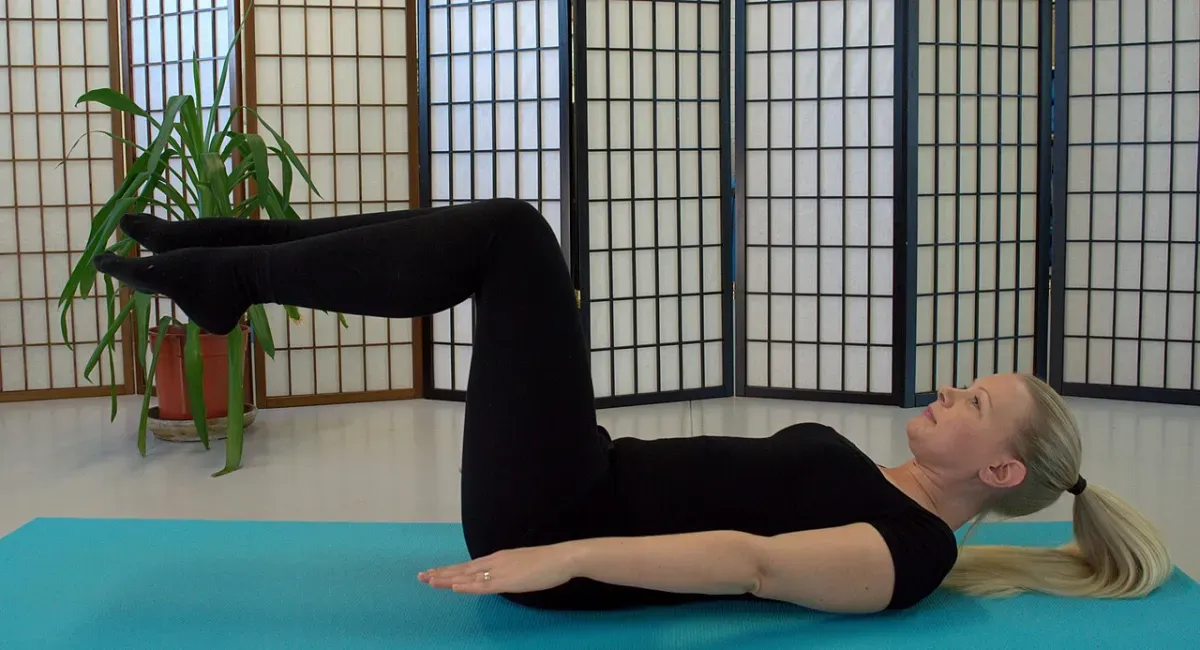
Wall pilates removes the usual barriers to core training. Instead of a pricey studio membership or a specialized reformer machine, you just need a blank wall and a floor mat. Because the wall gives you immediate tactile feedback on your spinal alignment, beginners pick up the pelvic tilt and core bracing much faster. It builds muscular endurance and improves dynamic balance, serving as an accessible starting point for anyone looking to move better at home.
The Reality Behind the Practice
What the practice actually involves
Wall pilates is a modern adaptation of classical principles. While Joseph Pilates developed his method using specialized apparatuses equipped with springs and pulleys, most people today practice on a flat mat. The wall bridges the gap between these two approaches. By pressing against a solid surface, you create a closed kinetic chain. Fixing the far end of your limb against an unyielding wall provides greater overall stability, allowing you to generate force safely and isolate specific muscle groups with precision.
The true definition of the core
Many people equate core training strictly with abdominal exercises. The Cleveland Clinic notes that the ‘core’ trained in pilates actually encompasses much more, including the sides of your torso, your mid-to-lower back, glutes, and hips. Think of it as a complete cylinder of muscular support surrounding your spine. Wall exercises demand engagement from this entire network. You simply can’t perform a proper wall bridge using only your stomach muscles because you need that whole cylinder to remain stable.
What the research does and doesn’t cover
One big caveat first: there is essentially no published research on wall pilates specifically. The claimed benefits of pressing your feet against a wall are extrapolated from studies of traditional mat and equipment pilates. The Cleveland Clinic’s caution about pilates research applies doubly here. Without wall-specific trials in the major systematic reviews, we assume the biomechanical similarities yield similar biological results. That is a reasonable assumption, but still an assumption.
Examining the Health Claims
Chronic back pain and disability
Traditional pilates has a documented track record for certain therapeutic applications. A 2023 systematic review and meta-analysis pooled 19 randomized controlled trials involving 1,108 patients with chronic low-back pain. The researchers found pilates significantly reduced pain, showing a standardized mean difference of -1.31 (95% CI -1.80 to -0.83) compared to control groups. It also reduced disability scores. The Oswestry Disability Index showed a mean difference of -4.35, representing meaningful improvements for people struggling with daily function.
Quality of life improvements
While the pain reduction data is promising, the broader psychological and social benefits remain unclear. The same 2023 meta-analysis found that quality-of-life improvements from pilates were inconsistent across the literature. Only the physical-function domain of the SF-36 health survey improved significantly, meaning patients felt they could move better and perform physical tasks with less difficulty. However, their overall perception of general health and vitality didn’t show consistent, statistically significant changes.
Flexibility and dynamic balance
For populations without chronic pain, the benefits shift toward general mobility and stability. A systematic review of 16 studies in healthy people investigated the effects of the pilates method, finding strong evidence that it improves flexibility and dynamic balance. The authors also noted moderate evidence for improved muscular endurance, which makes sense given that the practice forces you to control your limbs through a full range of motion under tension.
The limits of current research
Fitness research deserves some skepticism. The authors of the same 2011 review mentioned earlier noted that the overall study quality in their analysis was low. The mean PEDro score, a scale used to assess the methodological quality of physical therapy trials, was only 4.1 out of 10. The Cleveland Clinic similarly cautions that research on the health benefits of pilates is not definitive. Because most studies are small and short in duration, we need larger, longer trials to make absolute claims about specific physiological adaptations.
When to check with a doctor first
Before attempting any of the routines discussed here, consider your individual health status. The research cited in this guide involves specific populations exercising under clinical supervision. Readers with existing back pain should check with a clinician before starting any new exercise program, and the same applies if you are pregnant or recovering from an acute injury. A physical therapist or medical doctor can tell you exactly which movements to avoid and how to modify the practice safely.
How the Wall Changes the Workout
Proprioception and alignment
Proprioception is your internal sense of body position. Many beginners struggle to know if their spine is neutral or if their pelvis is tucked, but the wall solves this problem instantly. By lying on the floor with your feet pressed against the baseboards, you receive continuous tactile feedback. You can feel exactly which parts of your spine make contact with the floor and notice immediately if your lower back arches away from the surface during a leg extension. The wall provides a reliable physical cue.
Adding resistance without springs
In a traditional studio, a reformer machine uses metal springs to provide resistance. At home, gravity and leverage fulfill that role. Pressing your hands or feet into an unyielding surface creates isometric muscle contractions, and you can increase the difficulty of a movement simply by pressing harder. Because this self-regulated resistance leaves you entirely in control of the tension you generate, the practice is quite safe for beginners.
Expanding your spatial awareness
Working vertically changes the way your vestibular system processes movement. Training with your legs vertical feels different and challenges your balance from a new angle. It forces your core to stabilize your pelvis in unfamiliar ways, requiring your nervous system to adapt to fresh spatial challenges.
A Beginner Wall Pilates Routine
Setting up your space
You only need a few feet of clear wall space and a standard yoga mat. Remove any pictures or fragile items from the immediate area, as your feet will slide against the surface during certain movements. Wear grip socks or practice barefoot to maintain traction. A smooth, painted wall works best. Textured wallpaper adds friction that makes sliding movements awkward and should generally be avoided.
Core activation basics
Pilates relies heavily on specific breathing patterns. Inhale through the nose to expand the ribcage laterally, then exhale forcefully through the mouth to draw the navel toward the spine. Practice this while lying on your back with your feet flat against the wall and your knees bent at a ninety-degree angle. Pressing your lower back lightly into the floor establishes a neutral spine. Mastering this baseline control is essential before attempting harder movements. Eventually, this foundational bracing will support a more intense at-home ab workout as you progress.
Lower body focus
 Photo by Shixart1985 via Wikimedia Commons (CC BY 2.0)
Lying on your back with your legs extended vertically against the wall is a classic starting position that relieves pressure on the lower back while gently stretching the hamstrings. From here, you can perform marches by alternating lowering one leg toward the floor while keeping the other anchored firmly. This tests your pelvic stability. If your hips rock side to side, reduce the range of motion and keep the movement slow and deliberate.
Glute and hip exercises
The wall bridge is a great movement for beginners. Lying on your back, place your feet flat against the wall with your knees bent. Press into the surface and lift your hips toward the ceiling. Pause at the top to squeeze your glutes tightly, then slowly lower your spine back down one vertebra at a time. This articulation builds segmental mobility in the spine. Once you master this variation, you can explore further glute bridge progressions and other at-home glute work to continue building strength in your posterior chain.
Advancing Your Practice
What a 28-day wall pilates challenge really delivers
Social media heavily promotes the 28-day wall pilates challenge as a rapid transformation tool, but the reality is much slower. While a month is enough time to establish a basic movement habit and learn how to breathe correctly, it rarely produces dramatic changes in muscle mass or profound shifts in body composition. Fitness requires long-term adherence, so treat the first month as an orientation period rather than a finish line.
Transitioning to mat work
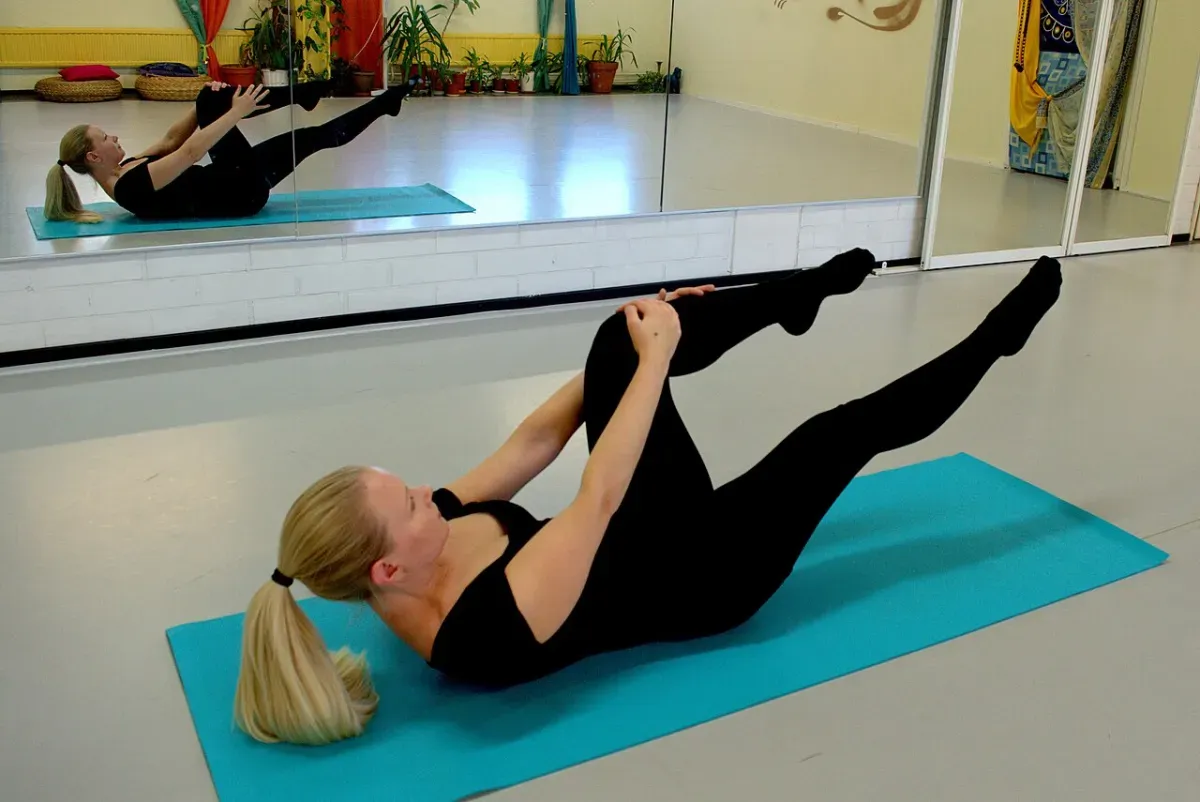 Photo by Helisusa via Wikimedia Commons (CC BY-SA 4.0)
Think of the wall as training wheels. The ultimate goal of wall pilates for beginners is to develop enough control to perform the exercises without external support. The single-leg stretch is a perfect example of this progression. You might start by using the wall to stabilize one leg, but eventually, you will move entirely to the center of the mat. By holding one knee in toward your chest while extending the other leg to hover just above the floor, your abdominals must do all the stabilizing work previously handled by the wall.
Moving past wall sits
The wall sit is a familiar physical education staple, and pilates incorporates similar isometric holds to build endurance in the quadriceps. Press your back flat against the wall and lower your hips until your thighs are parallel to the floor. Holding this position while maintaining deep, controlled breathing builds localized muscular endurance rapidly. Over time, your legs will adapt to the static hold, meaning you will eventually need to progress to a dynamic bodyweight leg workout to continue driving strength adaptations.
Building a Sustainable Habit
Does wall pilates work?
Many beginners ask if wall pilates actually works, and the answer depends entirely on your definition of success. If you want to increase your mind-muscle connection and improve your posture, it is highly effective. If your goal is to build significant muscle mass or maximize cardiovascular output, you will eventually need to add external resistance. Wall pilates is a specialized tool that does a few specific things extremely well, providing a foundation of control that enhances every other physical activity you pursue.
Expanding your routine
Because pilates focuses heavily on the anterior chain and deep core stabilizers, a balanced fitness routine requires additional stimulus. You should incorporate movements that target the upper back and improve overall joint mobility. Pairing your practice with a dedicated full-body stretching routine ensures you maintain the flexibility you are building. The two disciplines complement each other perfectly since they both prioritize movement quality over sheer volume.
Integrating other calisthenics
Once you build core endurance and spatial awareness through pilates, you are well-prepared for more demanding bodyweight exercises. Transitioning into a structured bodyweight training plan for beginners becomes much safer. The postural control you learned on the mat translates directly to push-ups and inverted rows, teaching you exactly how to brace your midline and avoid arching your lower back under heavier loads.
Listening to your joints
Pilates is classified as a low-impact exercise, which simply means there is no jumping or heavy striking of the joints against the ground. However, the movements still place significant tension on your ligaments and tendons. If an exercise causes sharp joint pain, stop immediately. While muscle fatigue is normal and expected, joint pain is a clear signal that your alignment is off or the load is too high for your current capacity. Adjust your position or shorten the lever, and if the pain persists, stop for the day.
Consistency over intensity
The most effective workout program is the one you actually complete. Wall pilates requires very little setup time, sparing you the hassle of driving to a gym across town or waiting for equipment to become available. This convenience makes it much easier to practice consistently. Fifteen minutes of focused, controlled movement every day yields far better results than a single exhaustive session once a week. Build the habit first, and the results will naturally follow.
Frequently asked
- What is a wall pilates workout good for?
- A wall pilates workout is great for building core stability and developing better postural awareness. The wall acts as a stabilizing prop that gives immediate feedback on your spinal alignment. This makes it useful for beginners who are just learning how to engage their abdominal muscles.
- Can you lose weight with a 28 day wall pilates challenge?
- Losing weight requires a consistent calorie deficit. While a 28-day wall pilates challenge will improve your muscular endurance and help you build a daily movement habit, it does not burn enough calories on its own to drive significant weight loss. Treat it as a tool for strength and mobility rather than a primary fat-loss method.
- Does wall pilates work as well as reformer pilates?
- Wall pilates is excellent for learning body control and basic core engagement without expensive equipment. A traditional reformer machine uses weighted springs to provide variable resistance throughout a full range of motion. Once you build foundational strength against the wall, you will eventually need external weights or a reformer to continue challenging your muscles.