Glute Stretches for Tightness and Lower Back Relief
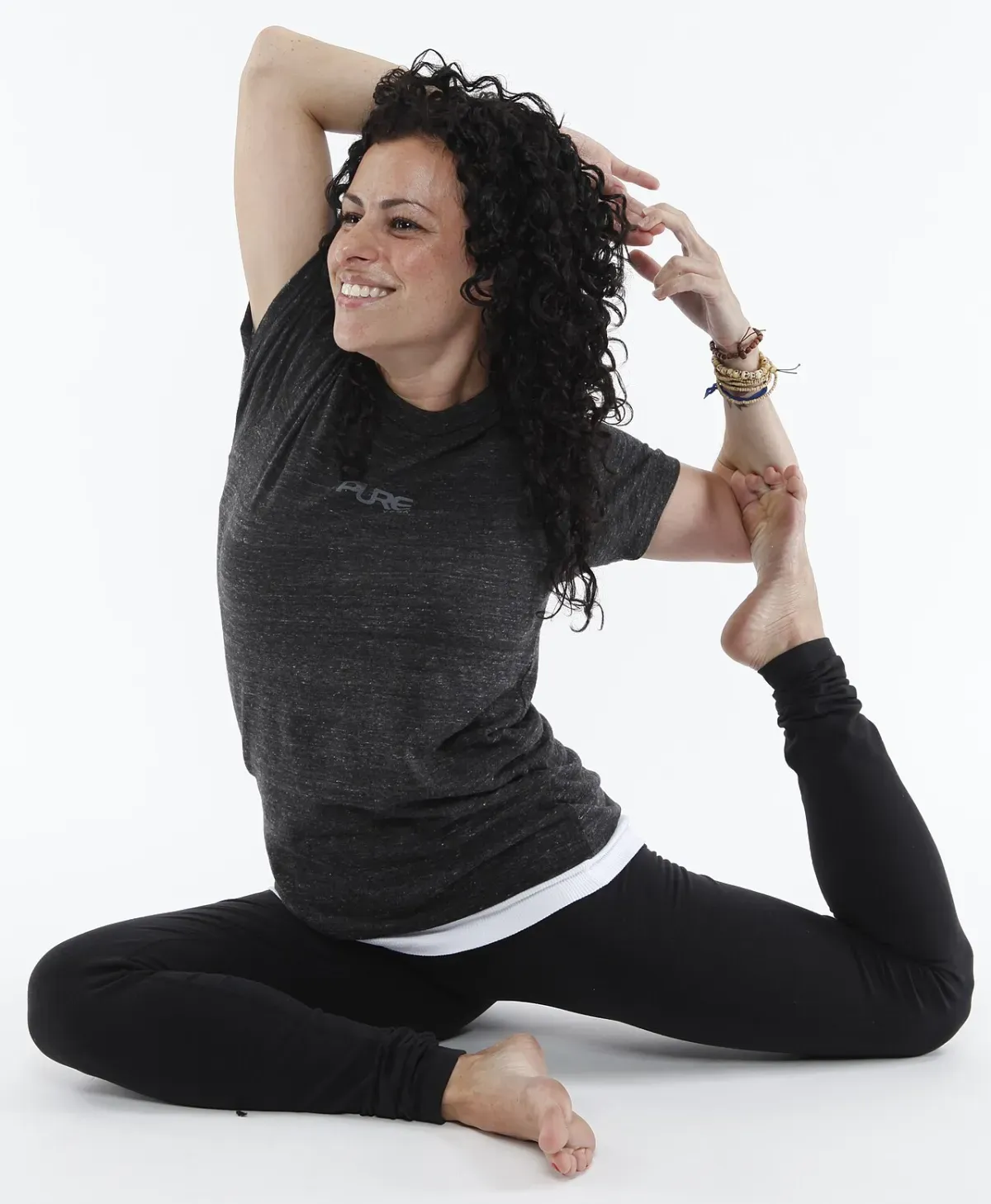
A consistent routine of targeted glute stretches offers one of the most reliable ways to relieve stiffness in your hips and pelvis. The recipe is simple: mild tension, held about 30 seconds, after a brief warm-up. The hard part is patience, since flexibility gains take weeks to months of steady work.
The Link Between Glutes and Lower Back Pain
Many people only notice their glutes when their lower back starts to ache. The muscles of your hips and pelvis form the foundation for your spine. When they lose mobility, the lower back often takes on extra stress to compensate. If the ache sits low, where the spine meets the pelvis, see our guide to SI joint stretches.
What the Research Says About the Gluteus Medius
Researchers have looked closely at how gluteal function relates to back discomfort. A systematic review of 24 studies published in BMC Musculoskeletal Disorders examined 1,088 people with low back pain alongside 998 healthy controls. They evaluated several parameters including muscle strength, endurance, and the presence of localized tender spots. The gluteus medius muscle tended to be weaker and carry more trigger points in the group experiencing back pain. Specifically, five of the eight strength-focused studies in the review recorded significantly lower strength in the symptomatic patients.
The direction of causation remains unclear. Whether weak glutes cause the pain, or the pain causes the glutes to shut down protectively, is still an open question. The association is strong; the causation isn’t settled. View gluteal stretching as a way to support a healthy system rather than a guaranteed cure for an existing injury.
When the Piriformis Gets Involved
Sometimes the issue lies deeper in the hip. The piriformis is a small, band-like muscle located deep in the buttock behind the main glute muscles. According to the Cleveland Clinic, the piriformis can compress the sciatic nerve. This compression causes aching, burning, numbness, or tingling in the buttock, hip, or upper leg.
The clinic explicitly lists prolonged sitting as a trigger for this specific tightness. Piriformis syndrome actually accounts for just 0.3% to 6% of low back pain cases. It’s relatively rare. However, when it does occur, the condition responds well to conservative treatment. With a combination of stretching, strengthening, and activity modification, piriformis symptoms often improve in a matter of days to weeks.
Red Flags for Nerve Pain
Pay close attention to the type of pain you feel during any lower body movement. Numbness, tingling, or pain radiating below the knee can indicate direct nerve involvement like sciatica. This deserves professional medical assessment rather than aggressive stretching. Never try to force a stretch through nerve pain.
Know What You’re Stretching
To stretch effectively, you need to know what you’re targeting. The gluteal region is complex. It involves multiple layers of muscle tissue pulling the leg in different directions.
The Gluteus Maximus
This is the heaviest muscle in the body. It shapes the visible portion of the buttocks. The gluteus maximus generates the immense power required to run, jump, and climb stairs. Because it handles heavy loads, it contains thick, dense muscle fibers. Stretching this muscle generally requires movements that bring the knee up toward the chest.
The Gluteus Medius and Minimus
These smaller muscles sit on the upper, outer edge of your pelvis. They act as critical stabilizers. When you stand on one leg, walk, or run, the gluteus medius prevents your pelvis from dropping to one side. The BMC study mentioned earlier highlighted how often these specific muscles weaken in people with back pain. Stretching them requires bringing the leg across the midline of the body.
The Deep External Rotators
Beneath the large glute muscles lies a fan-shaped group of small muscles. The piriformis is the most famous of these deep rotators. They work together to rotate the thigh bone outward in the hip socket. Because they sit so deep near the joint capsule, stretching them requires specific angles like the figure 4 position.
Essential Rules for Effective Glute Stretching
Stretching requires a calm approach. Rushing through a routine rarely yields good results and often invites injury.
Warm Up First
Cold muscles resist stretching. Harvard Health recommends warming up with five to 10 minutes of light activity before you begin. A brisk walk or a few flights of stairs will increase blood flow to your hips. Sitting all day tightens these muscles. Wake them up before asking them to lengthen.
Hold Steady Without Bouncing
The mechanics of a safe stretch are simple. Find a position of mild tension. Stop before you feel pain. Hold each static stretch for about 30 seconds without bouncing. Bouncing triggers a reflex that actually contracts the muscle you’re trying to relax.
Setting Realistic Timelines
Tissue adaptation requires patience. Muscles consist of bundled fibers surrounded by tough connective tissue. Stretching gently pulls on these structures, signaling the nervous system to allow more length over time. Meaningful flexibility gains take weeks to months of consistent effort. You won’t transform your hip mobility in a single weekend. Harvard Health notes that daily stretching or a frequency of at least three to four times per week is necessary to maintain flexibility. Stick to the schedule.
Foundational Glute Stretches for Beginners
You can perform most of these stretches on a comfortable floor mat. They isolate the gluteal muscles while keeping the spine supported. If you’re new to mobility work, consider reviewing a full beginner stretching routine to understand the basics of body positioning.
The Supine Figure 4 Stretch
This movement targets the piriformis and the larger gluteus maximus. Lying on your back protects your spine and lets you control the depth of the stretch.
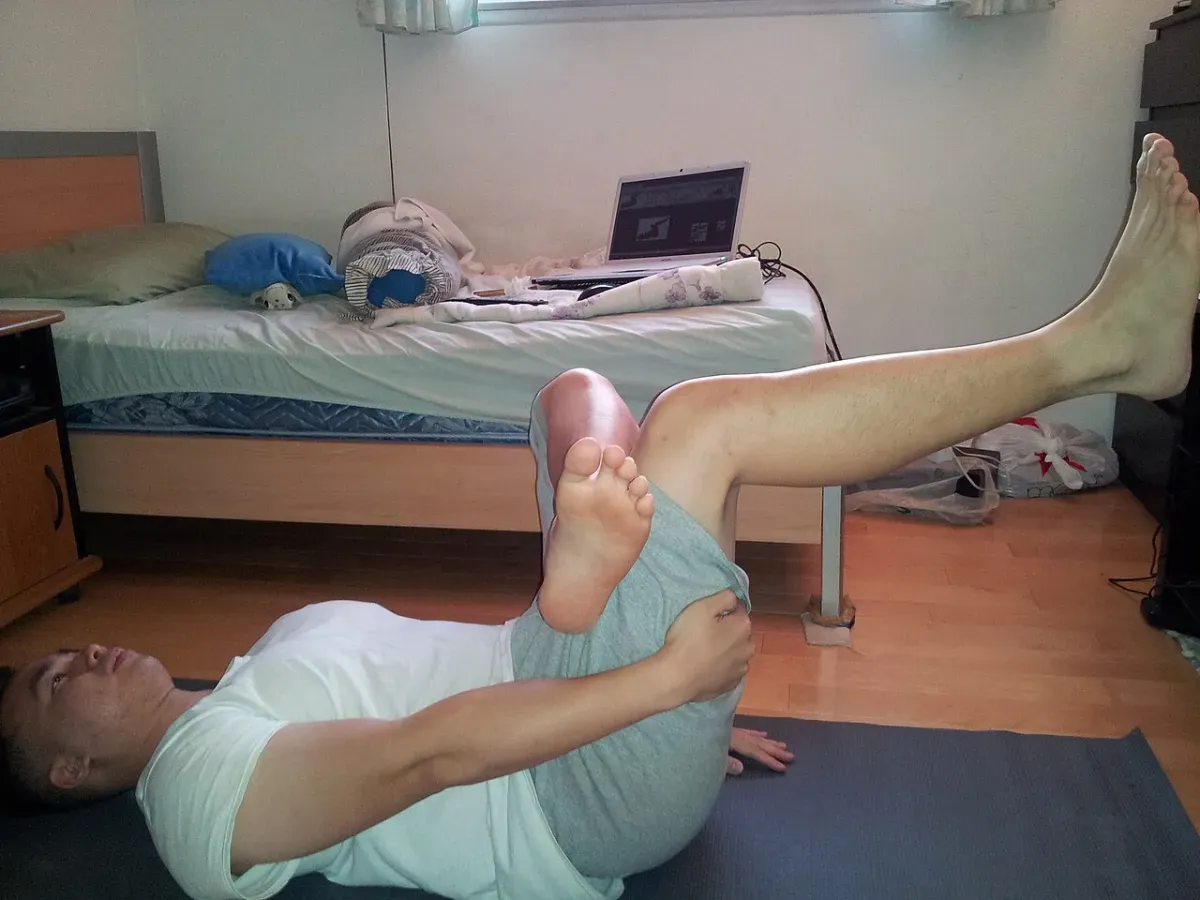 Photo by Kpa1563 via Wikimedia Commons (CC BY-SA 3.0)
Lie flat on your back on a supportive yoga mat. Bend your knees and place both feet flat on the floor. Lift your right leg and cross your right ankle over your left knee, letting the right knee gently fall outward. Reach both hands around your left thigh. Interlace your fingers behind the hamstring, then gently pull the left thigh toward your chest. Keep your head, neck, and shoulders completely relaxed on the mat. You’ll feel the stretch deep in your right buttock. Hold the position for 30 seconds. Breathe naturally. Lower your legs slowly, then repeat the process on the left side.
Seated Spinal Twist
This stretch opens the outer hip and engages the deep glute muscles. It also provides a gentle rotation for the mid-back.
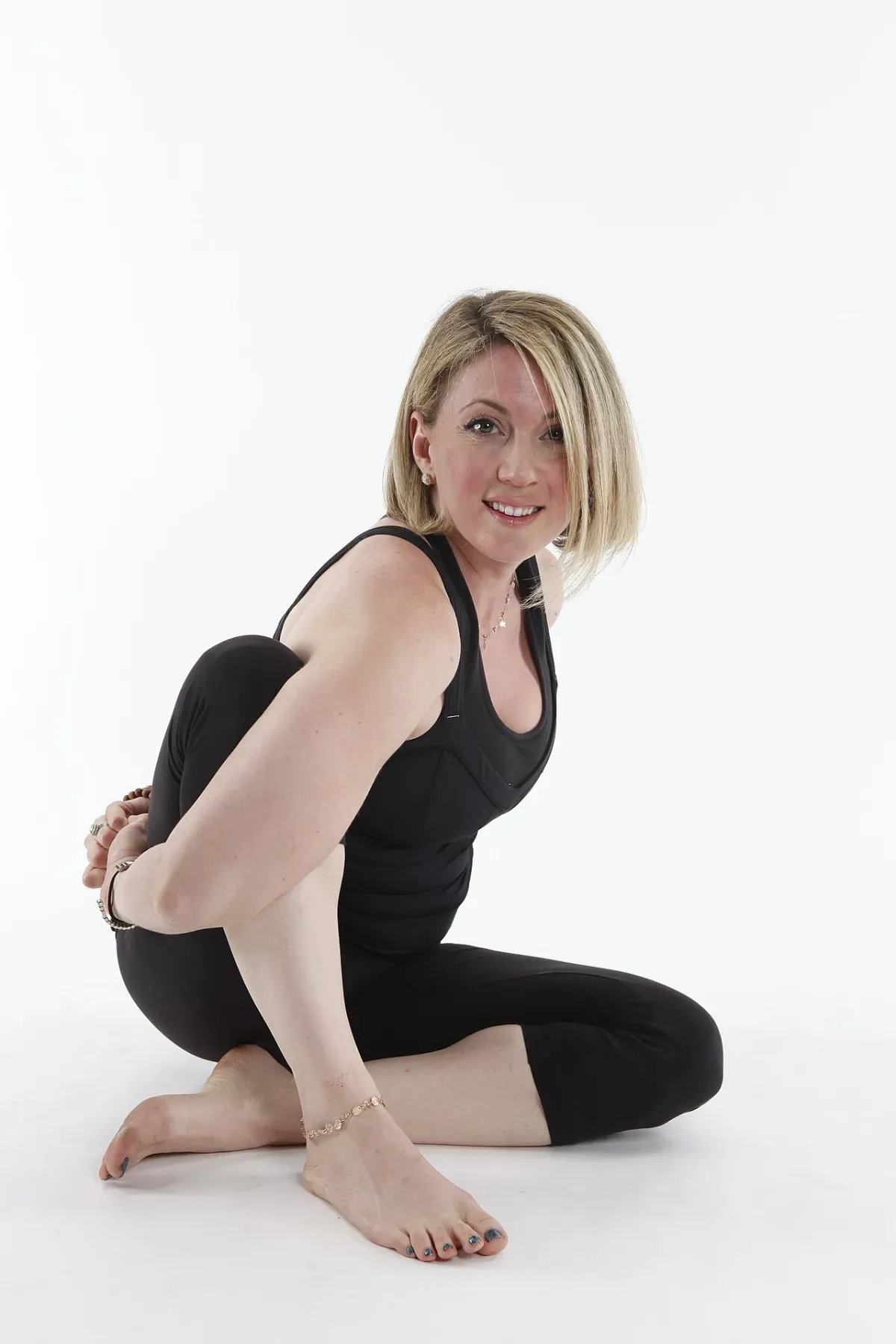 Photo by lululemon athletica via Wikimedia Commons (CC BY 2.0)
Sit on the floor with your legs extended straight in front of you. Bend your right knee. Step your right foot over your left leg, placing it flat on the floor outside your left knee. Wrap your left arm around your bent right knee and pull it gently across your body toward your left shoulder. Place your right hand on the floor behind your hips for support. Sit tall to keep your spine straight. Look over your right shoulder to add a gentle spinal rotation. The tension should localize in your right outer hip and glute. Hold for 30 seconds, then release the twist slowly before switching sides.
Knee to Opposite Shoulder
This subtle variation focuses heavily on the piriformis. Lie flat on your back with your legs extended straight along the floor. Pull your right knee up toward your chest. Grasp the outside of your right knee with your left hand, guiding it across your body toward your left shoulder. Keep your right hip resting on the floor. Don’t force the knee all the way across your body. The goal is simply to feel a mild stretch in the center of the right glute. Pause when you reach that point of mild tension. Hold for 30 seconds, switch legs, and repeat.
Deep Glute Stretches for Advanced Mobility
Once your hips grow accustomed to foundational movements, you might need different angles to access tighter muscle fibers. These variations require more balance and body awareness.
The Pigeon Pose Variation
This pose comes from yoga and provides an intense stretch for the front leg’s glute and the back leg’s hip flexor. Start on your hands and knees. Bring your right knee forward and place it behind your right wrist. Angle your right foot toward your left wrist, and extend your left leg straight back behind you. Keep your hips square to the floor. If your right hip hovers high off the ground, place a rolled towel or block underneath it for support. Slowly lower your upper body down to your forearms.
The angle of your front knee dictates the intensity. A sharp angle with your heel close to your groin places less stress on the joint. A wider angle with your shin parallel to the front of your mat increases the stretch dramatically. Always prioritize the safety of your knee over the depth of the stretch. If you feel any pinching in your right knee, stop immediately and return to the supine figure 4 stretch.
Standing Figure 4
Perform this stretch anywhere. It requires no floor space but does challenge your balance. Stand near a wall or a sturdy chair for support. Cross your right ankle over your left knee. Slowly bend your left knee and push your hips back as if you’re sitting in an imaginary chair. Keep your chest lifted. The deeper you sit, the more intense the stretch becomes in your right glute. Hold the position quietly. Switch sides after 30 seconds.
Wall-Assisted Glute Stretch
Using a wall removes the need for upper body strength during the stretch. Lie on your back with your buttocks about two feet away from a wall. Place your left foot flat against the wall with your knee bent at a 90-degree angle. Cross your right ankle over your left knee. To increase the stretch, inch your body closer to the wall. To decrease it, wiggle further away. Let the wall do the heavy lifting while you focus entirely on relaxing the hip joint.
Integrating Stretches Into Your Daily Routine
Stretch occasionally and you’ll get occasional results, which is to say not much. Building a habit is the only way to see lasting changes in your hip mobility.
Breaking Up Prolonged Sitting
When you sit in a chair, your hips remain locked at a 90-degree angle. The glutes are stretched out and inactive while the front of the hips becomes chronically shortened. Over an eight-hour workday, the nervous system can start to treat this seated position as its default.
Combat this by setting a timer to stand up every hour. Take two minutes to walk around the office or your home. Perform a standing figure 4 stretch against your desk. Frequent, brief mobility breaks often work better than a single marathon stretching session at the end of a long day. Your body responds better to regular movement than to isolated bursts of effort.
Pairing with Strengthening Exercises
Muscle weakness and muscle tightness often exist in a feedback loop. A weak muscle tires easily. Once fatigued, one common explanation is that it tightens up to protect itself from further strain. If you only stretch, you temporarily relieve the tension. The muscle remains weak, tires out again the next day, and returns to a tightened state.
Break the cycle by balancing your mobility work with an at-home glute strengthening routine. Exercises like bridges, clamshells, and bodyweight squats build the resilience your pelvis needs. Flexible muscles still need the strength to stabilize your skeleton under a load.
Creating a Weekly Schedule
Pick a consistent time for your mobility work. Many people prefer stretching in the evening while watching television. The distraction of a show can help you relax into the 30-second holds. Others prefer to stretch immediately after a workout when their muscles are thoroughly warmed up. Find a block of ten minutes that fits your life and protect it.
Common Mistakes to Avoid While Stretching
Even simple movements can cause problems if executed poorly. Pay attention to your form and your body’s signals.
Pushing Through Sharp Pain
A stretch should feel like a dull, spreading tension. It should never feel sharp, stabbing, or electric. If you grimace or hold your breath, you’ve gone too far. Back off until the sensation becomes manageable. Pushing into pain triggers a defensive reflex that tightens the tissue further.
Forgetting to Breathe
People tend to hold their breath when they concentrate on a physical task. This signals panic to your nervous system. Inhale deeply through your nose and exhale slowly through your mouth. Imagine the muscle softening slightly with every exhalation. Steady breathing tells your brain that you’re safe, allowing the muscle fibers to elongate.
Ignoring the Rest of the Lower Body
Your glutes don’t operate in isolation. They attach to the pelvis alongside several other major muscle groups. If your glutes are tight, you likely have tension elsewhere. Incorporate hip flexor stretches to open the front of the pelvis. Adding hamstring stretches will help release the back of the thighs. Finally, gentle lower back stretches can relieve the surrounding fascia. A comprehensive approach to the entire pelvic region delivers much better results than focusing on a single muscle group.
Frequently asked
- How long should I hold a glute stretch?
- Hold each stretch for about 30 seconds. Do not bounce or push into pain.
- Can stretching my glutes help my lower back?
- Yes. Tight glutes are often linked to lower back discomfort. Stretching them can improve mobility and relieve tension in the surrounding area.
- Why do my glutes feel so tight?
- Prolonged sitting is a common trigger for tight glutes. Weakness in the muscles can also cause them to overcompensate and feel stiff.