Hamstring Stretches: A Practical Guide

If you only remember one number from this guide, make it 30 seconds. That is roughly how long to hold a hamstring stretch, and a study that pitted 15, 30, and 60 seconds against each other found 30 was the sweet spot: as effective as a full minute, and clearly better than 15 (Bandy & Irion, 1994). Everything else below is about which stretches to do, when, and the mistakes that quietly waste the effort.
The hamstrings are the three muscles running down the back of your thigh, from your sit bones to just below the knee. They bend the knee and extend the hip, so they fire when you walk, climb stairs, sprint, or stand up from a chair. When they feel tight, the cause is usually less dramatic than people assume.
Why hamstrings get tight (it is mostly the chair)
Here is the part that gets skipped. “Tight” does not always mean “short.”
Spend eight hours sitting and your hamstrings stay in a slightly bent, slackened position for most of the day. The muscle is not being lengthened, so the nervous system gets comfortable with a smaller range, and the first time you reach for your toes it protests. A lot of what we call tightness is the body resisting an unfamiliar range, not a muscle that has physically shrunk. That distinction matters, because it explains why one heroic stretch session never fixes the problem and why frequent small movement does.
This is also why office workers and drivers report tight hamstrings far more than people whose jobs keep them moving. The fix that actually moves the needle is breaking up sitting: stand up every half hour, walk to refill water, do one standing fold while the kettle boils. Stretching is the lever, but reducing time in the shortened position is the foundation.
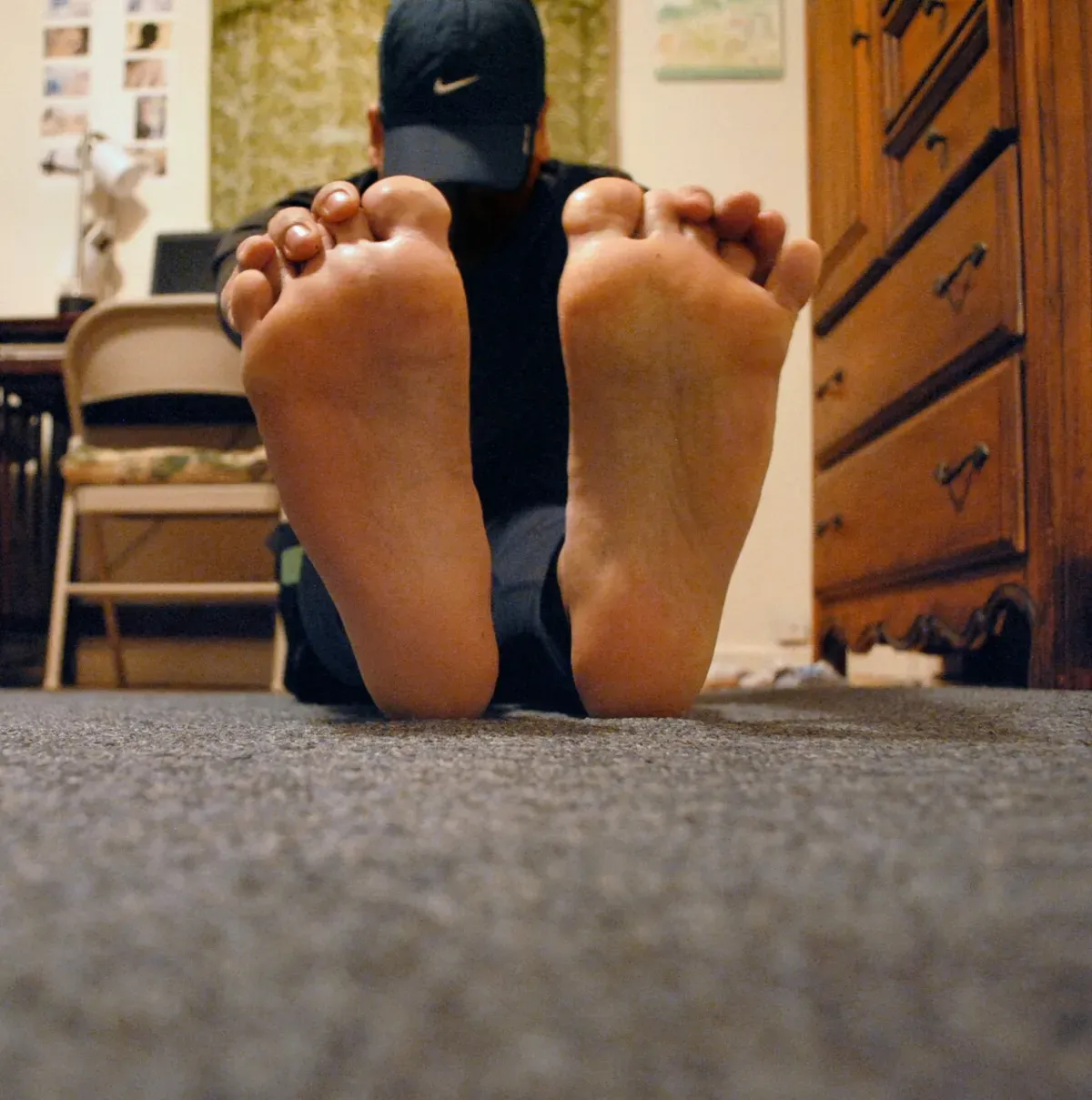
Photo by Northeastern Nomad via Wikimedia Commons (CC BY-SA 3.0)
The lower-back connection people miss
Your hamstrings attach to the bottom of your pelvis. When they are tight, they tug the pelvis into a backward tilt, which can flatten the natural inward curve of your lower spine. That altered position changes how the back loads when you bend, lift, or sit for long stretches, which is why tight hamstrings show up so often in conversations about low-back discomfort.
Harvard Health makes a related point that I think is underrated: hamstrings frequently get tight because they are overworked, and they get overworked when the glutes are weak and not doing their share (Harvard Health, “Are your hamstrings working double duty?”). So stretching is half the picture. If your glutes are asleep, the hamstrings keep picking up the slack and keep tightening no matter how diligently you stretch. Pairing stretches with bridges and other posterior-chain work tends to outperform stretching alone.
The best hamstring stretches
You do not need all of these. Pick two or three that fit your day and your flexibility. I have ordered them roughly from gentlest to most demanding.
Supine stretch with a strap (gentlest, easiest on the back)
Lie on your back. Loop a strap, towel, or belt around the arch of one foot and raise that leg toward the ceiling, keeping it as straight as comfort allows. The floor supports your spine, so there is almost no temptation to round your back. This is the one I recommend first for anyone with a cranky lower back or limited flexibility. Hold 30 seconds, switch sides, repeat two or three times.
Lying single-leg stretch (no equipment)
Same idea without the strap. On your back, keep one leg flat on the floor and draw the other toward your chest, hands behind the thigh, then slowly straighten the raised knee until you feel the stretch. Because the grounded leg keeps your pelvis neutral, you get a clean hamstring stretch without overarching.
Seated forward fold
Sit on the floor with one or both legs extended. Hinge forward from the hips, reaching toward your feet, and stop where you feel tension rather than pain. The cue that matters: lead with your chest and hinge at the hip, do not collapse your spine to get your hands closer. Reaching with a rounded back feels like more range but loads the lumbar spine and stretches the wrong tissue.
Standing forward fold
From standing, feet hip-width, hinge forward and let your upper body hang. A slight bend in the knees keeps the stretch in the hamstrings instead of straining the back of the knee. Let gravity do the work for 30 seconds. Wall and supported versions exist too, and many people find them gentler on the back.
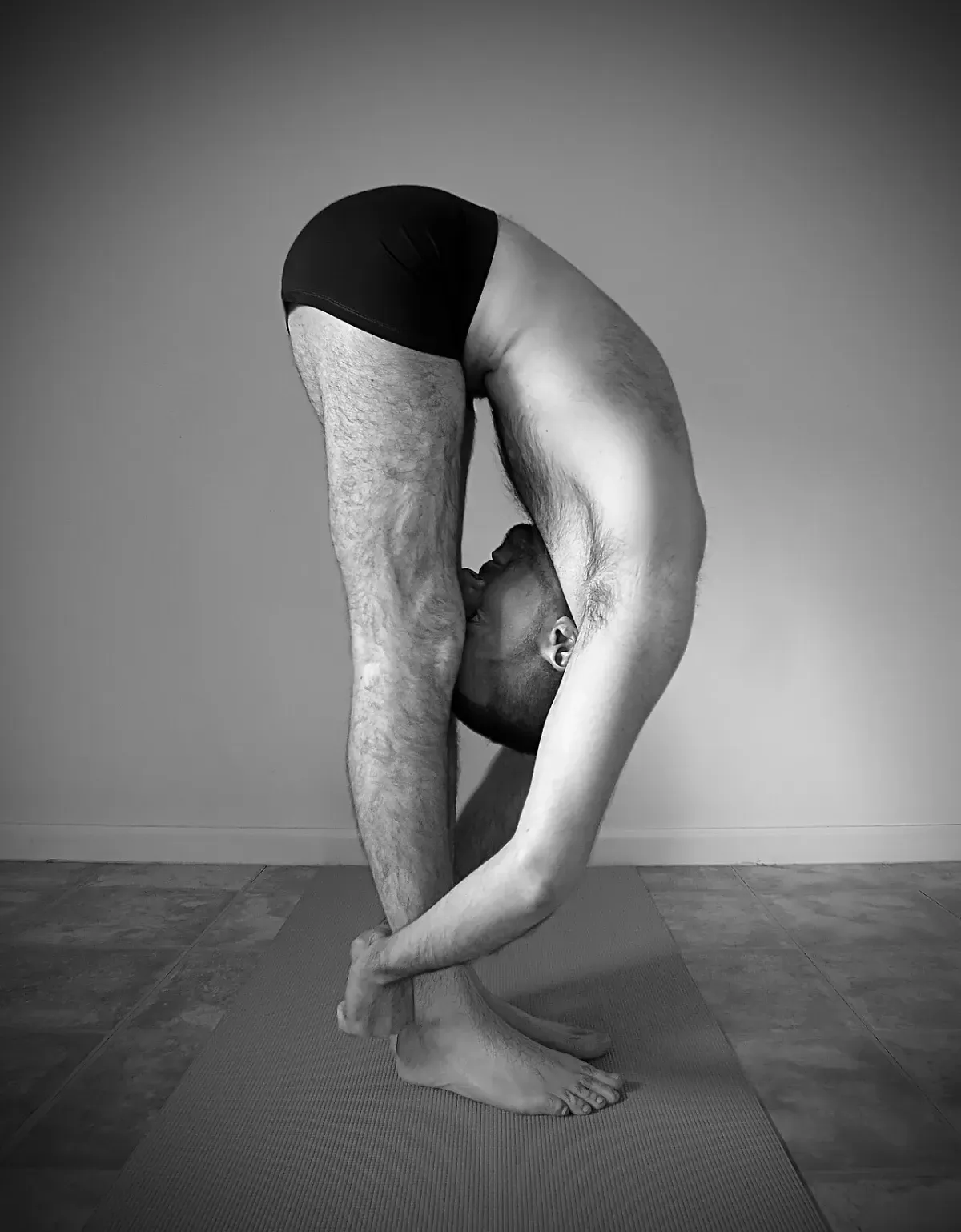
Photo by Nicholas A. Tonelli via Wikimedia Commons (CC BY 2.0)
Doorway stretch
Lie in a doorway with one leg up the wall or door frame and the other extended flat through the opening. Scoot closer to deepen it. This is a low-effort hold you can do while reading your phone, which makes it the one people actually keep doing. It is essentially the supine strap stretch with the wall holding your leg for you.
Dynamic leg swings (for warm-ups)
Hold a wall or chair for balance and swing one leg forward and back in a controlled arc, gradually increasing the range over 10 to 15 swings per leg. This is not a held stretch. It is a warm-up that takes the hamstrings through their range before activity, which is exactly when you want dynamic work rather than static holds.
Dynamic vs static: get the timing right
The single most useful rule about hamstring stretching is when to do which type.
Before a workout, run, or sport, do dynamic stretches like leg swings and walking kicks. Long static holds right before explosive activity can briefly reduce force and power output. One trial measured exactly this: 60 seconds of static hamstring stretching significantly lowered maximal voluntary contraction, while 30 seconds did not (Ogura et al., 2007). The practical takeaway is to keep pre-workout static holds short or skip them in favor of movement.
After a workout, or in a standalone flexibility session, static stretching is where it earns its keep. A meta-analysis of 19 trials confirmed that static stretching reliably increases hamstring flexibility in healthy young adults across multiple measurement methods (Medeiros et al., 2016). For lasting range, consistency beats intensity: a few 30-second holds most days will outperform one brutal session a week.
Common mistakes that waste your stretching
Three errors account for most of the wasted effort I see.
Rounding the back to reach further. Curling your spine makes your fingers travel closer to your toes, but it shifts the stretch off the hamstrings and onto the lower back. Hinge from the hips and keep your spine long, even if that means you reach less far. Less range done well beats more range done badly.
Bouncing into the stretch. Ballistic bobbing at the end of your range can trigger a reflex that tightens the muscle you are trying to lengthen, and it raises strain risk. Ease into the position and hold it still.
Stretching cold and aggressively. Hamstrings respond better once there is some blood flow. Walk for a couple of minutes or do a few leg swings first, then settle into your static holds.
A fourth quiet mistake is treating stretching as the whole answer when the real issue is sitting all day and weak glutes. Stretch, yes, but also stand up more, break up long sitting spells with a few exercise snacks, and strengthen the back of your body.
Putting it together
A reasonable plan: leg swings before activity, then two or three static holds of 30 seconds per leg after your session or in an evening wind-down, most days of the week. If your lower back is involved, start with the supine strap and lying single-leg versions and keep your spine neutral. Add glute bridges so your hamstrings stop doing double duty.
If you are new to all of this, start with the stretching for beginners pillar guide, which covers the basics of holds, breathing, and building a routine you will keep. Since tight hamstrings and low-back tension travel together, the lower back stretches guide pairs naturally with this one. To make the habit stick, a short morning stretch routine is the easiest place to slot these in. And if you are training the legs themselves, the leg workout at home guide covers the strengthening side, including the glute work that keeps hamstrings from overworking.
The hardest part of any flexibility plan is not the stretches. It is doing them often enough to matter, on the days you do not feel like it. If consistency is your sticking point, our notes on how to motivate yourself to work out go deeper on making movement automatic.
Frequently asked
- How long should I hold a hamstring stretch?
- Around 30 seconds per leg. A classic trial that compared 15, 30, and 60 seconds found that 30 seconds improved hamstring flexibility just as much as a full minute, while 15 seconds did less. Holding longer than 30 seconds gave no extra gain, so two or three holds of 30 seconds per leg is a sensible target for a static session.
- Why are my hamstrings always tight even though I stretch?
- The most common reason is hours of sitting, which keeps the hamstrings in a shortened, slack position for most of the day. Stretching for a couple of minutes does not undo eight hours of that. Tightness is often as much a sensation of resistance as it is true short muscle, so a few short breaks to stand and move through the day usually helps more than one long stretch session.
- Can tight hamstrings cause lower back pain?
- They can contribute. Tight hamstrings pull on the pelvis and can flatten the natural curve of the lower back, which changes how the spine loads when you bend or sit. Gentle hamstring stretching often eases that pull, but if back pain is sharp, radiating, or persistent, see a clinician rather than stretching through it.