A Practical Guide to Hip Mobility Exercises
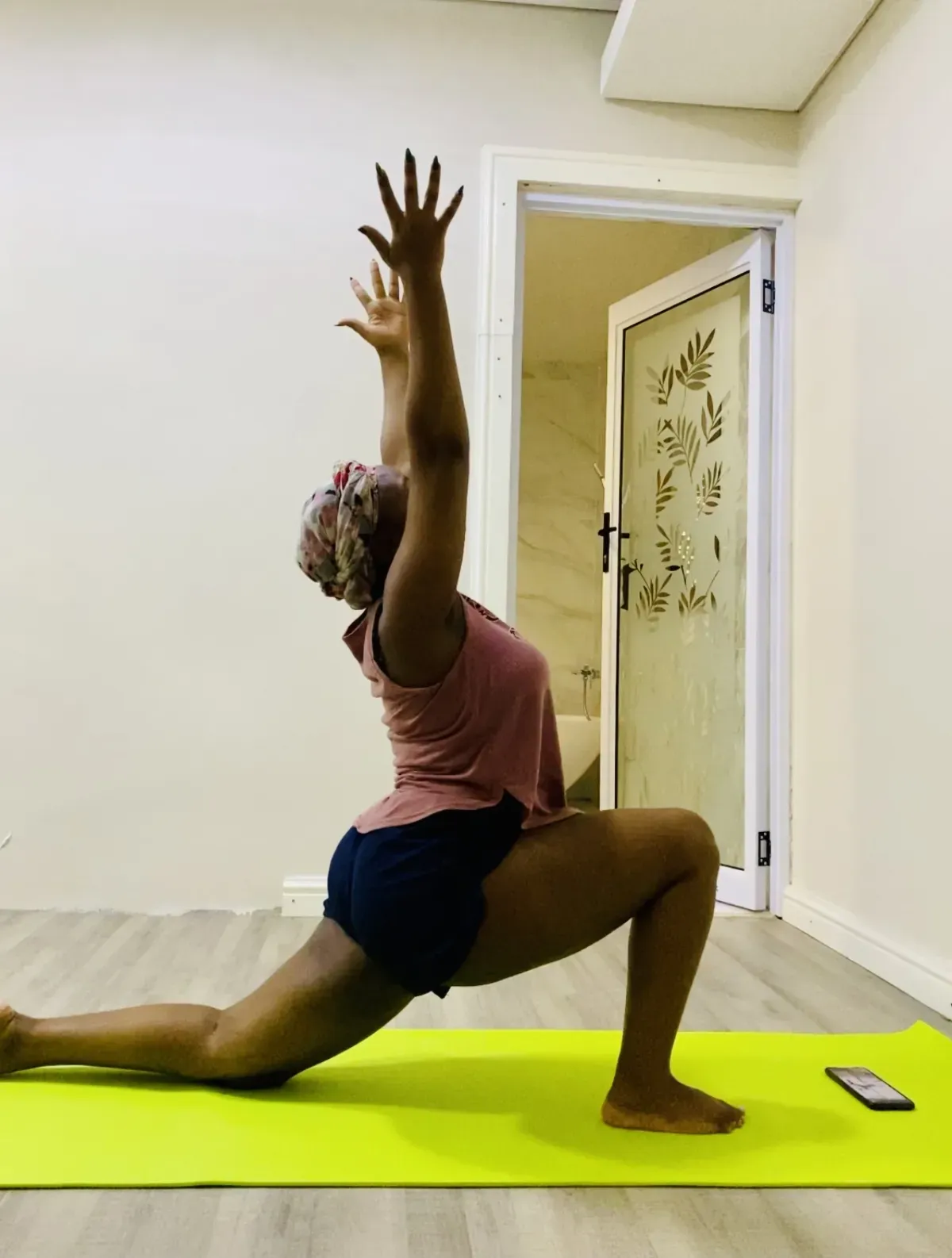
Reclaiming lost hip mobility requires consistent time spent in the stretch. A solid routine centers on the 90/90 stretch, deep squats, and glute bridges, taking about 10 minutes a day. It pays to work your hips multiple times a week, hold those stretches for at least a minute in total, and maintain the habit for months. A single weekend yoga class won’t undo years of sitting in an office chair.
The Reality of Hip Mobility
Most people approach flexibility with impatience. They stretch aggressively before a run, feel no immediate difference, and give up. The truth about joint mobility is much slower and far more deliberate.
Timelines for physical change
Improving your range of motion is a biological process. According to experts at Harvard Health, it takes weeks to months to get flexible, and you have to keep working on it to maintain it. Muscle fibers and connective tissues need repeated exposure to new lengths before they permanently adapt. You are convincing your nervous system that these new ranges of motion are safe to explore, a process that simply takes time.
Sitting and joint stiffness
Modern life is designed around the seated position. Desk, car, sofa. Most of the day happens in a chair. This posture has a direct physical cost. As Harvard Health points out, sitting in a chair all day results in tight hamstrings at the back of the thigh, restricting how fully you can move.
The front of your body suffers just as much. The Cleveland Clinic notes that long hours at a desk keep the front hip muscles in a shortened position for much of the day, which can lead to stiffness within the joint. Reading a comprehensive stretching for beginners guide is a good starting point to understand how global this stiffness can be.
The minimum time commitment
You need to accumulate enough time in a stretched position to signal a change to your body. A quick ten-second hold accomplishes very little. The ACSM position stand on exercise testing and prescription states that adults should do flexibility exercises for each major muscle-tendon group on at least 2 to 3 days per week. During these sessions, you need to accumulate about 60 seconds of total stretch time per exercise. You can break this up into two holds of thirty seconds, or three holds of twenty seconds, because total stretch time is what matters.
Understanding Your Hips
The hip is a complex ball-and-socket joint. The head of your femur rests inside a deep cavity in your pelvis. This design allows for a massive range of motion, provided the surrounding muscles allow it.
Major muscles of the hip
Dozens of muscles cross the hip joint. The gluteus maximus provides powerful extension when you stand up or climb stairs. The psoas connects your lower spine to your femur, lifting your knee toward your chest. Your hamstrings run down the back of your leg. Your adductors line your inner thigh. When any of these muscles become chronically tight, they limit how the femur can move inside the socket.
Internal and external rotation
Most people only think about their hips moving forward and backward. Bending over or lifting a knee. But the hip joint also rotates. External rotation happens when your thigh bone turns outward. Think of sitting cross-legged on the floor. Internal rotation happens when the thigh bone turns inward. Both rotational movements are heavily restricted in people who spend their days in a fixed, seated posture.
When to seek medical help
Stretching should feel like a dull pull in the muscle belly. It should never feel like a sharp, localized pain inside the joint itself. Pinching groin pain deep in the joint during rotation, clicking with pain, or pain that worsens over weeks deserves a professional assessment. Do not force your range of motion. These symptoms could indicate femoroacetabular impingement (FAI) or a labral tear. A physical therapist or orthopedic doctor can diagnose structural issues that stretching alone cannot fix.
The 90/90 Stretch Explained
If you only have time for one movement to improve your hip mobility, the 90/90 stretch is a powerful candidate. It addresses multiple tight areas simultaneously.
How to set up the 90/90
Sit on the floor. Place your front leg flat on the ground with your knee bent at a 90-degree angle. Your front shin should be parallel to the top edge of your mat. Now bend your back leg behind you, also at a 90-degree angle. The shin of your back leg should be parallel to the side edge of your mat. Keep your torso upright. You might need to place a hand on the floor beside you to stay balanced.
Mechanics of the movement
This position forces your hips into two different rotational extremes. According to the Cleveland Clinic, the 90/90 works external and internal hip rotation at the same time. The front leg targets the gluteus maximus and piriformis, while the back leg stretches the psoas. Leaning forward over your front knee intensifies the pull in your glutes. Sitting up taller and gently leaning back shifts the focus to your rear hip flexor.
Hold times and safety
Once you find the point of mild discomfort, stay there. The Cleveland Clinic recommends that you hold the 90/90 stretch for 20 to 60 seconds, then switch which leg is in front. Breathe deeply.
However, it is crucial to respect your current limits. The Cleveland Clinic clearly states that the 90/90 is an aggressive stretch. People with hip impingement, hip or knee replacements, meniscus tears, or arthritis should skip it. If your knees cannot tolerate the angles, use softer variations or seek guidance from a physical therapist.
Essential Hip Mobility Exercises
A complete hip mobility routine requires more than just sitting on the floor. Training the joint through active ranges of motion is just as important.
Deep squat holds
The deep resting squat is a fundamental human posture. Children do it naturally. Adults lose the ability because they stop practicing it.
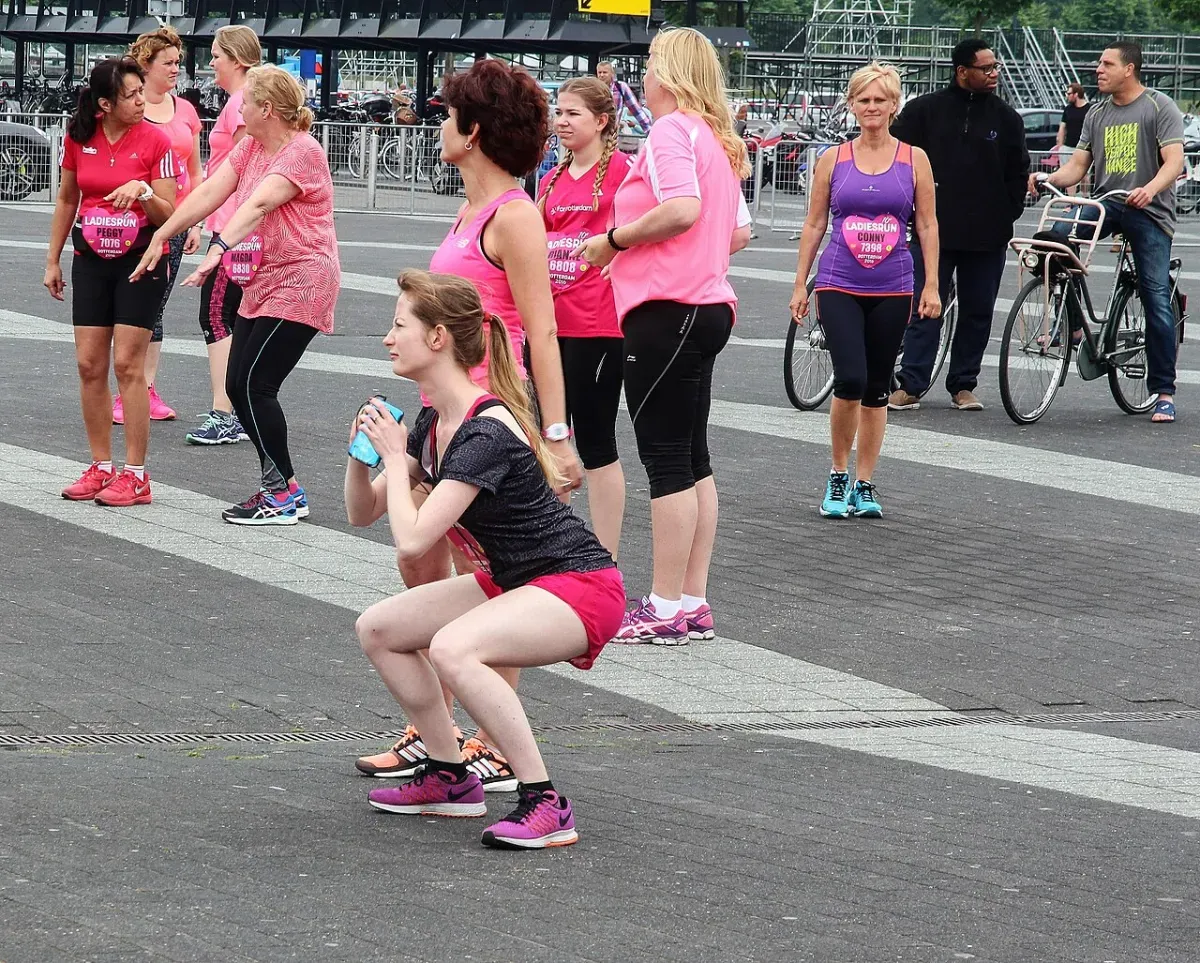 Photo by Peter van der Sluijs via Wikimedia Commons (CC BY-SA 4.0)
Stand with your feet slightly wider than shoulder-width apart. Turn your toes out slightly. Slowly lower your hips toward the floor. Keep your heels flat on the ground. If your heels lift, place a rolled-up towel under them for support. Let your hips sink between your ankles. Press your elbows gently against the inside of your knees to pry them outward. Hold this position, focusing on keeping your chest proud. The deep squat stretches the adductors, glutes, and ankles all at once.
Glute bridges: wake up the back side
Stretching the front of your hips is only half the battle. You also need to wake up the muscles on the back of your hips. When your hip flexors are tight, trainers often find the glutes are underactive as well.
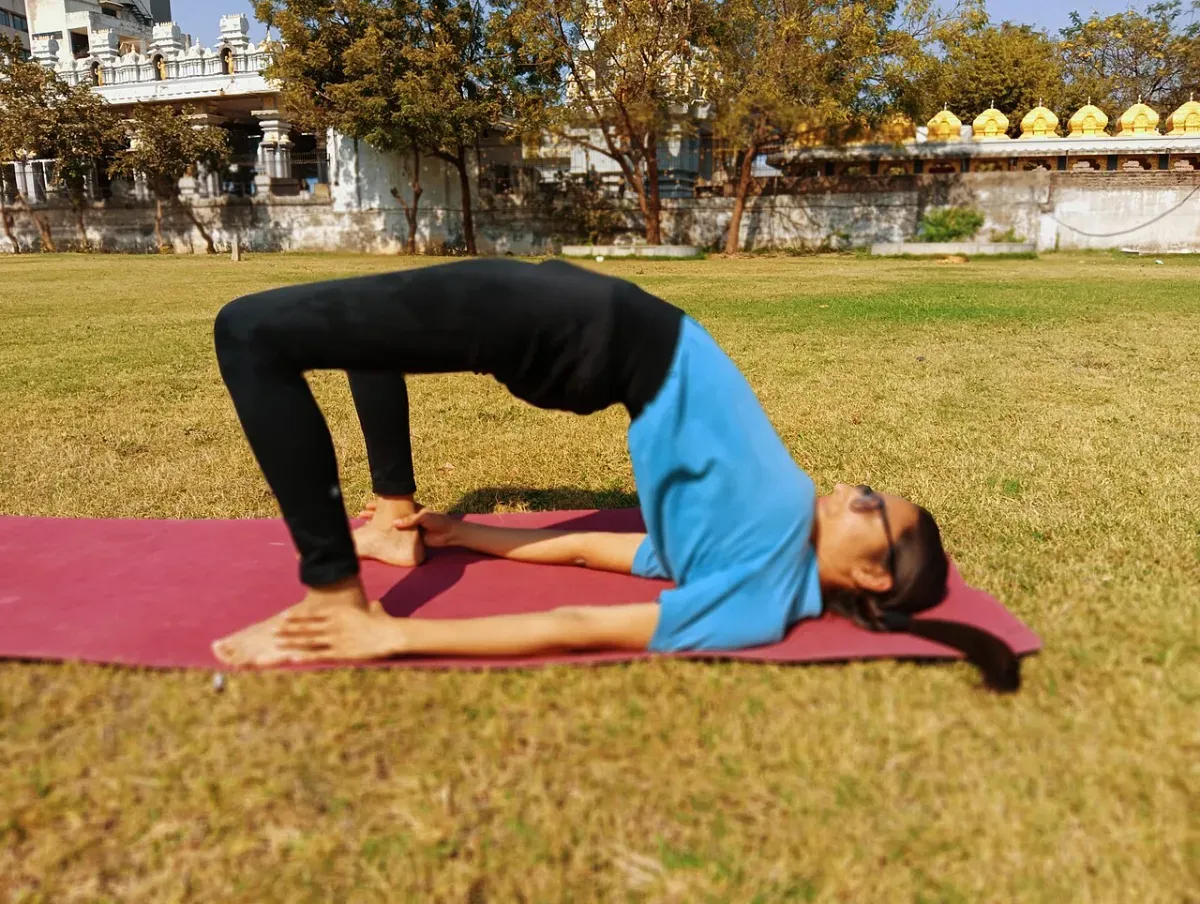 Photo by Rutvi Bhimani via Wikimedia Commons (CC BY 4.0)
Lie on your back with your knees bent and feet flat on the floor. Your feet should be roughly hip-width apart. Drive your heels into the floor and squeeze your glutes. Lift your hips until your body forms a straight line from your knees to your shoulders. Pause at the top. Contract your glutes as hard as you can for two seconds. Slowly lower your hips back to the floor. Bridging teaches your hips to extend fully without relying on your lower back.
Active versus passive stretching
Passive stretching involves relaxing into a position and letting gravity do the work. The 90/90 stretch is mostly passive. Active stretching involves contracting your muscles to move your joints through their full range. Glute bridges are active. You need both. Passive stretching creates new length in the tissue. Active movement teaches your nervous system how to control that new length.
Targeted Stretches for Specific Issues
Your daily habits dictate where your hips get tight. Tailor your mobility work to address the specific demands of your lifestyle.
Combating desk-chair stiffness
If you sit for eight hours a day, your psoas and rectus femoris are chronically shortened. Standing up suddenly feels restrictive. You might notice a slight forward lean in your posture. To counteract this, the fix is prioritizing hip flexor stretches. The half-kneeling lunge is highly effective here. Drop one knee to a padded mat. Keep your torso completely vertical. Squeeze the glute of your kneeling leg and gently shift your weight forward by an inch or two. You will feel a strong pull down the front of your thigh.
Preparing for heavy lifting
Athletes who perform heavy barbell movements need flawless hip mechanics. If your hips lock up during a squat, your lower back will round to compensate. This is dangerous under a heavy load. Before you start a leg workout at home or at the gym, spend ten minutes mobilizing your hips. Use dynamic movements. Leg swings, walking lunges, and deep bodyweight squats lubricate the joints and prepare the tissues for heavy tension.
Easing lower back tension
The lower back and the hips are intimately connected. Your pelvis acts as the foundation for your spine. Tight hamstrings and hip flexors tug on the pelvis, and a stiff pelvis often shows up as a stiff lower back. Often, the fastest way to relieve a stiff back is to unlock the hips below it. Adding specific lower back stretches alongside your hip routine provides a comprehensive approach to pain relief.
Building a Lasting Habit
Knowing the exercises is useless if you don’t do them. Mobility work requires a permanent place in your weekly schedule.
Frequency and hold times
Consistency beats intensity. Harvard Health recommends that you ideally stretch daily, or at least three to four times per week. That is stricter than the ACSM minimum above; treat 2-3 days a week as the floor and daily as the goal. They also offer a crucial warning on technique. You should hold each stretch for 30 seconds and avoid bouncing. Bouncing triggers a protective reflex in the muscle, causing it to tighten further, which can cause injury. Static holds are the safest starting point.
Fitting it into your day
You don’t need an hour to improve your mobility. Ten minutes is enough if you are focused. Many people find success by attaching their stretching routine to an existing habit. A quick morning stretch routine works well while your coffee brews. Alternatively, drop into a 90/90 stretch on the living room floor while watching television in the evening. Find a trigger in your daily schedule that prompts you to move.
Patience and maintenance
Don’t expect miracles in a week. The tissues surrounding your hips are thick and stubborn. They have spent years adapting to the shape of your car seat and your office chair. Reversing that process takes quiet persistence. Keep accumulating your sixty seconds of stretch time per muscle group. Measure your progress in months. Once you regain your range of motion, you cannot stop. Mobility is a depreciating asset. You must keep moving your hips through their full capacity to keep them healthy for the long term.
Frequently asked
- How often should I do hip mobility exercises?
- You should aim to stretch your hips at least two to three days a week. Daily practice is even better if you sit at a desk for long hours. Hold each stretch for a total of 60 seconds per session.
- Why do my hips feel so tight?
- Sitting in a chair for extended periods keeps your hip muscles in a shortened position. Over time, this leads to stiffness in the joint. Lack of regular movement compounds the problem.
- Is the 90/90 stretch safe for everyone?
- No. It is an aggressive movement. People with hip impingement, joint replacements, meniscus tears, or severe arthritis should avoid it.