Shoulder Stretches for Pain Relief: A Clinical Guide
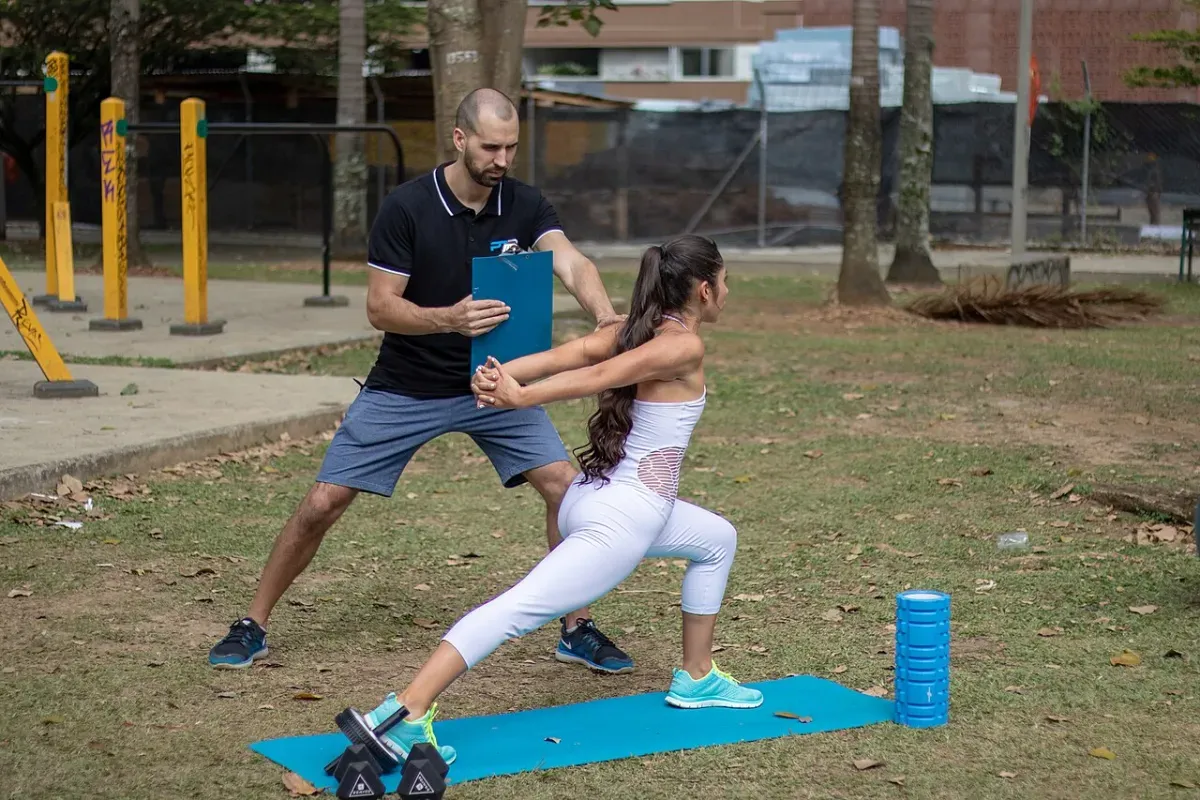
A few basic stretches, done most days, will fix most desk-related shoulder pain. The process involves stretching the tight tissues at the front of your chest and mobilizing the locked-up muscles in your upper back. It takes a little patience. Hold each static stretch for 10 to 30 seconds, three to seven days a week. Never push into sharp pain. Once your natural range of motion returns, strengthening the joint will lock your new posture in place.
You do not need expensive massage tools or complex gym equipment. You just need a few minutes of daily discipline and the patience to let your physiology adapt over the course of a month.
Understanding your shoulder joint
To understand why your shoulders hurt, look at how they are built. The shoulder is the most mobile joint in the human body. It operates like a golf ball resting on a very shallow tee. This design allows you to reach overhead, throw a ball, and cross your arms.
The cost of this mobility is a lack of structural stability. The joint relies on a complex web of muscles, ligaments, and tendons to keep the ball centered in the socket. Your rotator cuff muscles constantly make micro-adjustments to hold everything together. When you sit at a desk for forty hours a week, you disrupt this delicate mechanical balance.
Gravity pulls your heavy head forward as you look at a screen. Your chest collapses inward. Over months and years, the muscles on the front of your body adapt to this shortened position. Your pectorals become stiff. Meanwhile, the muscles on your upper back are stretched taut. They become weak and exhausted from trying to pull your head back into alignment. This constant tug of war eventually manifests as a dull ache around your shoulder blades. Stretching interrupts this degenerative process by telling the tight muscles to finally let go.
Ground rules for safe stretching
Before pulling on a tight joint, understand the boundaries of safe mobility work. Many people treat stretching like a punishment. They yank their arms across their chest and grit their teeth. This approach guarantees failure and often leads to injury.
Timing and frequency
Muscle tissue needs sustained, gentle tension to lengthen. According to Harvard Health, aim to hold each stretch for 10 to 30 seconds and repeat the movement three to four times. A quick five-second pull does nothing to change the resting length of a muscle.
Frequency is just as critical as duration. Harvard experts suggest stretching three to seven times per week. Daily stretching helps if you are stiff from years of office work. If you already have decent flexibility and just want to maintain it, stretching every other day works perfectly fine.
The danger of bouncing
Stay still once you find the point of tension. Bouncing during a stretch is a common mistake. Harvard Health warns against bouncing because it triggers a protective muscle reflex. When a muscle senses a sudden, rapid change in length, the nervous system panics. It forcefully contracts the muscle to prevent a tear. You end up fighting your own nervous system. Move slowly into the stretch. Breathe deeply. Let the muscle relax on its own timeline.
Medical red flags
Pain is a reliable signal. A good stretch feels like a dull, broad pulling sensation. It should feel relieving. If a stretch hurts, back off immediately.
Certain symptoms suggest a problem that stretching cannot fix. Sharp, stabbing pain deep inside the joint is a clear warning. Numbness or a tingling sensation traveling down your arm also requires attention. Night pain that wakes you up from sleep is another serious sign. A sudden loss of range of motion following a fall or physical injury is equally concerning. These symptoms warrant a professional medical assessment. They point to possible nerve compression or acute rotator cuff damage. In these specific cases, aggressive stretching will only aggravate the damaged tissue.
Core shoulder stretches for pain relief
You can run through the whole routine in the middle of your living room. Focus on form. Breathe through your nose. Pay attention to how your left side feels compared to your right side.
The cross-body shoulder stretch
This movement targets the posterior capsule and the back of the shoulder joint. It works well for people who feel tightness right behind their shoulder blade.
Stand or sit tall with a neutral spine. Bring your right arm across your chest. Keep the arm parallel to the floor. Hook your left forearm under your right arm, positioning it just above the elbow. Gently pull your right arm closer to your chest. You will feel a deep, satisfying pull in the back of your right shoulder. Hold this position for 10 to 30 seconds. Switch sides and repeat.
The most common mistake here is shrugging. People often hike their working shoulder up toward their ear. Actively pull your shoulder blade down toward your back pocket while you perform this cross-body shoulder stretch.
The doorway stretch for tight pectorals
Tight chest muscles are a major contributor to a rounded upper back. Finding an open doorway is the easiest way to open up the front of your body.
Stand in the center of a doorway. Raise your arms so your elbows are bent at a 90-degree angle. Place your forearms and palms flat against the vertical door frames. Step forward slowly with one foot. Let your chest press forward through the frame. You will feel the pectoral muscles open up.
Do not lean forward with your neck. Keep your chin tucked and your spine straight. You control the intensity of this stretch by how far you step forward. Start small.
The upper trap stretch
Tension frequently pools exactly where the neck meets the shoulder. The upper trapezius muscle takes a beating during stressful work days. This muscle instinctively tightens when we feel overwhelmed or cold.
Sit in a firm chair with your feet flat on the floor. Anchor your right hand under the seat of the chair to keep your right shoulder locked in a downward position. Slowly tilt your left ear toward your left shoulder.
 Photo by Shixart1985 via Wikimedia Commons (CC BY 2.0)
Place your left hand lightly on top of your head. Do not pull. The mere weight of your resting hand provides enough extra tension. You will feel the tissue stretch down the side of your neck and into the top of the shoulder blade. Hold for 30 seconds and switch sides.
Child’s pose for upper back release
This classic yoga position gently opens the latissimus dorsi and the deep muscles of the shoulder joint. It also decompresses the lower back.
Kneel on a soft floor or yoga mat. Sit back so your hips rest on your heels. Walk your hands forward on the floor until your arms are fully extended in front of you. Lower your chest toward the ground and let your forehead rest on the floor.
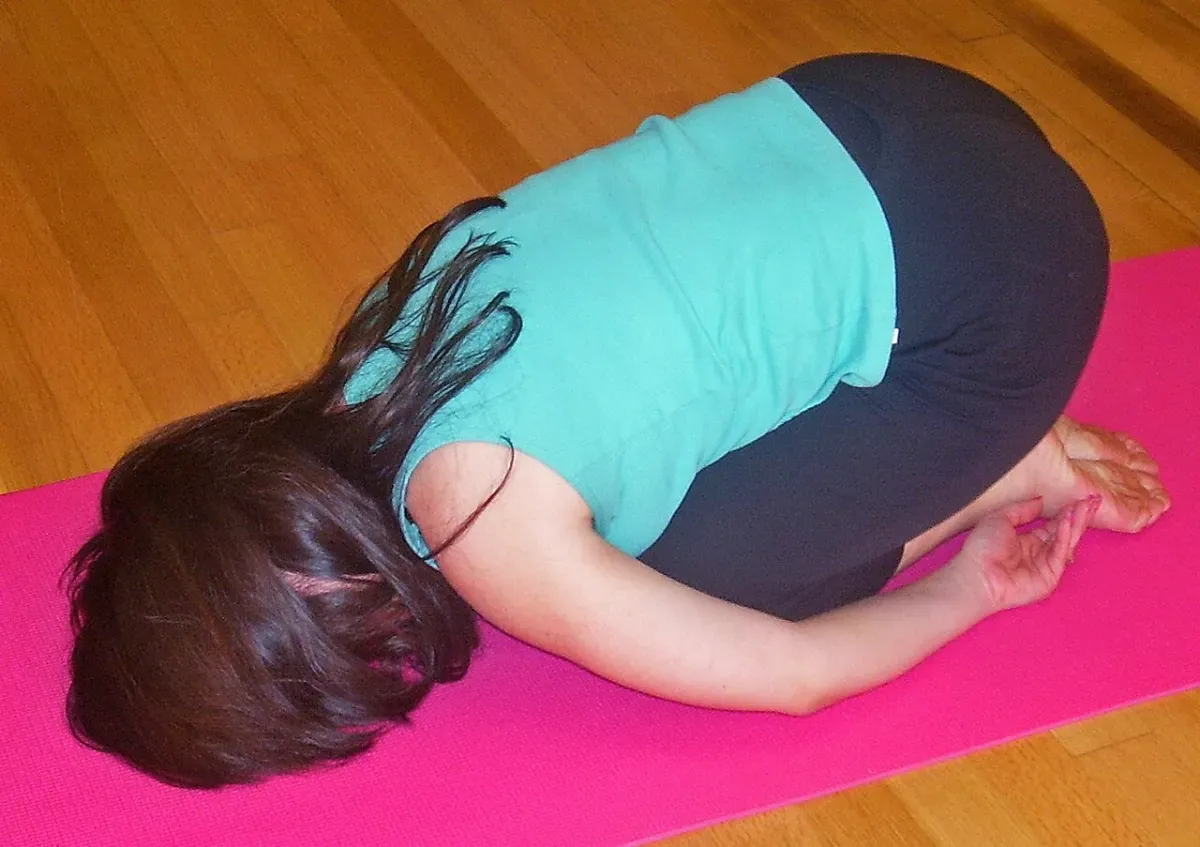 Photo by Daniel Case via Wikimedia Commons (CC BY-SA 3.0)
Breathe deeply into your upper back. Imagine your ribs expanding toward the ceiling with every inhale. If your shoulders pinch in this position, simply widen the gap between your hands. Let gravity do the work.
The clinical evidence for office workers
It is easy to dismiss basic stretching as too simple to work. Many chronic pain sufferers assume they need complex medical interventions for their aching shoulders. The clinical data suggests otherwise.
Measuring pain reduction at the desk
A rigorous randomized controlled trial published in Clinical Rehabilitation examined 96 office workers with moderate to severe neck pain, treated with a neck and shoulder stretching program. The researchers prescribed a simple four-week routine. The workers performed their stretches twice a day for five days a week.
The results were statistically significant. After four weeks, the stretching group saw their pain drop by about 1.4 points on a standard 0-10 visual analog scale compared to the control group. This represents a modest but real difference, enough that participants also reported better neck function and quality of life.
The frequency threshold
That same clinical trial revealed a crucial detail about human habit formation. The researchers noted that participants who managed to stretch three or more times per week achieved much better gains in neck function and quality of life than those who stretched less frequently.
You cannot cram a week of mobility work into a single Sunday afternoon session. Your connective tissues require regular, frequent signaling to change their resting length. If you are currently exploring stretching basics for beginners, focus on building a daily habit before worrying about advanced mobility techniques. Consistency is the primary variable for success.
From stretching to strengthening
Stretching alone will not cure chronic posture issues forever. Stretching gives you temporary access to a new range of motion. You need muscular strength to hold your joints in that proper position permanently.
Restoring range of motion first
Regain your basic mobility before lifting heavy weights. According to the Cleveland Clinic, focus on restoring your range of motion before adding strengthening exercises to your routine. Pushing a tight, restricted joint through a heavy overhead press can do real harm. For drills that move the joint through its full range instead of holding a stretch, see our shoulder mobility exercises.
Even if you have minor joint damage, you have excellent reasons to be optimistic. The Cleveland Clinic notes that roughly 80 percent of people with partial rotator cuff tears improve with non-surgical treatment, which includes dedicated physical therapy. Most partial tears respond to rehab. Surgery is a rare exception.
Adding resistance safely
Once you can move your arms overhead and across your body without pain, you can start building muscle. Harvard Health recommends performing strengthening exercises every other day alongside your stretching routine.
Focus on the muscles you cannot see in the mirror. A well-rounded shoulder workout at home needs rear-delt and upper-back exercises. Movements like resistance band pull-aparts, dumbbell rows, and reverse flyes will strengthen your posterior chain. This new muscle mass will actively pull your shoulder blades back. It keeps your freshly stretched chest muscles from pulling you forward again.
Building a realistic daily habit
The best mobility routine is the one you actually complete. Complex, hour-long mobility flows look great on video. They rarely survive contact with a busy work schedule.
Make starting as easy as possible. Try anchoring these four shoulder movements to a short morning stretch routine. Do the doorway stretch while waiting for your morning coffee to brew. The seated upper trap stretch fits perfectly into your first conference call of the day. You do not need to change into gym clothes to take care of your joints.
Sitting ruins more than just your upper body. The same office chair that rounds your shoulders also shortens your leg muscles. If you spend eight hours at a desk, your lower body requires identical care. Consider adding hamstring stretches to your daily plan. The backs of your legs tighten up from prolonged sitting. The fronts of your hips suffer just as much. Basic hip flexor stretches will counter the hip-flexed position sitting forces you into.
Treat your body as one interconnected system. Fixing the tight tissues in your chest and strengthening your back will transform how you feel at work. Once you maintain the length in your legs as well, your desk job stops being a physical liability. You gain control over your own comfort.
Frequently asked
- How often should I stretch my shoulders?
- Aim to stretch your shoulders three to seven times a week. Daily stretching works well if you feel very stiff, but every other day is sufficient if you already have decent flexibility.
- How long should I hold a shoulder stretch?
- Hold each static shoulder stretch for 10 to 30 seconds. Repeat the movement three to four times to allow the muscle tissues to fully relax and lengthen.
- Should I push through shoulder pain when stretching?
- Never push through sharp pain. Forcing a painful stretch can trigger a protective muscle reflex or worsen an underlying injury like a rotator cuff tear.