Hip Flexor Stretches for People Who Sit All Day
If you sit most of the day and your hips feel tight by evening, a few minutes of targeted stretching will usually help. It won’t fully fix tight hip flexors on its own, and that distinction matters more than most stretch guides admit. The hip flexors get short partly because they spend hours folded in a chair, and a 30-second stretch is a small counterweight to eight hours of sitting.
So here are five hip flexor stretches worth your time, with the form cues that actually change whether they work, plus an honest take on why stretching is half the job and what the other half is.
The short version
Pick one or two of the stretches below, hold each for about 30 seconds, and do them most days rather than once a week. The half-kneeling hip flexor stretch is the one to learn first, because it’s effective and hard to botch once you know the one cue that ruins it.
That cue: tuck your pelvis under before you lean forward. Most people arch the lower back instead and feel the stretch in their spine, not their hip. More on that below.
And if your hips have felt locked for years, don’t expect a stretch alone to undo it. The fix usually involves loosening the front of the hip and waking up the glutes behind it. I’ll explain why.
Why sitting tightens your hip flexors
Your hip flexors are the muscles that lift your thigh toward your torso. The main one is the iliopsoas, which is really two muscles, the psoas and the iliacus, working together. The psoas runs from your lower spine down to the top of your thigh bone. Harvard Health describes the basic problem in one sentence: “Sitting for long periods of time causes the hip flexors to tighten and shorten, and that can lead to stiffness and discomfort” (Harvard Health).
Here’s the mechanism. When you sit, your hip is bent and the iliopsoas is held in a shortened position for hours. Muscle is adaptable, and tissue that stays short tends to settle into being short. Over a working week of long days at a desk, that adds up.
There’s research behind the everyday feeling. A 2021 cross-sectional study in Musculoskeletal Science and Practice measured passive hip extension in 144 people and compared it against how much they sat and moved. People who sat for long stretches and moved little had significantly reduced passive hip extension. The authors concluded this likely reflects “a physiological adaptation in passive muscle stiffness,” not just a temporary tightness you can shake off (Boukabache et al., 2021, PubMed). In plain terms, sitting doesn’t only leave the muscle short, it changes how stiff it is. That’s why a one-off stretch rarely feels like enough.
The iliopsoas also matters more than its size suggests. An anatomical analysis published in 2024 found the iliopsoas acts as a fast hip flexor and contributes a growing share of flexion force as the hip bends deeper, working alongside the rectus femoris of the quad (Iwanuma et al., 2024, PMC). It’s a small muscle doing a big job, and it sits in a position sitting punishes.
The anterior pelvic tilt and your lower back
This is the part that connects tight hips to a sore back.
The psoas attaches to your lumbar spine at one end and your thigh at the other. When it stays short, it pulls those two points toward each other. Your spine can’t move much, so the pull tilts the top of your pelvis forward instead. That’s an anterior pelvic tilt, and it shows up as an exaggerated arch in the lower back and a belly that pushes forward even when you’re not slouching.
The cost is that your lower back lives in a deeper arch all day, and the small muscles along the spine work overtime to hold you there. A study of patients with low back pain found a positive Thomas test, the clinical sign of shortened hip flexors, in about 64% of them, and noted that stretching exercises can lengthen the iliopsoas and relieve the pain (Hip Flexors Shortening among Patients with Low Back Pain). That doesn’t mean every aching back traces to the hips, but the link is common enough to take seriously.
If your back nags after sitting, treating only the back is treating the symptom. The hips are often upstream of it. For stretches aimed directly at the spine, see lower back stretches that actually ease tightness, which pairs naturally with the hip work here.
Five hip flexor stretches worth doing
You don’t need all five. Learn the first one well, then add others for variety or to reach the stretch from a different angle.
1. Half-kneeling hip flexor stretch
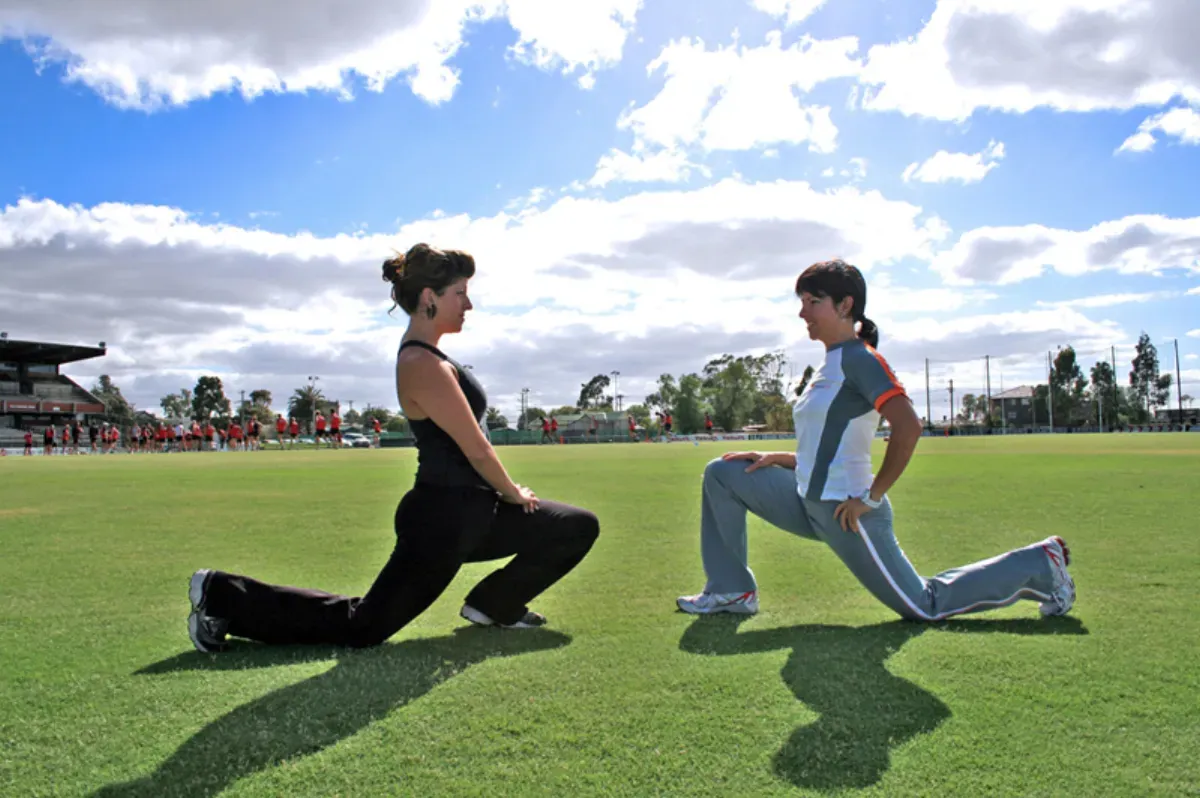
This is the foundation. Kneel on one knee with the other foot flat in front, the front knee bent near 90 degrees, like the bottom of a proposal. Before you move, do this: tuck your pelvis under by squeezing the glute on the kneeling-leg side, as if you’re starting a gentle pelvic tilt. You should feel the front of the hip on the kneeling side begin to pull.
Now, keeping that tuck, shift your weight forward a small amount. The stretch deepens at the front of the down hip and the top of that thigh. Hold for 30 seconds, then switch sides. Harvard Health recommends working up to roughly 60 seconds total per side in this position (Harvard Health).
The whole stretch lives in that pelvic tuck. Skip it and you’ll arch your back and feel nothing useful in the hip.
2. Standing lunge hip flexor stretch
A standing version for when you can’t get to the floor, useful at a desk or in shoes. Step one foot well forward into a lunge, keep the back leg fairly straight, and tuck the pelvis under the same way. Press your weight gently forward until you feel the front of the rear hip. Keep your torso tall rather than leaning your chest down toward the front thigh, which cheats the stretch into the back.
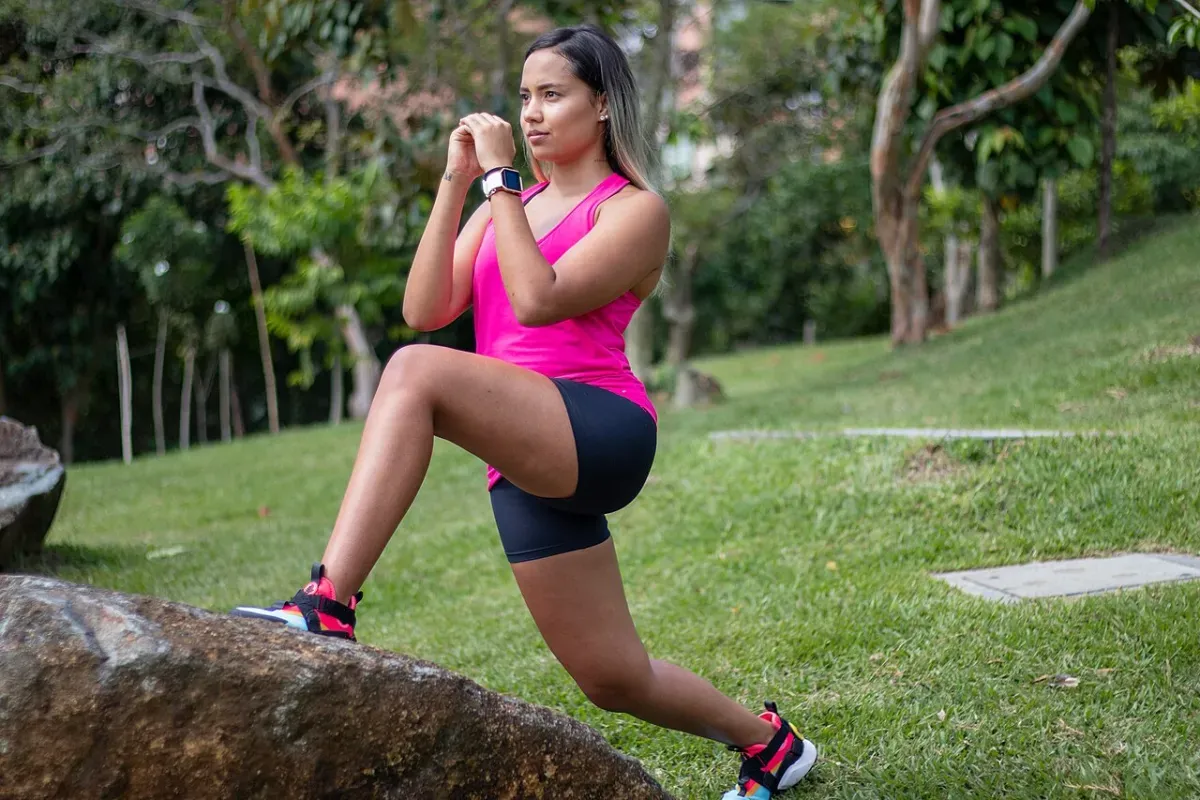
Photo by PTPioneer via Wikimedia Commons (CC BY 2.0)
Hold 30 seconds per side. This one is easy to sneak into a workday, since you can do it by your desk without a mat.
3. The couch stretch
The couch stretch is the strongest hip flexor stretch on this list and the one to respect. Kneel facing away from a couch or wall, then place the top of your back foot up against it so the shin runs vertically. Bring the other foot flat in front of you. Keep your pelvis tucked and your torso upright, then slowly raise your chest toward vertical as your hips drop.
This reaches the rectus femoris part of the quad as well as the deeper hip flexor, which is why it feels intense. If the front of the thigh is the part that screams, work through our quad stretches first and come back to this one. Start shallow. If your lower back arches hard to compensate, you’ve gone too far. Ease back, re-tuck the pelvis, and hold a position you can actually breathe in for 30 to 60 seconds.
4. Pigeon pose
Pigeon mostly stretches the glute and outer hip of the front leg, but the trailing leg gets a real hip flexor stretch, which is why it earns a place here. From all fours, bring one knee forward toward the same-side wrist and slide the other leg straight back behind you. Square your hips toward the floor and let the back hip sink. You’ll feel the back hip flexor lengthen along with the front-leg glute.
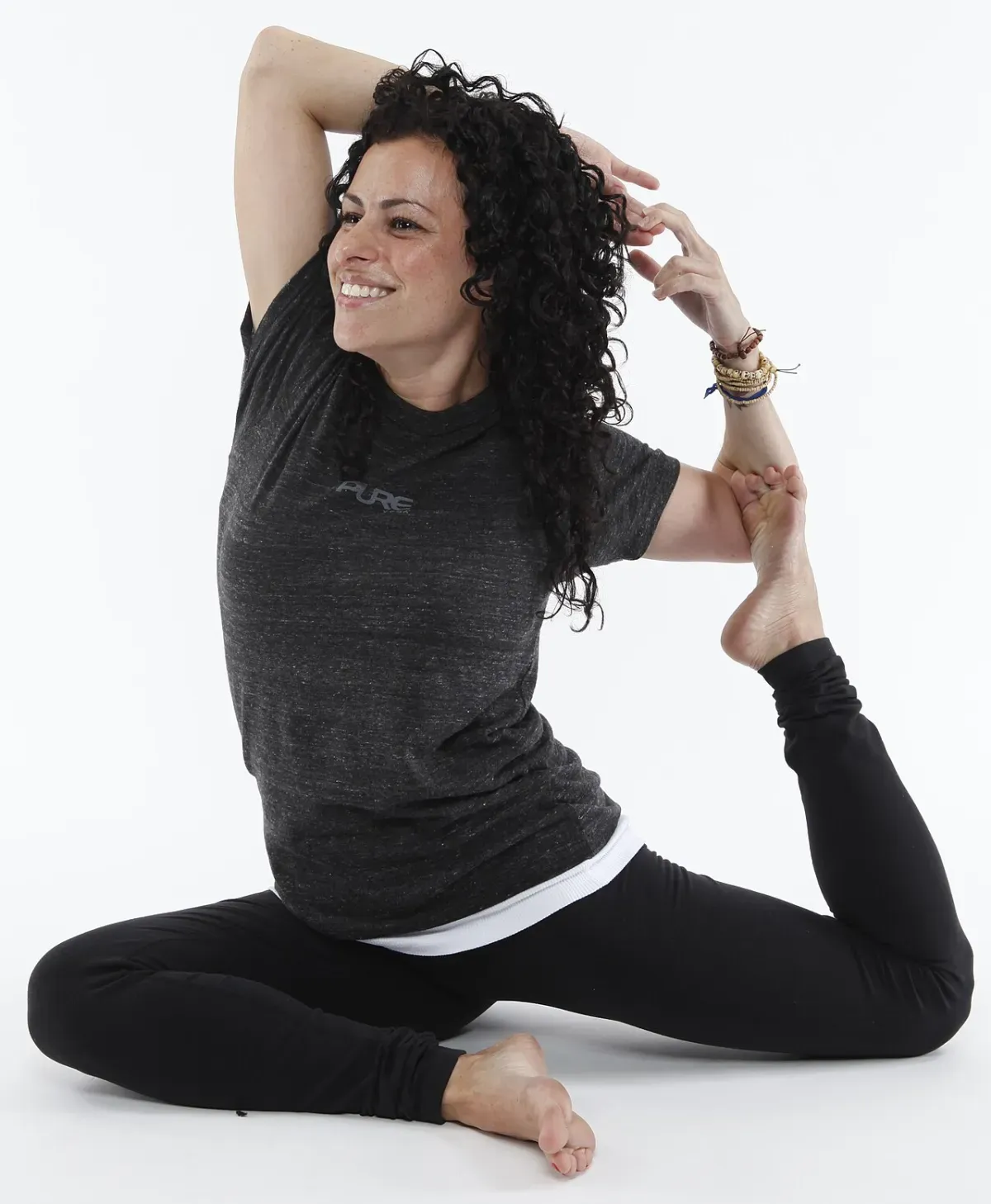
Photo by lululemon athletica via Wikimedia Commons (CC BY 2.0)
Go gently on the front knee. If it complains, slide the front shin closer to your body so the angle is less sharp, or skip pigeon for the half-kneeling stretch.
5. Butterfly stretch
The butterfly targets the inner thigh and groin more than the hip flexors directly, but it loosens the broader hip region and pairs well with the others. Sit tall, bring the soles of your feet together, and let your knees drop toward the floor. Hold your ankles, lengthen your spine, and hinge forward slightly from the hips, not by rounding your back. Hold for 30 seconds.
It’s a low-effort stretch you can do while watching something, which makes it easy to keep doing.
Why stretching alone often isn’t enough
Here’s where most hip flexor advice stops short, and where I’ll be blunt.
Stretching lengthens the front of the hip for a while. But if the muscle is stiff from years of sitting, and that 2021 study suggests stiffness, not just shortness, is part of the picture, then giving it a 30-second pull and then sitting for another eight hours is a losing trade. The hip flexor returns to the position it spends the most time in.
The piece people miss is the glutes. Sitting both shortens the hip flexors and switches off the glutes behind them. Weak glutes can’t hold the pelvis in a neutral position, so it drifts back into that anterior tilt no matter how much you stretch the front. You end up stretching one side of a tug-of-war while the other side keeps losing.
The more durable approach is two-part: stretch the hip flexors, and strengthen the glutes and core that hold the pelvis level. Glute bridges, hip thrusts, and squats do the strengthening. A simple set of home glute exercises covers the strength side, and a broader home leg workout hits the surrounding muscles that stabilize the hip. Pair those with the stretches above and you’re addressing the cause, not just the symptom.
Movement through the day helps too. Standing up every half hour interrupts the long stretches of sitting that cause the problem in the first place.
Common mistakes that waste the stretch
A few errors turn a good stretch into a useless one or a sore back.
Arching the low back instead of tucking the pelvis. This is the big one. If you don’t tuck your pelvis under before leaning into a kneeling or lunge stretch, you simply increase the arch in your spine and feel the stretch there. The hip flexor barely changes. Tuck first, every time.
Pushing into pain. A hip flexor stretch should feel like a firm pull, not a pinch. Sharp pain at the front of the hip, especially a pinching sensation, is a signal to back off, not push through.
Holding for two seconds and moving on. Bouncing or rushing does little. The tissue needs a sustained hold to respond, which is why 30 seconds is the floor, not the target.
Doing it once and expecting results. Tightness built over months of sitting won’t release in one session. Consistency over a few weeks is what moves the needle.
If you want a structured way to build the habit, a short routine to start the day works well. The morning stretch routine includes a hip opener you can do before the chair gets you, and the full-body stretch covers the hips alongside everything else. For tight hamstrings, which often travel with tight hips and also tug on the pelvis, see hamstring stretches. If you’re new to stretching altogether, start with the beginner’s guide to stretching for the basics on holds, breathing, and how often.
How to fit this into a sitting day
You don’t need a dedicated session. The half-kneeling or standing lunge stretch takes a minute and slots into any break. Doing it twice a day, once mid-morning and once in the evening, beats a single long stretch on the weekend, because you’re interrupting the shortening more often.
The honest summary: stretch the hips for relief, strengthen the glutes for the lasting change, and get out of the chair more often than you think you need to. The stretches feel good and they help. They just work best as one part of the picture rather than the whole thing.
Frequently asked
- How long should I hold a hip flexor stretch?
- Aim for a steady 30-second hold and repeat it two or three times per side. Harvard Health suggests working up to about 60 seconds total in the stretch position per side. Stretching daily helps more than one long session a week, since the tissue adapts to whatever position it spends the most time in, and right now that's a chair. Stop short of any sharp or pinching pain.
- Why are my hip flexors so tight even when I stretch?
- Two reasons. First, a long day of sitting holds the muscle short for far longer than a few minutes of stretching can undo, so you're fighting the clock. Second, stiffness isn't only about length. A 2021 study found prolonged sitters had measurably reduced passive hip extension, which points to a change in muscle stiffness rather than just a missing stretch. Pair your stretching with glute work and you'll usually see more change than from stretching alone.
- Can tight hip flexors cause lower back pain?
- They can contribute to it. When hip flexors stay short, they pull the front of the pelvis down into an anterior tilt, which increases the arch in your lower back and loads the spinal muscles. One study of people with low back pain found a positive Thomas test, the standard sign of shortened hip flexors, in roughly 64% of them. Stretching the hips and strengthening the glutes and core usually does more than treating the back alone.